VLSI Korea
Ireland: Why the Youth Leave Despite Intel's Fab
30-Second Summary * Intel's Fab 34 in Leixlip (outside Dublin) is Europe's only EUV high-volume fab, running Intel 4 and Intel 3 for Core Ultra and Xeon 6. In April 2026 Intel paid $14.2 billion to buy back Apollo's 49% stake, restoring full ownership. * Yet CSO Ireland reports 35,000 Irish citizens


30-Second Summary
- Intel's Fab 34 in Leixlip (outside Dublin) is Europe's only EUV high-volume fab, running Intel 4 and Intel 3 for Core Ultra and Xeon 6. In April 2026 Intel paid $14.2 billion to buy back Apollo's 49% stake, restoring full ownership.
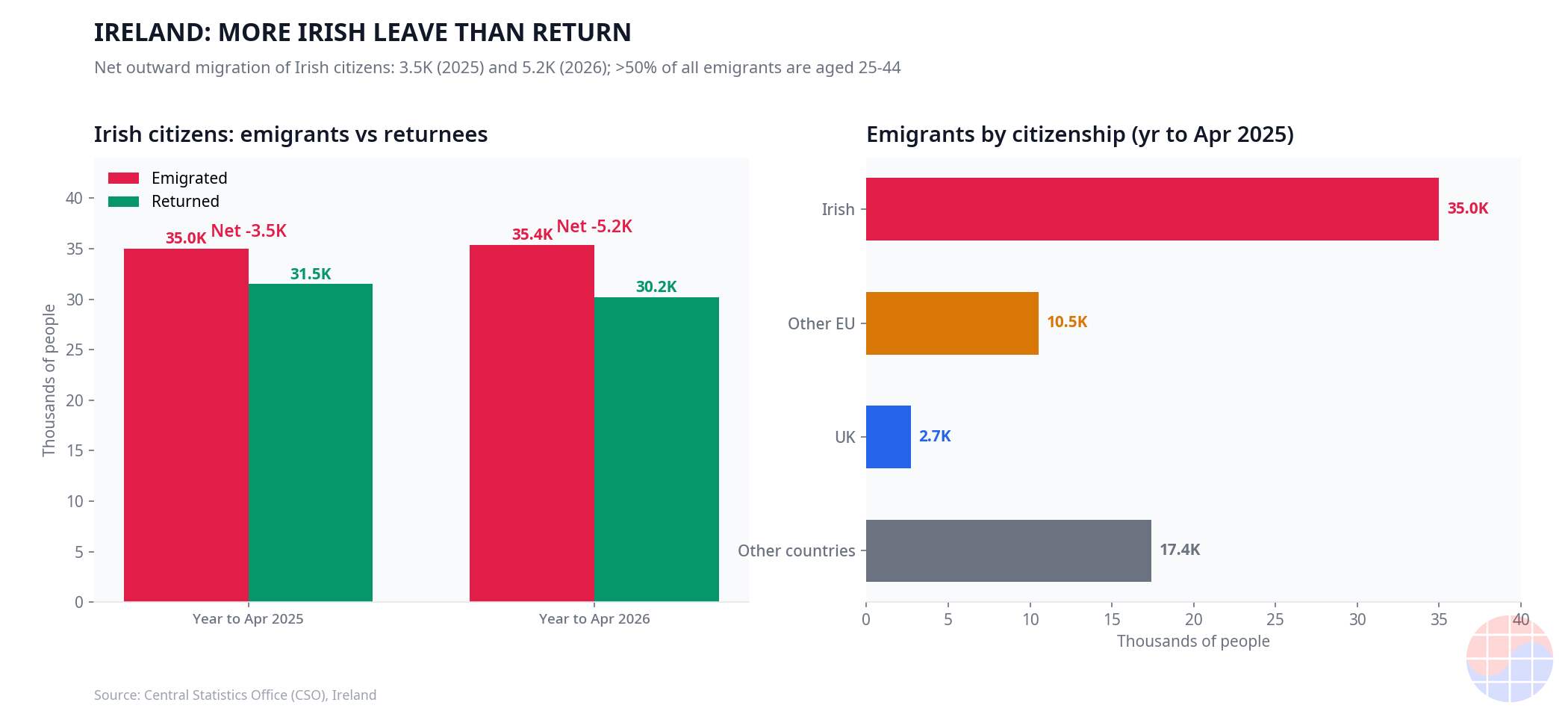
- Yet CSO Ireland reports 35,000 Irish citizens emigrated in the year to April 2025 — 13,500 to Australia alone (+27%). Net outward migration of Irish citizens: 3,500 in 2025, 5,200 in 2026.
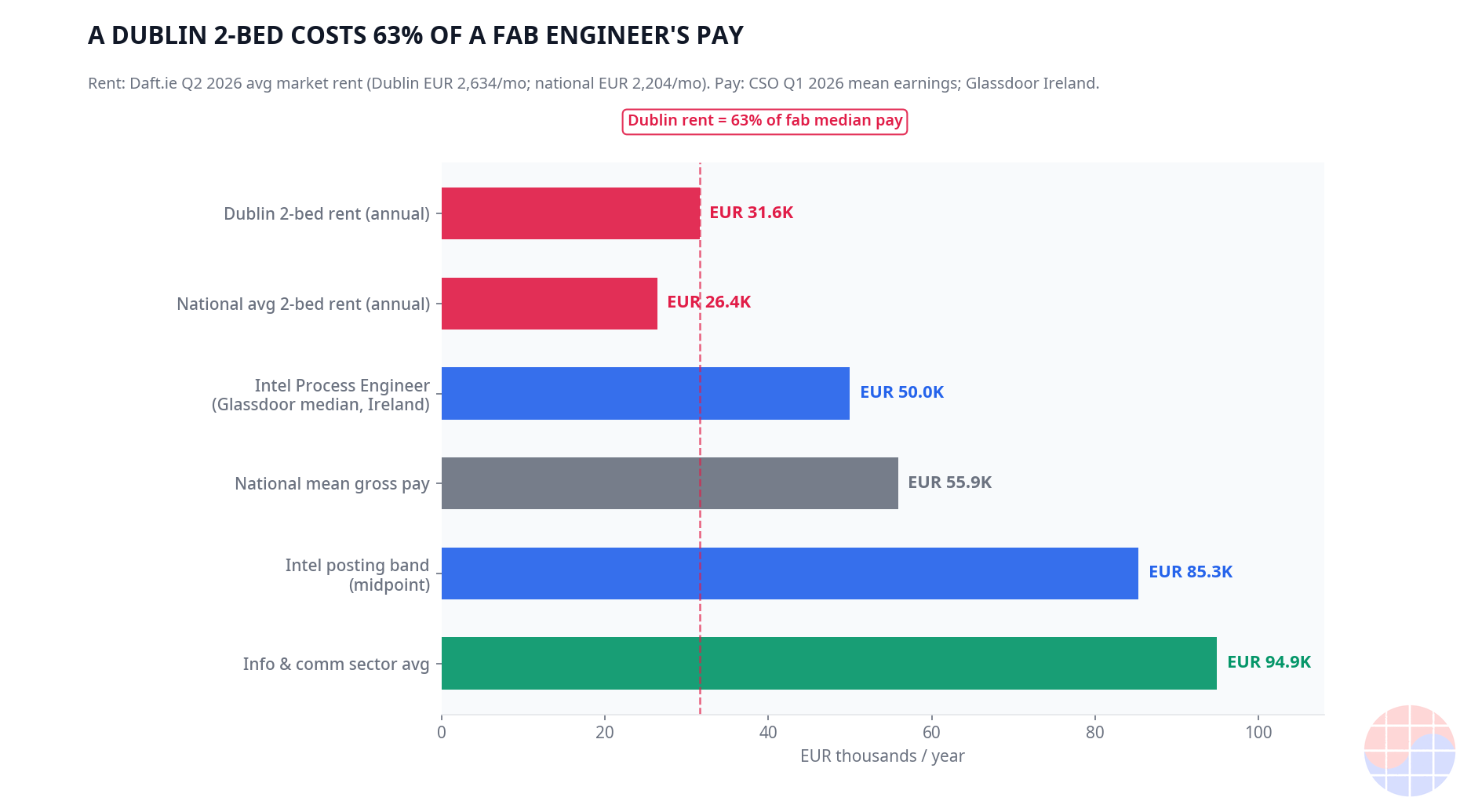
- Average Dublin two-bed rent: EUR 2,634/month (EUR 31,608/year) — 63% of a fab process engineer's Glassdoor median pay.
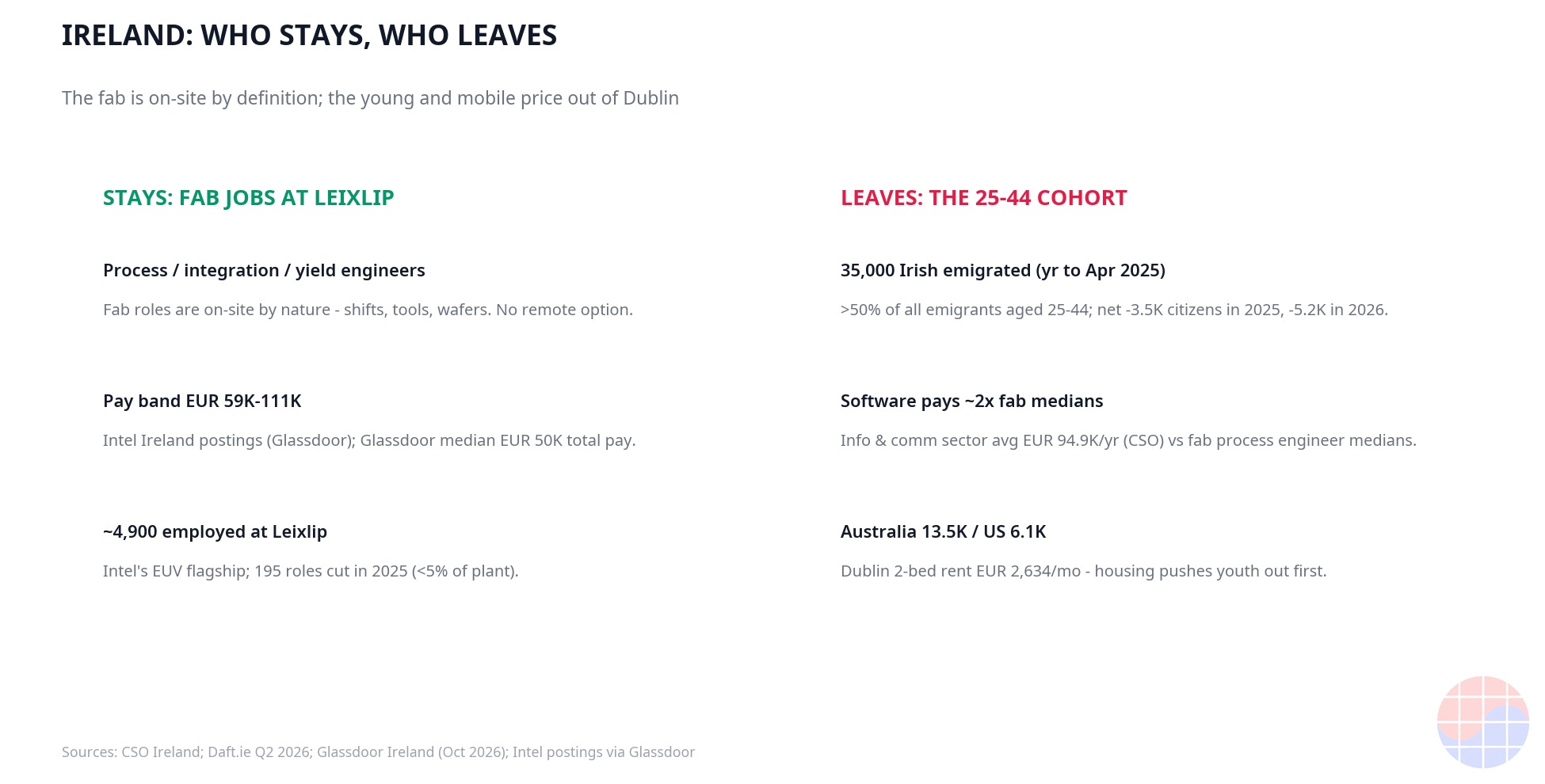
- Who stays: process/yield/equipment engineers at Leixlip (on-site by nature; Intel posting band EUR 59,200-111,300). Who leaves: the 25-44 cohort in software/design (info & comm sector avg EUR 94,900/year), priced out by housing.
- The 12.5% corporate tax era is over for giants: Pillar Two imposes an effective 15% minimum for groups with revenue over EUR 750 million (fiscal years starting on/after 31 December 2023). Over 99% of firms still pay 12.5%.
- Switzerland correction: EU/EFTA citizens taking a Swiss job face NO quota under the free-movement agreement. Quotas apply to posted workers (>120 days) and non-EU nationals. The real barriers are Zurich rents and the rising salary floor.
- Tech tree for Korean engineers: Route A — Leixlip fab process/yield engineer (difficulty 3/5), Route B — Dublin software/EDA/design (2/5), Route C — Australia/Canada working-holiday route (1/5).
Intro: The Fab Stays, the People Leave
Every country has its version of "the neighbor's rice cake looks bigger." For young Irish people, the neighbors are the UK, Australia, Canada, and the US.
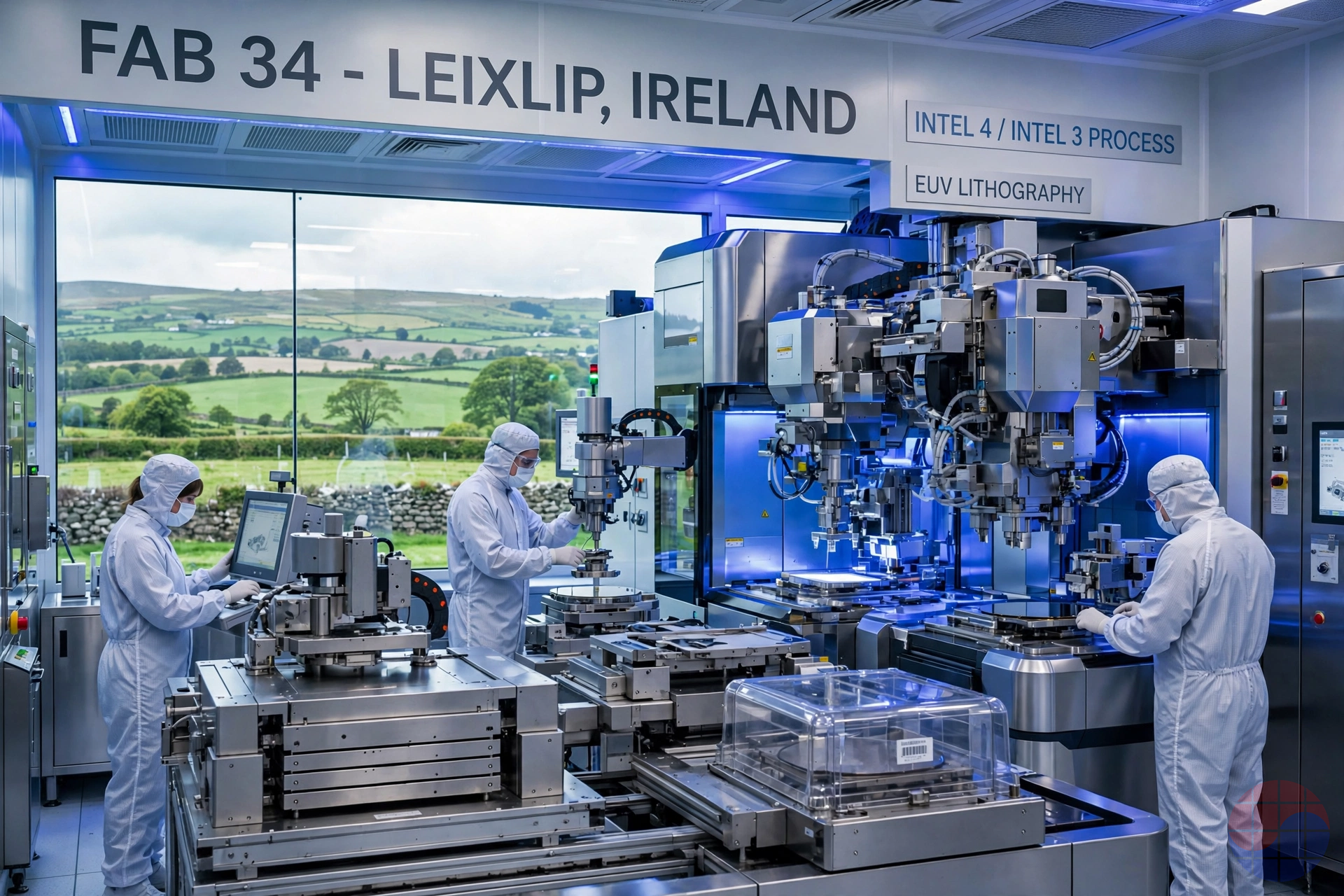
It seems paradoxical. Ireland is Intel's European heartland. In Leixlip, 20 km from Dublin, stands Fab 34 — Intel's first high-volume Intel 4 site, the only fab in Europe running EUV lithography in volume production. When Intel hit its worst financial crisis in 2024, Apollo Global Management bought 49% of the Fab 34 joint venture for $11.2 billion. In April 2026, Intel paid $14.2 billion to buy it back. $14.2 billion for one fab — a signal Intel has no intention of leaving Ireland.
But the numbers tell the opposite story. Ireland's Central Statistics Office reports 65,600 people emigrated in the year to April 2025, including 35,000 Irish citizens. 13,500 went to Australia alone, up 27% — the highest since 2013. Another 6,100 went to the US, up 22%. Immigration (125,300) still outpaces emigration, so net migration is positive — but strip out non-Irish citizens and Ireland loses people: net outward migration of 3,500 Irish citizens in 2025, 5,200 in 2026.
Why? The answer isn't inside the fab. It's outside — on the rent bill.
Deep Dive 1: The Fab Is Fine — Status of Intel Fab 34
Facts first. Rumors of Leixlip's decline are wrong.
Fab 34 is Intel's first high-volume manufacturing site for the Intel 4 process and the first Intel site to deploy EUV lithography in volume. It now runs both Intel 4 and Intel 3, producing Core Ultra PC chips and Xeon 6 server processors. In April 2026 Intel repurchased Apollo's 49% stake for $14.2 billion, restoring 100% ownership (Reuters, 1 April 2026). There were cuts — up to 195 roles at Leixlip in June 2025, under 5% of the plant's roughly 5,000 employees, under CEO Lip-Bu Tan's restructuring — but the fab's strategic position has, if anything, strengthened.
So the narrative "Ireland's chip industry is collapsing, that's why youth leave" is false. The fab runs well. The problem: no matter how well the fab runs, the city around it has stopped being a place people can afford to live.
Deep Dive 2: Dublin, Europe's Most Expensive Roof
Ireland's housing crisis is brutal in numbers.
- Average Dublin market rent, two-bed: EUR 2,634/month (Q2 2026, Daft.ie). National average: EUR 2,204.
- Up 42% since pre-Covid, 78% over a decade ago.
- Fewer than 1,150 homes listed for rent in all of Dublin (down 18% year-on-year) — a quarter of the pre-pandemic norm of 4,300+.
- Dublin house prices: 9 to 14 times the average annual salary (CSO, via Irish Examiner). Central Bank rules cap mortgages at 3.5x salary. The math doesn't work.
Average weekly earnings in Ireland hit EUR 1,074.61 in Q1 2026 (about EUR 55,900/year, CSO). A Dublin two-bed costs the average earner over half their gross pay in rent. Intel Leixlip process engineer postings list EUR 59,200-111,300; the Glassdoor median for Intel process engineers in Ireland is EUR 50,000 total pay. Dublin's annualized rent of EUR 31,608 is 63% of that median. After rent, there's nothing left.
Meanwhile, in the same city, the information and communication sector averages EUR 1,824.62/week — EUR 94,900/year. Nearly double the fab engineer's median. Same rent, double the leftover. Who stays at the fab and who goes into software? That's the fault line of Ireland's semiconductor workforce.
Deep Dive 3: Where They Go — Australia, the US, and the EU Passport
The emigration data reveals young Ireland's menu of choices.
Year to April 2025: 13,500 to Australia (+27%, most since 2013), 6,100 to the US (+22%). An estimated 15,600 Irish moved to Canada between 2023 and 2025. More than half of all emigrants are aged 25-44 — exactly the career-building years.
Here's the EU-citizenship paradox. Irish citizens, as EU citizens, can live and work anywhere in the EU-27 freely. Yet many choose non-EU destinations — Australia, Canada, the US. What about Switzerland, the highest-paying option inside Europe's orbit?
A correction is owed to a common belief: "even EU citizens face quotas in Switzerland." That's wrong. Under the Agreement on the Free Movement of Persons (AFMP), an EU/EFTA citizen taking a job with a Swiss employer faces no quota and no labor-market test — it's an entitlement. The 2026 quotas (8,500 for non-EU nationals, 3,500 ring-fenced for UK citizens, 3,500 for EU/EFTA posted workers) apply to assignments over 120 days and third-country hires. The Bilaterale III safeguard clause is under debate but not active; no popular vote before 2027. Legally, Switzerland is wide open to Irish youth.
Yet there's no mass exodus to Switzerland. The real barrier isn't law — it's money. Zurich rents, and the annually rising minimum salary floor for permits. The paradox of EU free movement: the borders are open, but housing is closed. It's the same reason young Irish pick Australia: English works, pay is high, and the working holiday visa (ages 18-35, up to two years) gets a foot in the door.
Deep Dive 4: Who Stays vs Who Leaves — Through a Fab Engineer's Lens
Ireland's talent map splits cleanly.
Who stays — process, integration, and yield engineers at Fab 34. Fab work is on-site by definition: shifts, tools, wafers. No remote option. Intel's Ireland postings offer EUR 59,200-111,300 — top-tier for Irish manufacturing. EUV volume experience is a globally scarce credential. Kildare, where Leixlip sits, is cheaper than Dublin. These are people who chose stability and specialization.
Who leaves — the 25-44 cohort in software, design, and young engineering. Their market isn't the fab. Dublin software pays near double fab medians, and remote/hybrid roles mean no reason to endure Dublin rents. Sydney, Melbourne, London, Toronto, and Vancouver absorb them.
The implication for Korean engineers is blunt: Ireland means the fab. If you also want Dublin software jobs, budget for the housing tax.
Tech Tree for Korean Engineers
Route A — Direct to Leixlip: EUV process/yield engineer (Difficulty 3/5, Reward 4/5)
Intel Ireland hires continuously (7 process engineer postings on Glassdoor as of October 2026). EUV, yield, or equipment experience is the strongest card, and these roles typically qualify for the Critical Skills Employment Permit, easing sponsorship. Downsides: shift work, Leixlip-based life. Three years of fab experience becomes a ticket to TSMC Arizona or Intel Ohio.
Route B — Dublin software/EDA/design (Difficulty 2/5, Reward 3/5)
The info & comm average of EUR 94,900/year is attractive, but Dublin rent eats the premium. EDA and design-automation specialists are scarce enough to negotiate. The English interview is the gate. Compromise on housing: Dublin outskirts plus commute, or fully remote under an Irish entity from a cheaper county.
Route C — The working-holiday detour via Australia/Canada (Difficulty 1/5, Reward 2/5)
The route young Irish already proved. Build English and overseas experience on a working holiday, then re-enter Ireland on Critical Skills or settle via Australia's skilled migration. Slowest, but lowest visa risk. One caveat: Australia has almost no fabs — pivot toward software, equipment, or materials.
Chase's Take
As someone working in the fab industry, the Leixlip story feels personal. I once reached the final round at a US big tech company and got filtered on visa sponsorship. That's when I learned borders are crossed with paperwork, not skill.
Ireland exposes an uncomfortable truth about the semiconductor industry. A country can attract a fab — offer tax breaks, land, bring in EUV. But it can't attract people the same way. People vote with their feet when they see the rent bill. While Intel spent $14.2 billion buying back its fab, 35,000 young Irish pulled suitcases through Dublin Airport. A country where the fab stays and the people leave — that's Ireland's portrait in 2026.
For Korean engineers, Ireland is not "the land of opportunity." It's the land of arithmetic. Go if EUV volume experience is a concrete payoff. If it's just vague European romance, run the rent calculator first. The neighbor's rice cake looks bigger mostly because you haven't seen the neighbor's rent.
FAQ
Q1. Is Intel's Leixlip fab still operating?
Yes. Fab 34 runs Intel 4 and Intel 3 processes producing Core Ultra and Xeon 6 chips. In April 2026 Intel bought back Apollo's 49% stake for $14.2 billion, restoring full ownership. It is Europe's only EUV high-volume fab.
Q2. How large is Irish youth emigration?
Per CSO, 35,000 Irish citizens emigrated in the year to April 2025; 35,400 in the year to April 2026 (net -5,200). Australia took 13,500 (+27%), the US 6,100 (+22%). Over half of all emigrants are aged 25-44.
Q3. Can an engineer salary cover Dublin housing?
Barely. Average Dublin two-bed rent of EUR 2,634/month equals 63% of the Glassdoor median pay (EUR 50,000) for an Intel process engineer in Ireland. House prices run 9-14x average salary against a 3.5x mortgage cap.
Q4. Do EU citizens face Swiss work quotas?
No. EU/EFTA citizens taking employment with a Swiss employer have free-movement rights with no quota. Quotas apply to posted workers and non-EU nationals. The real barriers are Zurich housing costs and the rising minimum salary threshold.
Disclaimer: This is not investment or immigration advice. Figures are approximate, based on public sources; verify visa, tax, and salary details with official sources.