VLSI Korea
Aart de Geus on AI's Energy Dual Challenge: More Power, Less Carbon
30-Second Summary * Synopsys co-founder Aart de Geus appeared on the YouTube channel OpenMinds 203X (August 3, 2026, 37 minutes) with a talk titled "AI's Energy Surge Meets its Techonomics Dual Challenge." This piece summarizes the video as presented in its description and chapters (no transcript was available). * The core thesis ("Dual Challenge"


30-Second Summary
- Synopsys co-founder Aart de Geus appeared on the YouTube channel OpenMinds 203X (August 3, 2026, 37 minutes) with a talk titled "AI's Energy Surge Meets its Techonomics Dual Challenge." This piece summarizes the video as presented in its description and chapters (no transcript was available).
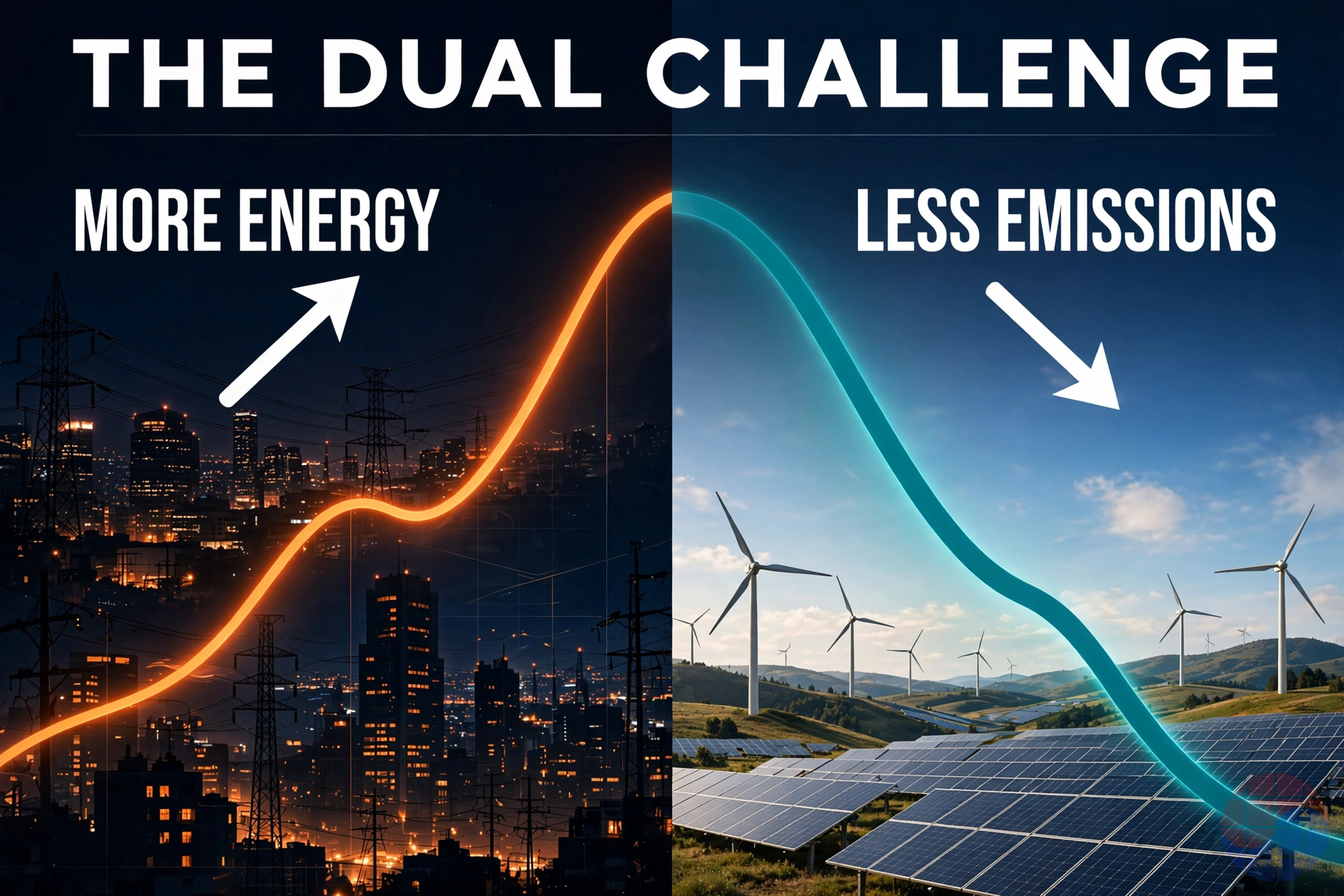
- The core thesis ("Dual Challenge"): AI is driving the steepest US power-demand growth in decades, and society must solve MORE energy AND LESS emissions simultaneously.
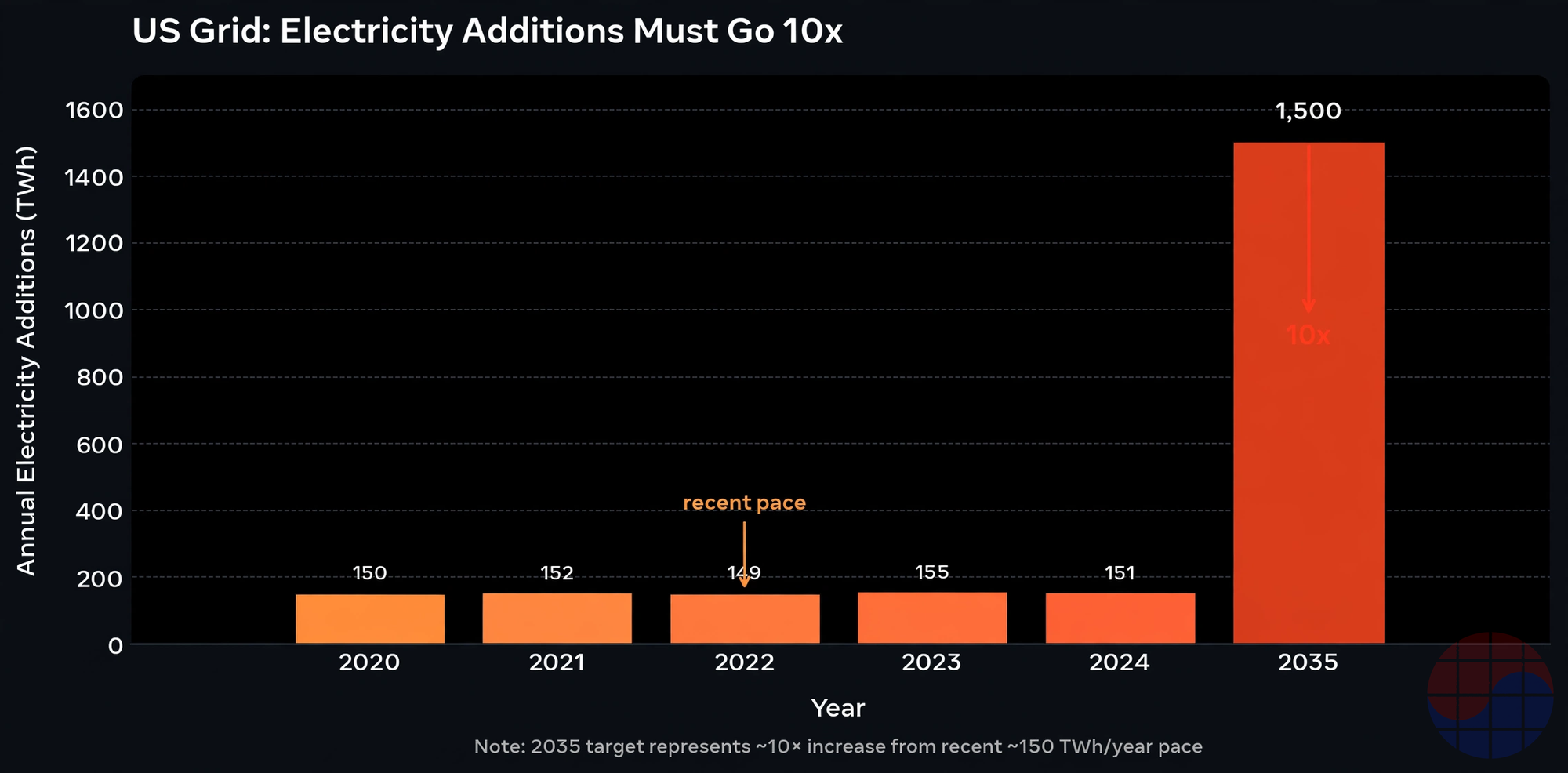
- The video's headline number: the US grid must add roughly 1,500 TWh of electricity per year by 2035 — about 10x the recent pace of additions.
- CO2 and methane (CH4) are different problems requiring different responses. The video emphasizes methane abatement.
- Solar and wind are often the cheapest power sources today, and batteries are increasingly solving intermittency.
- Three levers of change: technology, market, policy. The talk ends with "Three Calls to Action."
- The thesis of this piece: it is no accident that the founder of the world's leading EDA company talks about energy. Chip design efficiency is energy efficiency. And his "more energy + fewer emissions" framing fits precisely with the Jevons paradox argument made in this site's The Energy Cost of Intelligence: efficiency alone will not cut total consumption — supply expansion and emissions abatement must come with it.
Background: Why an EDA Legend Talks Energy
Aart de Geus needs no introduction in semiconductors. He co-founded Synopsys in 1986, served as CEO from 1994 to 2024, and is now executive chair (Applied Materials board profile). He commercialized logic synthesis and turned CAD into the EDA era, was elected to the US National Academy of Engineering in 2019, and received the IEEE Robert N. Noyce Medal and the Phil Kaufman Award (Wikipedia).
His stage of choice is surprising: a tiny YouTube channel with 35 subscribers and 389 views. OpenMinds 203X promotes expanding "techonomic abundance" while mitigating "techonomic risk" (openminds203x.org) — techonomics being the frame where technology and economics intersect to set civilization's direction. De Geus speaks there not as a tool vendor but as a civilization designer.
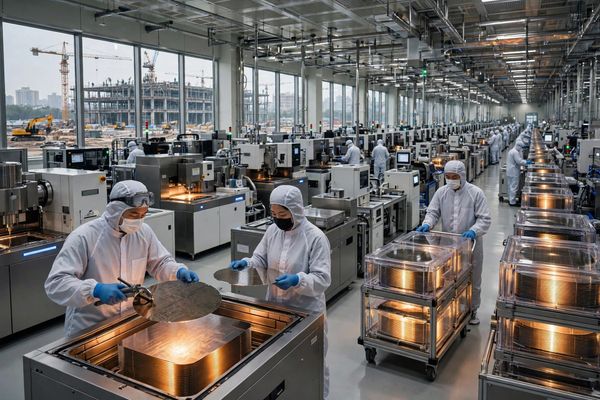
Why would an EDA founder give an energy talk? Because AI's power problem starts at the chip. Datacenter power is decided not at the rack but at the silicon die, and the die's power is decided at design time. EDA is the tooling that governs design efficiency. Semiconductor design sits at the center of the "technology" lever de Geus describes.
Deep Dive
1. The Dual Challenge: More Energy, Fewer Emissions, at Once
De Geus's diagnosis compresses into two sentences. First, AI is bringing the steepest power-demand growth the US has seen in decades. Second, society must supply more energy while cutting emissions at the same time. "Dual" means solving both together — neither alone is enough.
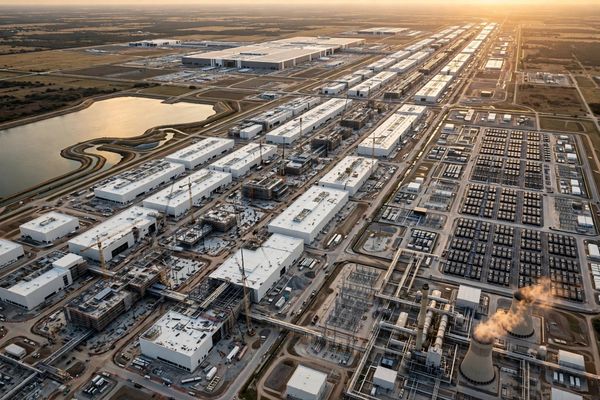
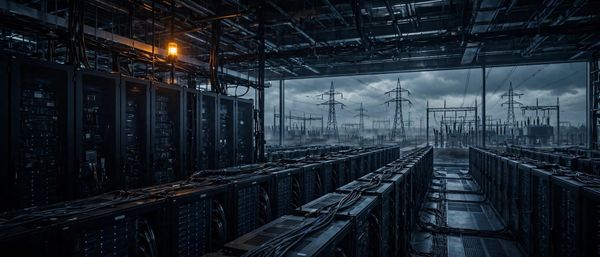
Independent forecasts point the same direction. BloombergNEF projects US datacenter power demand rising from about 40 GW today to 106 GW by 2035, a 2.7x increase (TechCrunch). Datacenters would go from roughly 5.9% of US electricity today to 12% by 2030 and 20% by 2035 (TechSpot), reaching 34% of power in PJM (Virginia to Illinois) and 22% in ERCOT (Texas) (GovTech). After decades of flat US demand, a demand curve with this slope is unprecedented.
2. The Math of 1,500 TWh and 10x
The video's most striking number: the US grid must add roughly 1,500 TWh of electricity per year by 2035 — about 10x the recent pace of additions. That is the claim as presented in the video's description and chapters.
Consider what 10x means. It is not about building power plants faster; it means the entire power system's throughput of "adding electricity" must run 10x hotter — generation construction, transmission expansion, permitting, equipment supply chains, all of it. Recall the figures from this site's Energy Cost of Intelligence: a 2,061 GW US interconnection queue with a 13% historical completion rate, and large-transformer lead times of 160–210 weeks. At current system throughput, 10x acceleration is close to physically impossible. That is why de Geus reaches for market and policy alongside technology.
3. CO2 and Methane Are Different Problems
A notable move in the talk is treating CO2 and methane (CH4) separately. They share the label "greenhouse gases" but are physically different problems demanding different responses.
Methane lives about 12 years in the atmosphere versus centuries for CO2, but its near-term warming punch is far stronger — roughly 80x CO2 over 20 years on the IPCC's standard assessment. Methane abatement is therefore a lever with visible climate payoff on a fast timescale. If CO2 reduction is a decades-long structural transition, methane abatement is closer to fixing pipes that are leaking right now. De Geus's emphasis on methane means one slogan ("cut emissions") is not enough; each gas needs its own response speed and instrument.
There is a semiconductor connection too. Fluorinated gases used in fabs (CF4, C4F8, SF6, NF3) carry global warming potentials thousands to tens of thousands of times CO2. Like methane, they are "small volume, huge impact" emitters. The principle — prioritize by impact-per-unit times abatement cost, not by total volume — applies directly to managing a fab's Scope 1 emissions.
4. Solar and Wind Are Cheapest; Batteries Close the Gap
The talk's other pillar is supply-side optimism: solar and wind are often the cheapest power sources today, and batteries are increasingly solving intermittency.
The data backs it. Lazard's 2025 LCOE+ report puts unsubsidized utility-scale solar at $38–78/MWh and onshore wind at $37–86/MWh — the cheapest new-build sources for the 10th straight year, versus $48–109/MWh for combined-cycle gas (pv magazine). New-build renewables being cheapest is now a decade-old conclusion. Battery levelized storage costs are falling sharply too, letting solar-plus-storage bid for baseload-like roles.
The optimism has a condition attached. Cheapest is not the same as connected. Permitting delays and interconnection-queue bottlenecks limit how fast renewables actually hit the grid. "Cheapest" is necessary, not sufficient — which is where the policy lever enters.
5. Three Levers: Technology, Market, Policy
De Geus names three levers of change.
Technology pushes the physical frontier of efficiency and supply: semiconductor power efficiency, falling solar and battery costs, methane leak detection and capture. Technology opens possibilities but does not guarantee speed.
Market is the price-signal lever. Carbon pricing, demand response in power markets, and long-term PPAs that finance renewable projects — when these work, capital flows down the fastest path. The hyperscalers' scramble to procure power is itself a giant market signal.
Policy is the speed lever. Permitting reform, interconnection-queue throughput, methane regulation, transmission investment. 10x addition rates will not come from technology alone. Institutions set the throughput.
The talk closes with "Three Calls to Action," ending on de Geus's signature line (only partially shown in the video description, so it is not quoted here in full).
Chase's Take
As a Synopsys engineer, what struck me most is exactly where semiconductor design sits inside the "technology" lever.
AI datacenter power is decided not at the rack but at the transistor. Think of the chips I sign off in PrimeTime: dynamic power is P = α·C·V²·f, and design controls every variable — α (switching activity), C (capacitance), V (voltage), f (frequency). Power-aware synthesis and placement, multi-Vt optimization, clock and power gating, DVFS — everything the EDA toolchain automates writes the first line of the datacenter power bill. At the architecture level, precision scaling (FP8 to FP4) and minimizing data movement are even bigger levers. As the Horowitz numbers in this site's Energy Cost of Intelligence show, reading data from HBM costs 128 pJ versus 0.15 pJ for the compute itself — 850x more. Moving data less matters more than computing less.
But honesty requires naming the tension. That same piece made the Jevons paradox case head-on: even 5x or 10x efficiency gains accelerate total power consumption. Once demand elasticity crosses the threshold, efficiency gains summon more consumption. Through that lens, de Geus's "technology" lever alone cannot resolve the Dual Challenge. Efficiency is necessary, not sufficient.
So the two framings are complementary, not competing. De Geus's answer is "more energy + fewer emissions"; our piece's warning is "efficiency alone won't do it." Combined, the strategy is clear. (1) Cut energy per unit of intelligence through chip design efficiency, (2) build clean supply at 10x speed to absorb the demand that efficiency unlocks, and (3) choke off short-term high-impact emissions like methane first. Drop any one of the three and the equation fails.
One Korea-angle note. Korea's grid has less headroom than America's. The Yongin semiconductor cluster alone is projected to need 9–15 GW of additional transmission power. The fabs of Samsung and SK hynix are central variables in the national power supply plan. While the US debates 10x acceleration, Korea faces the more direct question of where fab power comes from. De Geus's Dual Challenge applies to Korea's semiconductor industry verbatim: making more chips needs more power, and that power must get cleaner.
Implications
Grid and utilities. 10x addition rates are unreachable under current permitting and interconnection systems. Queue reform and transmission investment are the frontal assault on the bottleneck — alongside equipment supply chains like transformer lead times (160–210 weeks).
Hyperscalers. Power procurement has become a core AI-competition variable. Long-term PPAs, nuclear co-location, behind-the-meter generation, and demand-flexibility software are becoming standard — power is "secured," not just "bought."
EDA and semiconductors. Power is now the first-class citizen of PPA. Power-aware design flows, architecture-level data-movement minimization, and precision scaling decide product competitiveness. An EDA vendor's power-optimization capability maps directly onto its customers' electricity bills.
Policy. From short-term high-impact areas like methane regulation to speed bottlenecks like permitting reform: technology and markets set the direction, policy sets the speed.
FAQ
Q1. Who is Aart de Geus?
The co-founder of Synopsys (1986), CEO from 1994 to 2024, and now executive chair. He commercialized logic synthesis and helped create the EDA industry, and is a member of the US National Academy of Engineering and a recipient of the IEEE Noyce Medal and the Phil Kaufman Award.
Q2. What is the "Dual Challenge"?
De Geus's diagnosis that as AI drives the steepest power-demand growth in decades, society must solve "more energy supply" and "fewer greenhouse-gas emissions" simultaneously. "Dual" means both must be solved together.
Q3. Where do the 1,500 TWh and 10x figures come from?
They are claims presented in the description and chapters of the video "AI's Energy Surge Meets its Techonomics Dual Challenge" (OpenMinds 203X, August 3, 2026): the US grid must add roughly 1,500 TWh per year by 2035, about 10x the recent pace. Independent forecasts (e.g., BloombergNEF's projection of US datacenter demand nearly tripling by 2035) agree on the direction.
Q4. How does this connect to this site's "The Energy Cost of Intelligence"?
That piece argued via the Jevons paradox that efficiency gains alone will not reduce total power consumption. De Geus's framing supplies the answer's structure: efficiency (technology) plus clean-supply buildout (market, policy) plus short-term emissions cuts like methane abatement, all together. The two pieces complement each other.
Footnote: video claims cited here (1,500 TWh, 10x, methane emphasis, Three Calls to Action) are summarized as presented in the description and chapters of "AI's Energy Surge Meets its Techonomics Dual Challenge" (OpenMinds 203X, August 3, 2026); no transcript was available. Video: https://youtu.be/gEgF2a4ozv4. Not investment advice.
Related: The Energy Cost of Intelligence — the 950 TWh question: the Jevons paradox and silicon's physical limits