VLSI Korea
ERCOT Batch Zero: 474 GW queue를 AI chip demand로 바꾸지 않는 법
ERCOT의 474 GW queue는 chip demand가 아닙니다. Batch Zero evidence gate가 request MW를 verified demand로 바꾸는 과정을 분석합니다.


🆓 무료 글 · 누구나 무료로 읽을 수 있는 글입니다
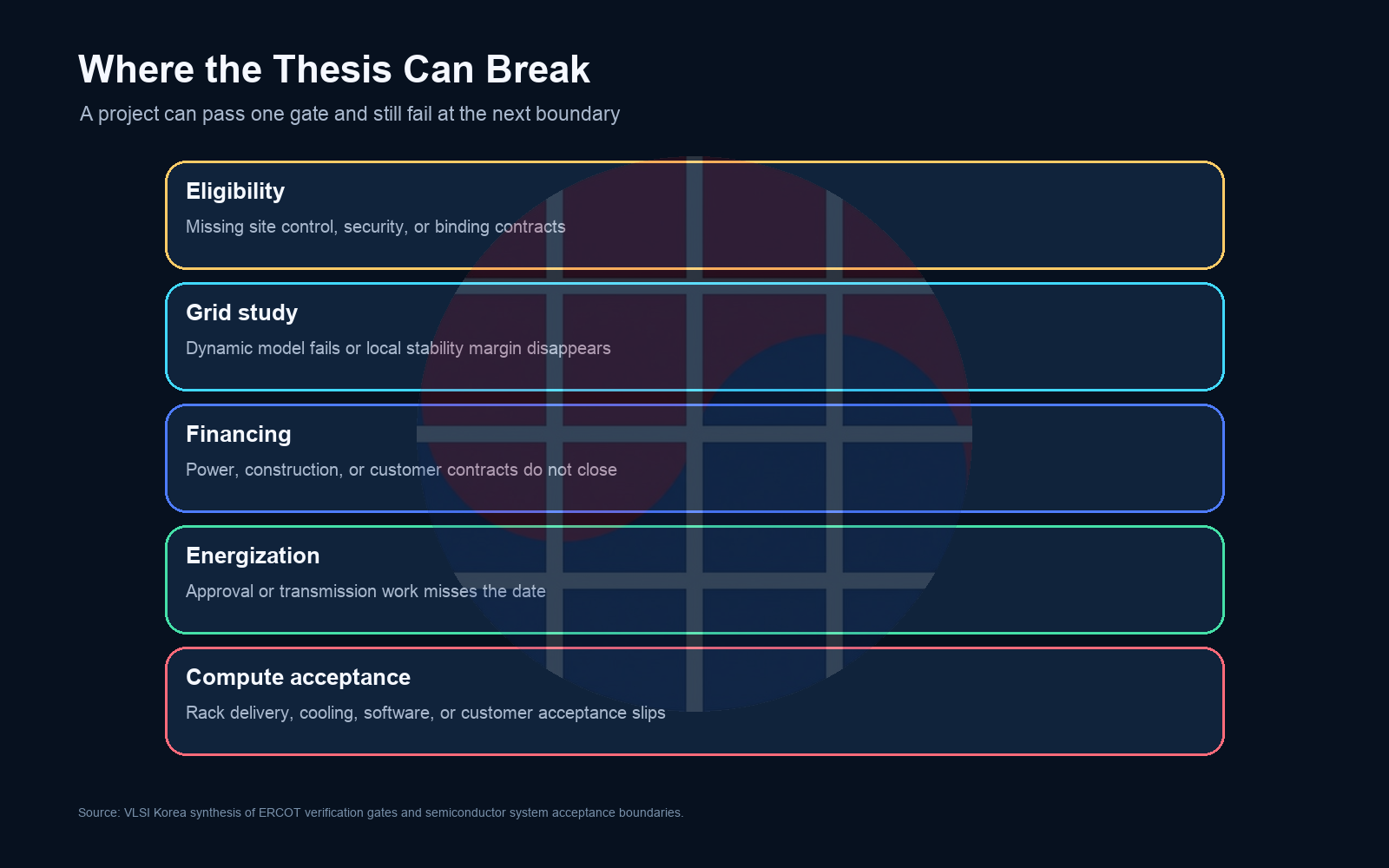
답부터 말하면, ERCOT가 추적하는 474 GW의 large-load request를 AI accelerator, HBM, foundry wafer 또는 server revenue로 곧바로 바꾸면 안 된다. 474 GW는 신청된 전력의 합계다. 2026년 8월 20일 ERCOT 공개 자료는 dynamic model 290건 가운데 첫 검토에서 acceptable 판정을 받은 비율이 약 18%였고, 일부 load는 Quarterly Stability Assessment에 들어가도 energization 승인을 별도로 받아야 한다고 명시한다. Queue MW와 실제 chip demand 사이에는 eligibility, grid study, financing, construction, energization, rack acceptance라는 서로 다른 denominator가 있다.
이 글의 두 reader job은 명확하다. 반도체 strategy와 supply owner는 headline MW를 확률가중 evidence로 바꿔 HBM, logic, package, substrate, power component의 capacity 결정을 늦추거나 앞당길 수 있다. Data-center, server, EDA와 power engineer는 grid-side dynamic model에서 rack-side power, cooling, SI/PI, firmware, acceptance까지 이어지는 ownership boundary를 확인할 수 있다. 개선하려는 결정도 두 가지다. 첫째, 언제 request MW를 qualified semiconductor demand로 승격할지 정한다. 둘째, 다음 6~12개월에 어떤 공식 문서와 field metric이 thesis를 지지하거나 깨는지 정한다.
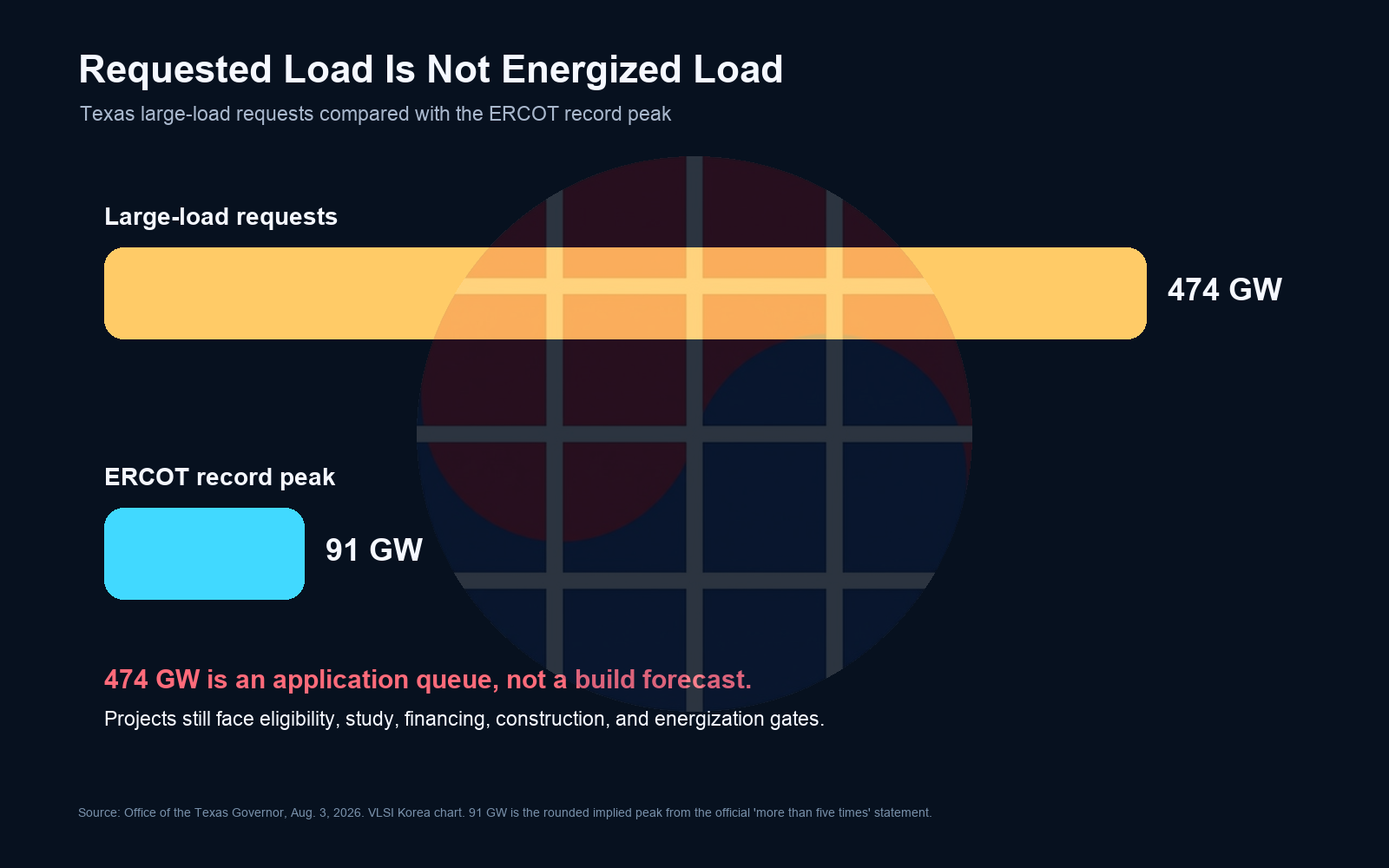
VLSI Korea view: MW queue는 수요의 증거가 아니라 검증을 시작하는 inventory다. Semiconductor demand로 인정하려면 같은 project가 grid, capital, construction, compute acceptance gate를 연속해서 통과했다는 날짜 있는 증거가 필요하다.
1. 474 GW가 보여주는 것은 규모가 아니라 denominator risk다
Texas Governor의 8월 3일 directive는 ERCOT가 약 474 GW의 connection request를 검토 중이며, 이는 Texas record peak의 5배를 넘는다고 밝혔다. Directive는 PUCT와 ERCOT가 interconnection process를 진행하는 data-center project를 comprehensive verification and audit하도록 요구했다. Requirement를 충족하지 못하는 project는 Texas grid 연결을 거부해야 한다는 것이 공개 문서의 핵심이다.
두 달 전 ERCOT의 6월 18일 release는 large-load request가 438,000 MW를 넘고 약 89%가 data center라고 밝혔다. 한 달 반 사이 headline queue가 약 36 GW 늘었다고 단순 계산할 수 있지만, 이것은 신규 site가 실제 건설됐다는 뜻이 아니다. Duplicate intent, multiple service territories, 초기 option value, 부지와 전력 계약의 maturity가 다르기 때문에 queue growth와 energized growth는 별도 시계열로 관리해야 한다.
Batch Zero는 이 denominator 문제를 줄이기 위한 one-time transitional study다. ERCOT Large Load Integration page는 75 MW 이상 facility가 PGRR145에 따라 eligibility path를 확인하고, load information, dynamic model, attestation과 provider confirmation을 제출하도록 요구한다. 75 MW threshold는 large load의 process boundary이지, semiconductor order의 threshold가 아니다.
Consensus는 AI infrastructure가 Texas power planning의 중요한 변수라는 것이다. 정확한 disagreement는 그 다음에 있다. 낙관적 해석은 474 GW를 future compute footprint의 leading indicator로 본다. VLSI Korea view는 474 GW를 upper-bound discovery inventory로 보고, evidence gate가 닫힐 때마다 denominator를 다시 정의해야 한다고 본다. Why now는 명확하다. August verification process가 application intent와 energization 사이의 실제 탈락 지점을 처음으로 public schedule과 evidence requirement로 보여주기 시작했다.
2. Batch Zero가 실제로 거르는 다섯 가지 evidence gate
첫 gate는 eligibility다. Project는 site control, required study path, financial security, binding contractor 또는 customer evidence 등 자신의 eligibility route에 맞는 자료를 제출해야 한다. 8월 20일 ERCOT presentation은 attestation, disclosure, evidence, form, TSP/DSP sign-off, inspection을 구분한다. 단순한 developer statement와 third-party confirmation을 같은 강도로 세지 않는 구조다.
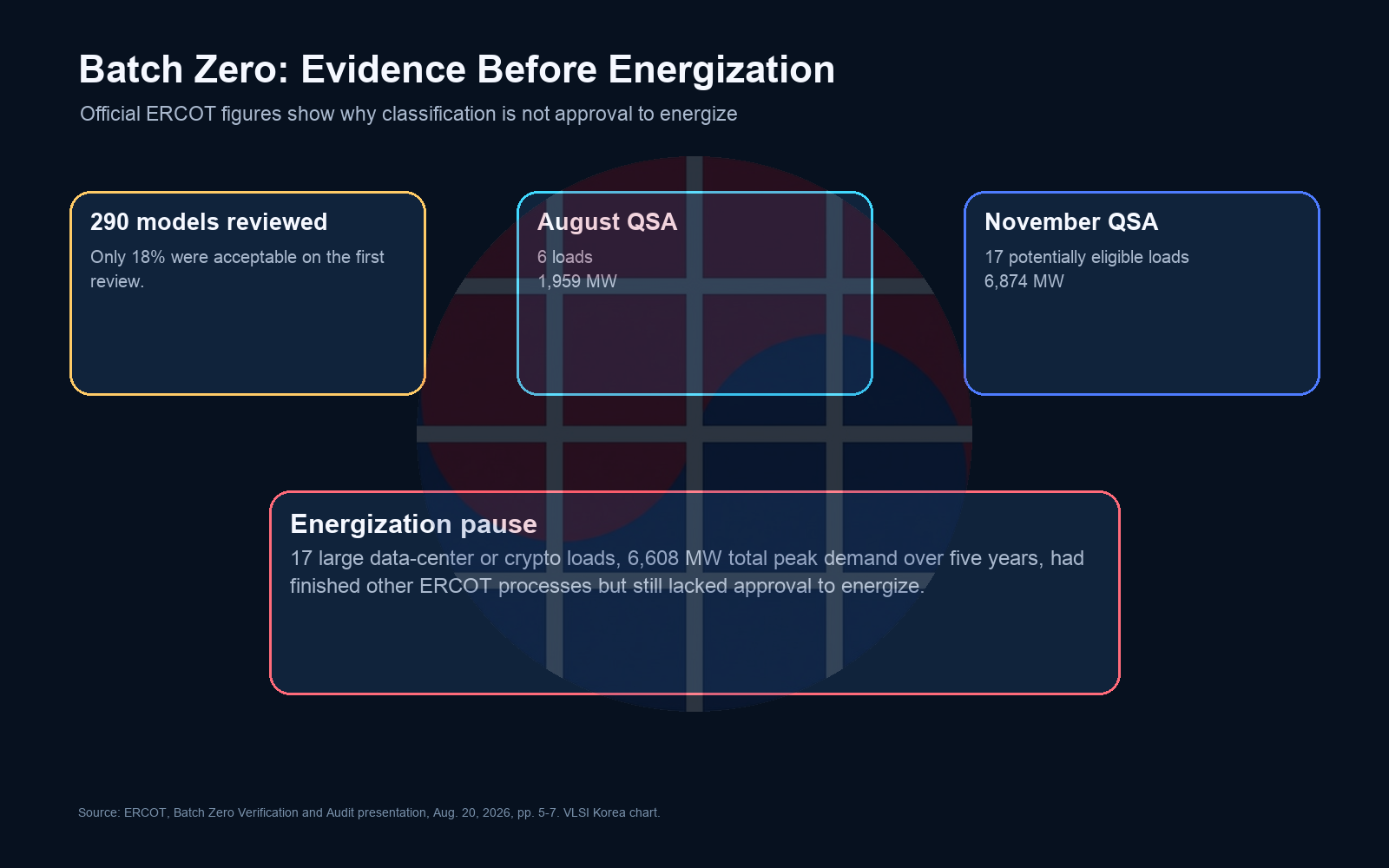
둘째는 dynamic-data review다. ERCOT는 290개 dynamic model을 검토했고 약 18%만 첫 검토에서 acceptable했다고 밝혔다. 이는 82%가 영구 탈락했다는 뜻이 아니다. Deficiency notification과 24-day cure period가 존재한다. 그러나 first-pass acceptance가 낮다는 사실은 data-center load가 nameplate MW 하나로 grid behavior를 설명할 수 없다는 강한 증거다. Voltage sensitivity, protection, ride-through, ramp와 control behavior가 stability model에 들어가야 한다.
셋째는 Quarterly Stability Assessment다. ERCOT는 August 1 QSA에 6개 load, 약 1,959 MW가 들어갈 것으로 보고, November 1 QSA에는 17개 load, 약 6,874 MW가 potentially eligible하다고 설명했다. 중요한 문장은 “QSA inclusion does not by itself authorize energization”이다. Study queue에서 한 단계 올라갔다는 사실과 grid에 전력을 넣어도 된다는 permission은 다르다.
넷째는 verification과 inspection이다. ERCOT는 RFI를 보내고 provider, developer, supporting document를 대조하며, 필요한 경우 requested energization date가 가까운 site를 검증한다. Inconsistency가 있으면 설명 기회를 주지만, verification을 통과하지 못하거나 응답하지 않으면 Batch Zero에서 disqualify할 수 있다. Site control, long-lead equipment, notice to proceed, end-use customer, permit, contractor, financial security는 각각 다른 proof object다.
다섯째는 approval to energize다. ERCOT는 17개 large data-center 또는 crypto load, 합계 6,608 MW의 five-year total peak demand가 다른 process를 마쳤지만 energization approval은 받지 못했다고 밝혔다. 이 숫자는 오히려 “거의 다 됐다”는 narrative도 마지막 gate 앞에서 멈출 수 있음을 보여준다. Semiconductor revenue recognition과도 같은 구조다. Fab output, packaged unit, shipped system, customer acceptance는 같은 denominator가 아니다.
3. Queue-to-Revenue Evidence Ladder: MW를 chip demand로 바꾸는 framework
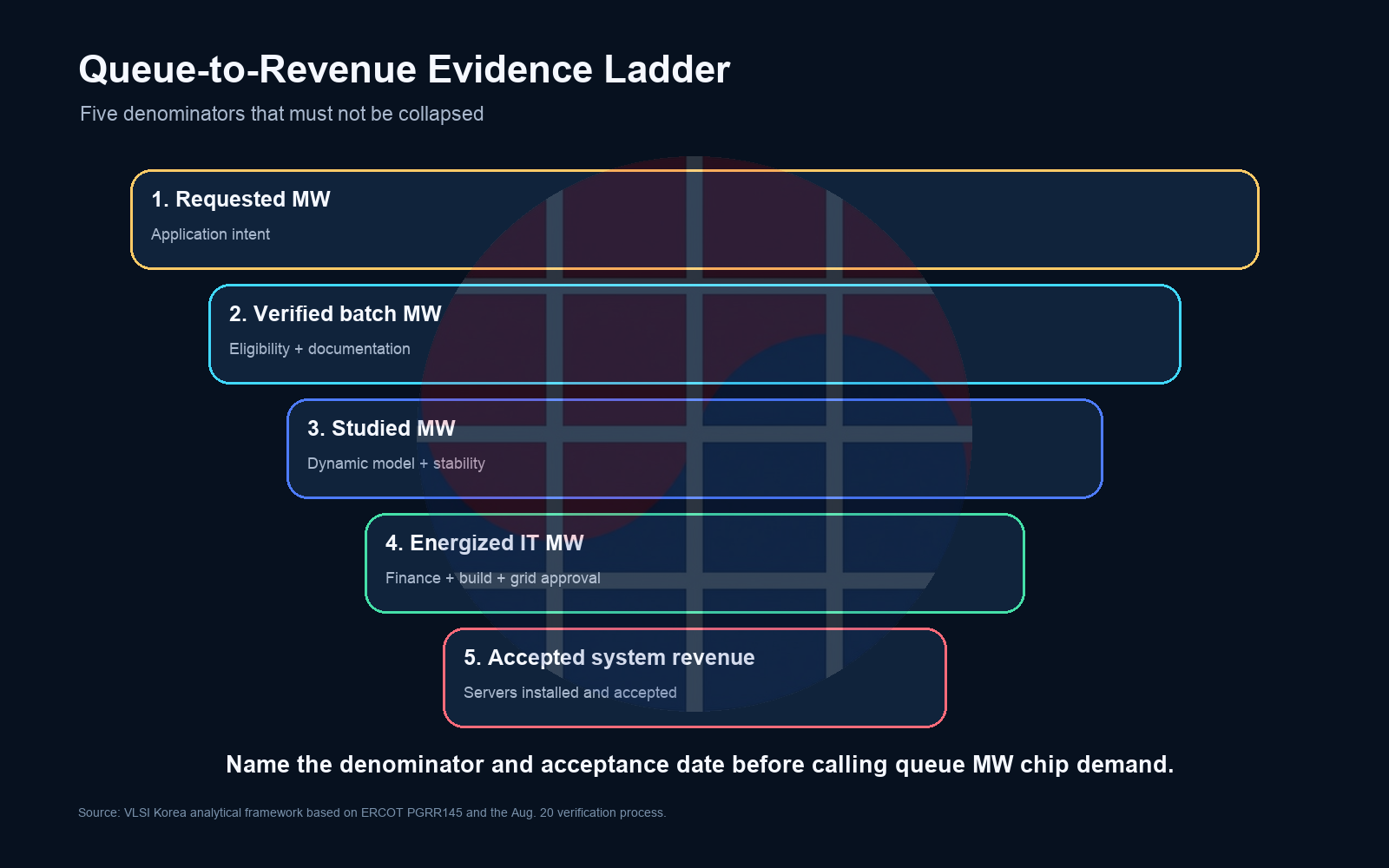
이 글은 Queue-to-Revenue Evidence Ladder를 제안한다. Stage 1은 requested MW다. Discovery와 upper-bound capacity planning에는 유용하지만, build probability를 말하지 않는다. Stage 2는 verified Batch MW다. Eligibility document와 institutional confirmation을 통과한 project만 남는다. Stage 3은 studied MW다. Dynamic model과 stability assessment가 grid connection의 기술적 조건을 정한다.
Stage 4는 energized IT MW다. Financing, transmission work, substation, site construction, cooling과 local permit가 닫히고 실제 electrical service가 가능해야 한다. Stage 5는 accepted system revenue다. Server, accelerator, memory, network, storage가 설치되고 software bring-up, thermal qualification, customer acceptance를 통과해야 chip shipment가 durable revenue와 utilization으로 연결된다.
핵심은 각 stage에서 owner와 clock이 바뀐다는 점이다. ERCOT와 TSP/DSP는 grid evidence를 다룬다. Developer와 lender는 land, contract, security, construction evidence를 다룬다. Hyperscaler와 OEM/ODM은 rack, power, cooling, network, software acceptance를 다룬다. Semiconductor supplier는 wafer, package, board, firmware, system qualification을 다룬다. 한 owner의 milestone을 다음 owner의 completion으로 대체하면 timing error가 생긴다.
Demand model은 다음처럼 써야 한다. Expected live IT MW = requested MW × eligibility probability × study clearance probability × financing/build probability × energization probability × IT-load share다. Semiconductor units를 구하려면 여기에 workload mix, rack density, accelerator or CPU power, redundancy, utilization, spares, refresh와 acceptance timing을 더해야 한다. Public evidence가 없는 factor를 100%로 두면 숫자는 정교해 보여도 model은 틀린다.
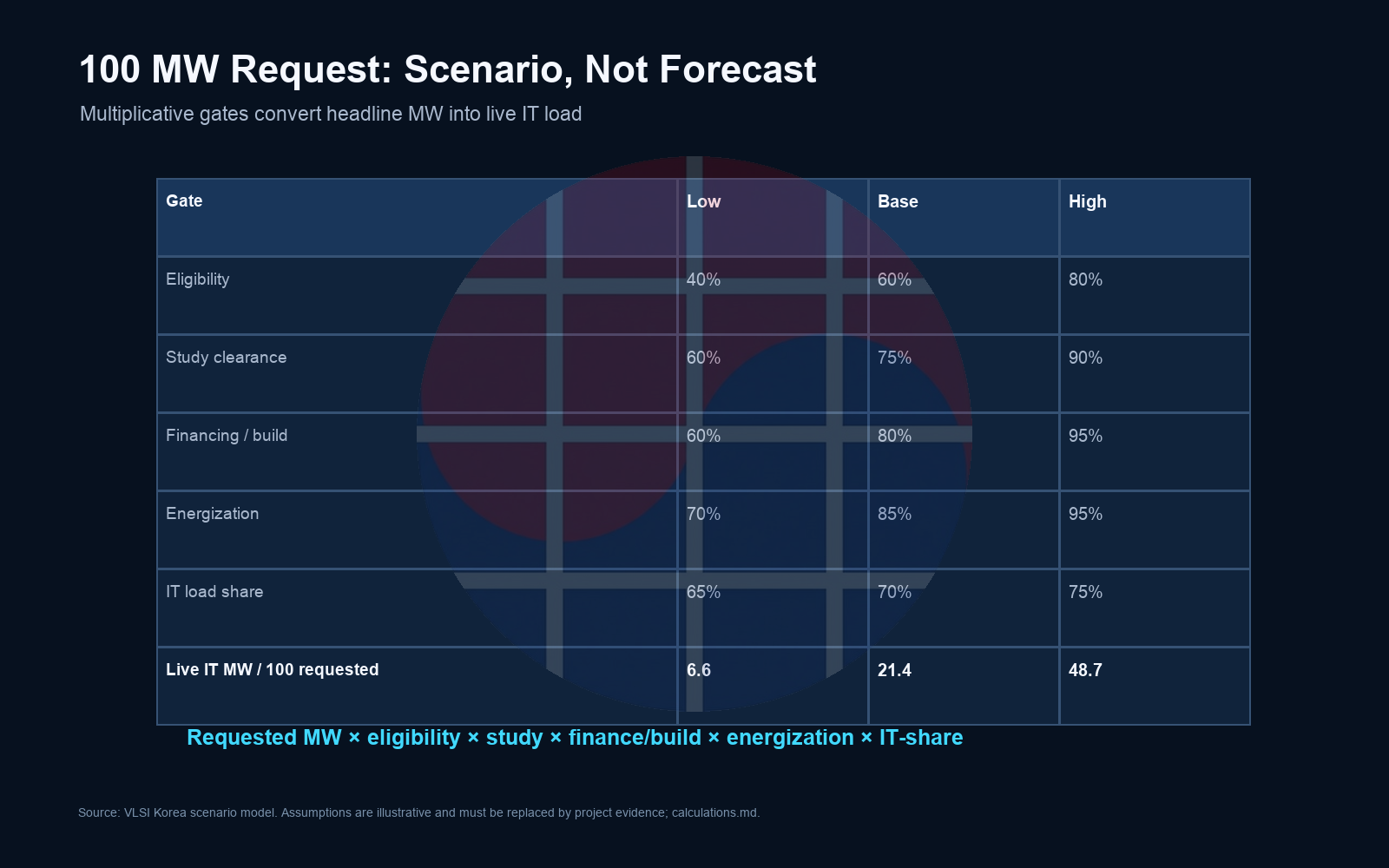
예시 계산은 100 MW request에 low, base, high factor를 곱한다. Low case는 eligibility 40%, study 60%, financing/build 60%, energization 70%, IT share 65%를 가정해 6.6 MW다. Base는 60%, 75%, 80%, 85%, 70%로 21.4 MW다. High는 80%, 90%, 95%, 95%, 75%로 48.7 MW다. 이 범위는 Texas project outcome의 추정치가 아니다. Multiplicative gate가 headline을 얼마나 빠르게 줄일 수 있는지 보여주는 sensitivity tool이다.
Strongest counterargument는 queue가 완벽한 forecast가 아니더라도 방향과 infrastructure scarcity를 충분히 보여준다는 주장이다. 맞다. 438 GW에서 474 GW로 커진 request, 89% data-center share, NERC의 computational-load standards 작업은 power-constrained compute가 구조적 issue임을 지지한다. 하지만 방향이 맞는 것과 shipment timing이 맞는 것은 다르다. Capacity reservation, long-lead procurement, quarterly revenue guide에는 stage별 denominator가 필요하다.
Boundary condition: 본문의 low, base, high case는 설명용 scenario다. 실제 project의 contract, study result, financing, construction progress, IT design이 공개되지 않으면 probability를 관측값처럼 쓰지 않는다.
4. Grid dynamic model과 semiconductor qualification은 같은 문제의 다른 scale다
ERCOT가 dynamic model을 요구하는 이유는 load가 단순한 저항이 아니기 때문이다. Modern data center는 UPS, power conversion, motor load, cooling, protection, control firmware와 workload scheduler가 묶여 있다. Voltage 또는 frequency disturbance가 생길 때 대규모 load가 동시에 감소하거나 복귀하면 bulk power system에 새로운 transient를 만들 수 있다. NERC도 computational load의 electrical behavior가 conventional load보다 distinctive하고 less predictable할 수 있다고 설명한다.
NERC Large Loads Action Plan은 2026년 8월 19일부터 computational-load registry criteria와 foundational standards를 public comment에 올렸다. Proposed CLO-001-1은 interconnection, studies, modeling, CLO-002-1은 operational data와 communications, CLO-003-1은 protection coordination과 disturbance monitoring을 다룬다. 이것은 chip demand forecast가 아니라 system reliability contract다. 그러나 semiconductor team에는 중요한 upstream acceptance condition이다.
Rack과 package 안에서도 구조는 닮았다. Power delivery network는 voltage droop와 transient를 견뎌야 하고, accelerator, HBM, CPU, NIC는 power state와 workload spike를 coordination해야 한다. Grid dynamic model이 site의 aggregate behavior를 검증한다면, package와 board model은 microsecond 이하의 electrical and thermal behavior를 검증한다. 두 model은 scale과 owner가 다르지만, 잘못된 static assumption이 system failure로 이어진다는 점은 같다.
Hard part는 interface ownership이다. Grid event가 발생했을 때 누가 load-shed command, ride-through, restart sequence, telemetry accuracy를 책임지는가. Rack event에서는 누가 power cap, thermal throttle, link retrain, memory error, firmware rollback을 책임지는가. Contract가 모호하면 각 subsystem은 자신의 local test를 통과해도 full system acceptance는 실패할 수 있다.
Failure mode도 연쇄적이다. Project가 eligibility를 통과해도 dynamic model이 cure를 요구할 수 있다. Study를 통과해도 transmission work 또는 permit가 늦을 수 있다. Energization을 받아도 cooling, network, software가 rack acceptance를 늦출 수 있다. Rack이 준비돼도 accelerator, HBM, package yield 또는 firmware가 shipment mix를 바꿀 수 있다. 따라서 “power available”과 “chip revenue visible” 사이에는 최소 한 번의 system acceptance layer가 더 있다.
5. Timing bridge: 어느 날짜가 semiconductor revenue clock을 바꾸나
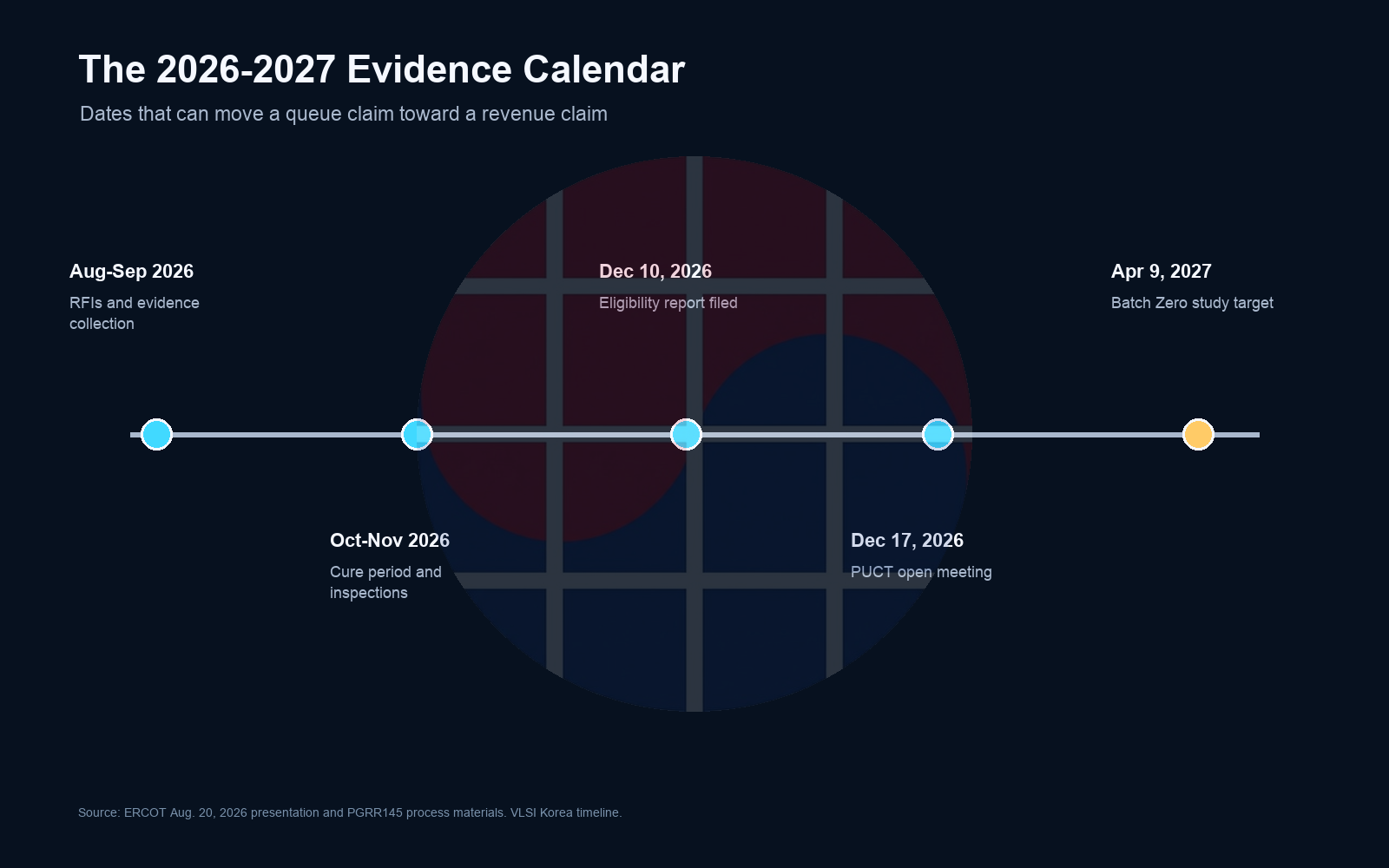
August-September 2026에는 RFI와 evidence collection이 진행된다. 이때의 actionable signal은 request total이 아니라 response completeness, eligibility path, site verification 대상, dynamic-data deficiency다. Project count와 MW를 함께 보고, developer가 같은 site를 여러 route로 제출했는지 확인해야 한다.
October-November에는 additional RFI와 cure가 이어진다. Cure 성공률, inspection 결과, provider confirmation이 verification denominator를 만든다. December 10에는 ERCOT가 Batch Zero Eligibility Verification Report와 Community Impact Review Report를 file할 계획이고, December 17 PUCT open meeting이 다음 public checkpoint다. 이때도 verified classification이 energization 또는 server acceptance와 같지는 않다.
기존 presentation은 Batch Zero study result target을 2027년 4월 9일로 유지하려 했지만, ERCOT는 delay impact를 아직 모른다고 밝혔다. Schedule이 바뀌면 demand timing model도 바뀌어야 한다. 특히 long-lead transformer, substation, transmission upgrade, cooling equipment, generator 또는 backup architecture가 critical path라면 chip delivery가 먼저 준비돼도 site acceptance가 뒤로 밀릴 수 있다.
Capital owner에게 필요한 것은 milestone-to-cash bridge다. Requested MW, verified MW, studied MW, contracted rack MW, energized MW, installed IT MW, accepted system revenue를 분기별로 따로 기록한다. Semiconductor supplier는 purchase order와 non-cancellable commitment를 구분하고, customer acceptance clause와 deployment site의 power date를 연결해야 한다. Public-company guidance를 비교할 때도 order, backlog, shipment, revenue recognition의 정의를 통일해야 한다.
6. Korea Lens: HBM, foundry, OSAT, power와 EDA가 바꿔야 할 decision
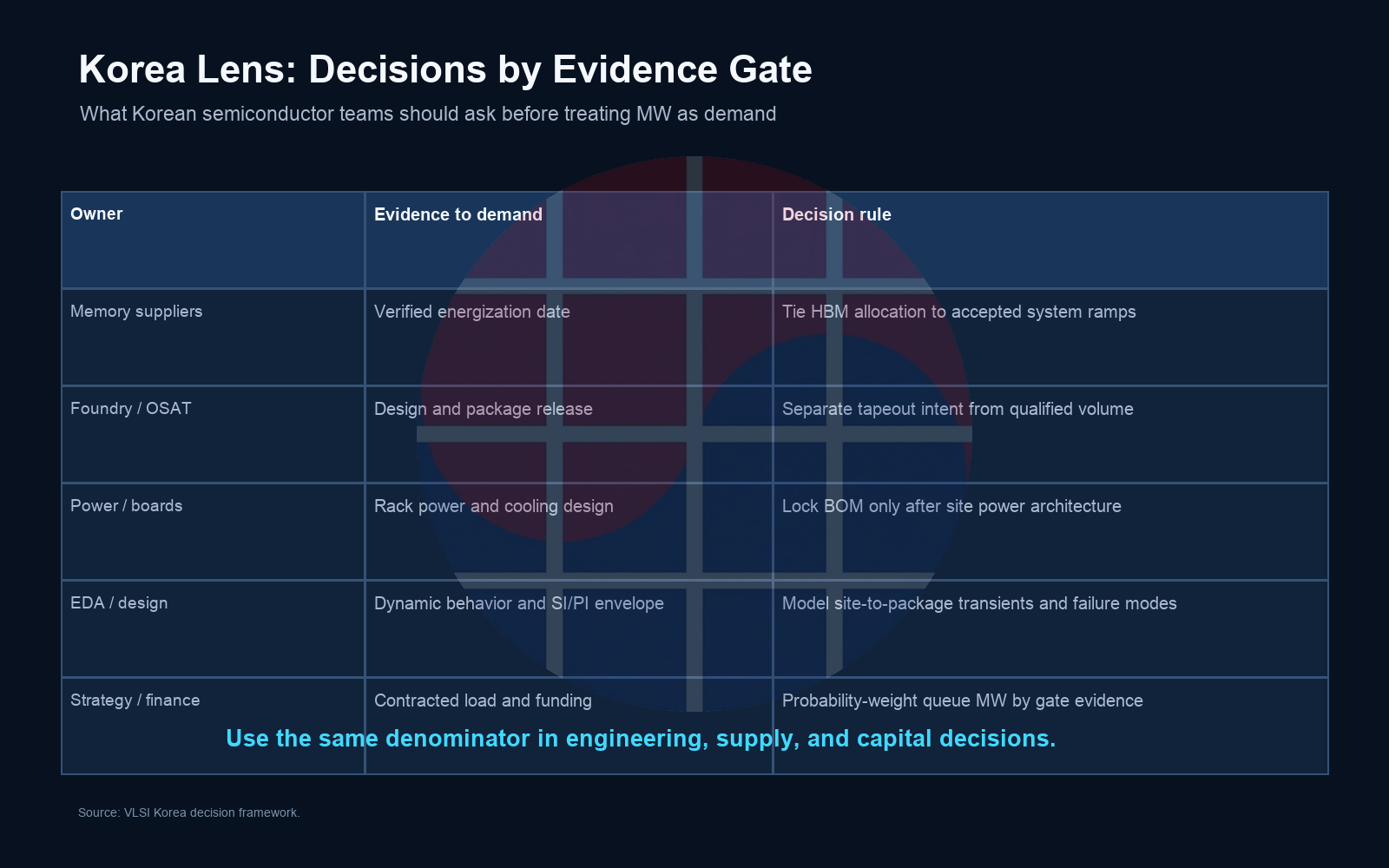
Samsung Electronics와 SK hynix 같은 memory supplier는 large-load queue를 HBM volume으로 직접 환산하기보다 verified energization date와 accepted accelerator platform을 요구해야 한다. Allocation decision은 headline project MW가 아니라 system vendor, HBM generation, package release, customer acceptance, deployment quarter가 연결될 때 강해진다. Site delay가 생기면 inventory가 chip company에서 OEM, ODM, cloud operator 중 어디에 쌓이는지도 확인해야 한다.
Foundry와 OSAT는 tapeout intent와 qualified volume을 분리해야 한다. Data-center project가 grid queue에 있다는 사실은 accelerator design이 tapeout됐거나 package가 qualified됐다는 뜻이 아니다. Foundry wafer start는 mask release, design sign-off, yield learning, advanced-package capacity, substrate, test와 연결된다. OSAT는 package demand를 rack power architecture, cooling method, board release, high-volume test time과 함께 봐야 한다.
Power semiconductor, board, connector와 cooling supplier는 오히려 grid evidence를 더 일찍 활용할 수 있다. Substation과 rack architecture가 확정되면 voltage class, converter topology, redundancy, busbar, connector, thermal solution이 구체화되기 때문이다. 그러나 “site MW”를 그대로 component BOM에 곱하지 말고, phases, utilization, redundancy, spares와 acceptance schedule을 분리해야 한다.
EDA와 design team은 site-to-package transient를 하나의 ownership map으로 봐야 한다. Grid disturbance, UPS transfer, rack power cap, accelerator power state, HBM traffic, network retry가 다른 time scale에서 겹친다. 모든 scale을 하나의 simulator로 통합하라는 뜻이 아니다. Boundary마다 model owner, input validity, correlation point, pass/fail limit와 escalation path를 명시하라는 뜻이다.
Strategy와 finance team은 474 GW에 single haircut을 적용하는 대신 stage별 probability와 evidence date를 써야 한다. Eligibility probability는 documentation과 audit, study probability는 dynamic model과 QSA, build probability는 financing과 contractor, energization probability는 grid work와 approval, semiconductor conversion은 workload and platform acceptance로 업데이트한다. 같은 base case라도 어느 factor가 바뀌었는지 보여야 decision quality가 올라간다.
Thesis breaker: December verification data와 2027 study result가 높은 conversion을 보여주고, independent project evidence가 power date와 server acceptance를 반복적으로 맞춘다면 이 글의 보수적 weighting은 지나치게 낮다. 반대로 eligibility, QSA, financing, energization 중 하나라도 크게 지연되면 474 GW headline은 semiconductor timing에 거의 쓸 수 없다.
Practitioner checklist: 1) MW가 requested, verified, studied, energized 중 무엇인지 적었는가. 2) 같은 project의 provider, developer, customer evidence를 구분했는가. 3) Dynamic model과 cure status를 확인했는가. 4) Financing, contractor, site control, long-lead equipment를 확인했는가. 5) Energization date와 rack acceptance date를 분리했는가. 6) HBM, logic, package, board BOM을 platform-specific하게 연결했는가. 7) Scenario factor를 관측값처럼 표현하지 않았는가.
2026-09-18: NERC computational-load registry와 proposed standards comment period의 결과를 본다. 2026-12-10: ERCOT eligibility verification report에서 project와 MW denominator가 얼마나 줄었는지 본다. 2026-12-17: PUCT open meeting에서 classification, community impact, energization condition을 확인한다. 2027-04-09: Batch Zero study target과 실제 schedule을 비교한다. 2027-06-30: verified project의 installed IT MW, accepted server ramp와 semiconductor shipment timing을 대조한다.
결론은 간단하다. 474 GW는 AI chip supercycle의 unit count가 아니라 evidence backlog다. Batch Zero의 진짜 가치는 large-load enthusiasm을 막는 데 있지 않다. Request, eligibility, study, energization, acceptance를 구분해 semiconductor demand의 clock과 denominator를 더 정확하게 만드는 데 있다.
Sources and method
- ERCOT, PUCT Approves Batch Zero Process, June 18, 2026.
- ERCOT Large Load Integration, current process and submission materials, opened August 30, 2026.
- ERCOT Market Notice M-A080326-01, August 3, 2026.
- ERCOT Batch Zero Verification and Audit presentation, August 20, 2026.
- ERCOT Market Notice M-A080326-02, August 21, 2026.
- Office of the Texas Governor, Comprehensive Data Center Audit directive, August 3, 2026.
- NERC Large Loads Action Plan, current actions and proposed computational-load standards, opened August 30, 2026.
- VLSI Korea Weekly Silicon, August 26, 2026, discovery trigger only and not counted as a primary source.
AI assistance note: AI tools supported public-source discovery, arithmetic verification, bilingual consistency checks, visual drafting, and copy editing. VLSI Korea editorial review remains responsible for the thesis, source interpretation, uncertainty labels, and publication decision. The low, base, and high calculations are transparent scenarios, not forecasts.
본 글은 정보 제공만을 목적으로 하며, 특정 증권의 매수 또는 매도를 권유하는 것이 아닙니다. 본 글에 포함된 수치와 사실은 기업 공시, 언론 보도, 시장 조사 등 공개적으로 이용 가능한 자료를 바탕으로 작성되었으며, 해당 자료 또는 작성 과정에서 오류가 발생할 수 있습니다. 필자는 언급된 기업의 주식을 보유하고 있을 수 있습니다. 모든 투자 결정 및 그에 따른 결과는 독자의 책임입니다.
관련 글