VLSI Korea
Tencent Zixiao C100·C200: cloud instance는 보이지만 chip은 보이지 않는 전략
Zixiao C100·C200은 cloud SKU로 보이지만 chip은 불투명합니다. Tencent의 three-chip portfolio와 opacity의 비용을 분석합니다.


이 글은 cloud AI accelerator의 세대별 architecture와 system economics를 비교해 구매·투자·공급망 판단을 내리려는 독자를 위한 글이다. 읽고 나면 peak 수치와 실제 model-level TCO를 분리하고, 다음 세대에서 검증할 지표를 선택할 수 있다.
자료 기준일: 2026-08-02
TL;DR
Tencent Zixiao는 Hanguang 800과 정반대 방식으로 보인다. Hanguang은 launch 때 architecture와 benchmark를 크게 공개한 뒤 후속 세대가 불투명하다. Zixiao는 C100과 C200이라는 두 세대가 Tencent Cloud PTX instance와 billing catalog에 실제 존재하지만 chip-level process, die, memory bandwidth, interconnect와 architecture 공개가 매우 제한적이다.
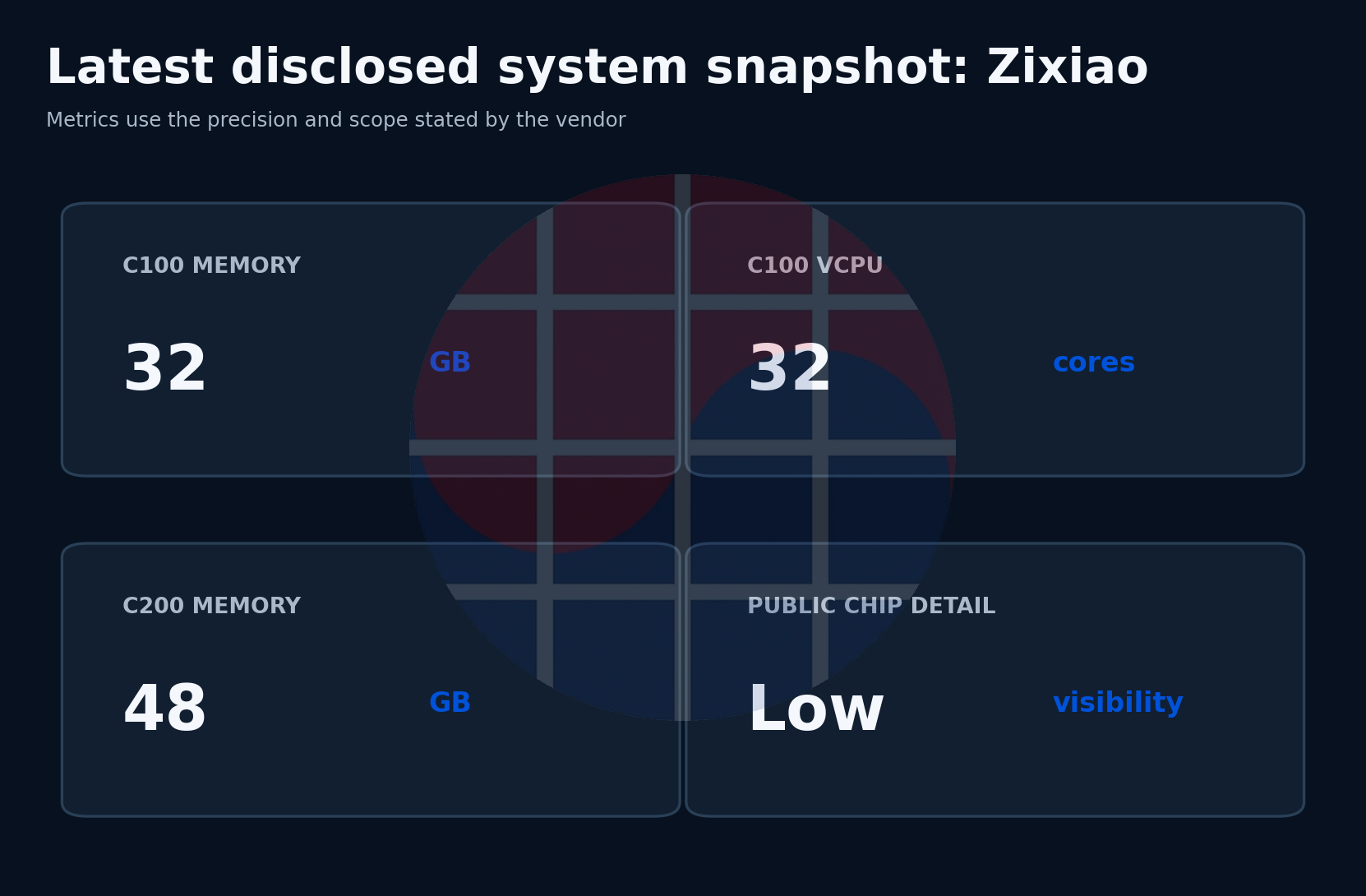
공식적으로 확인되는 1세대 C100은 PTX1 instance에서 card당 FP16 120 TFLOPS와 16 GB memory를 제공하고, 최대 8 card, AMD Milan host와 100 Gbps network로 구성된다. 2022년 computer vision, OCR, speech recognition inference용으로 출시됐다. 후속 C200은 PTX2에서 1·2·4·8 card 구성이 판매 단위로 확인되지만, 동일 수준의 official technical spec이 공개되지 않았다.
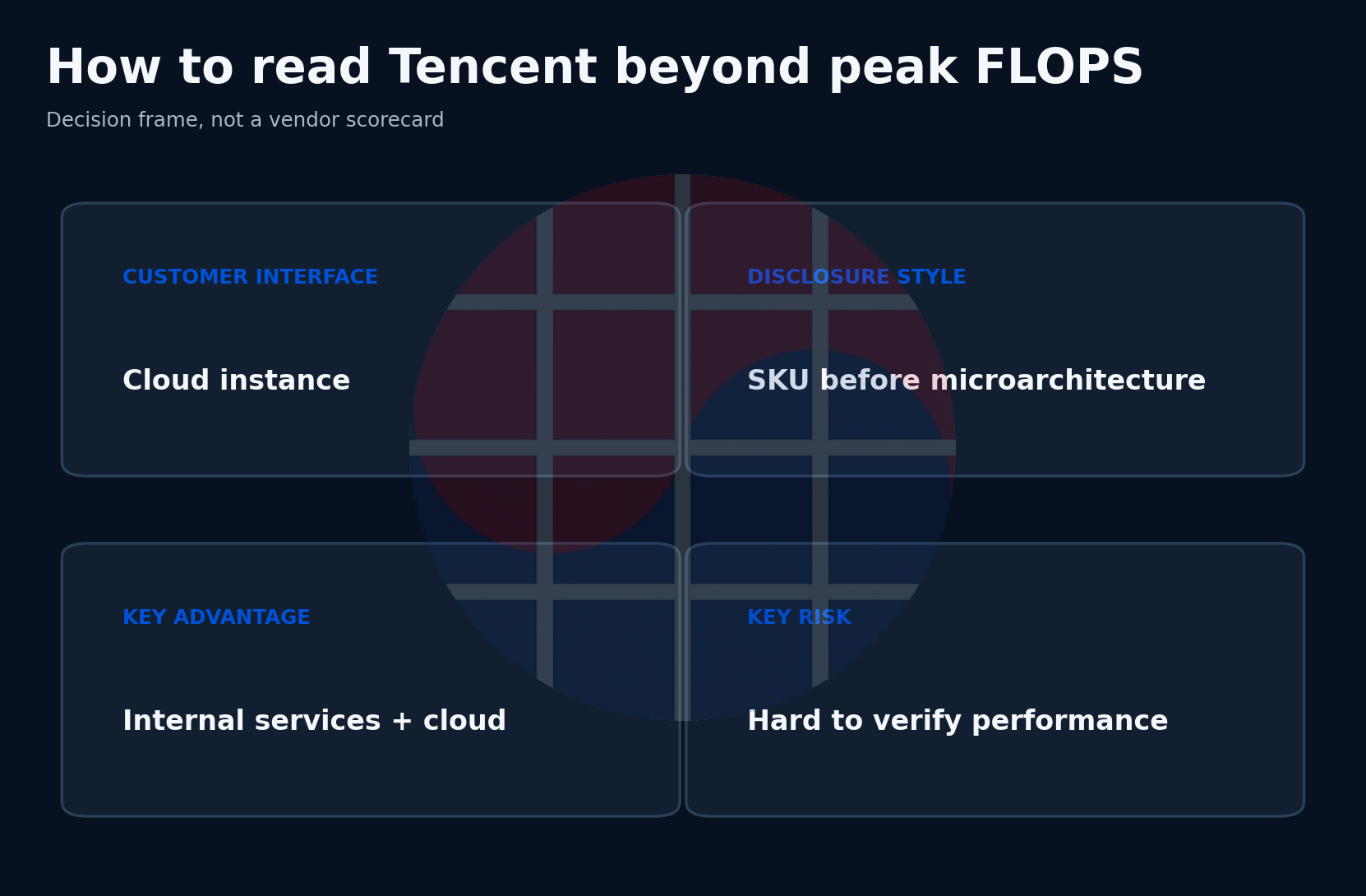
Zixiao를 평가할 때 중국의 어떤 GPU와 동급이라는 비공식 spec 비교는 피해야 한다. 더 정확한 결론은 Tencent가 inference, video transcoding, networking을 각각 Zixiao, Canghai, Xuanling으로 분리한 domain-specific silicon portfolio를 만들었고, cloud instance abstraction을 통해 외부에 판매했다는 것이다. 강점은 WeChat, advertising, video와 cloud workload를 통한 utilization이다. 약점은 transparency가 낮아 외부 고객이 performance portability, lifecycle과 independent benchmarking을 판단하기 어렵다는 점이다.
Generation map
| Generation | Cloud product | Public compute and memory | Primary workload | Evidence level |
|---|---|---|---|---|
| Zixiao C100 | PTX1 | 120 FP16 TFLOPS and 16 GB per card | CV, OCR and NLP inference | Official instance specification |
| Zixiao C200 | PTX2 | Not sufficiently disclosed | AI inference and cloud acceleration | Official product and billing presence |
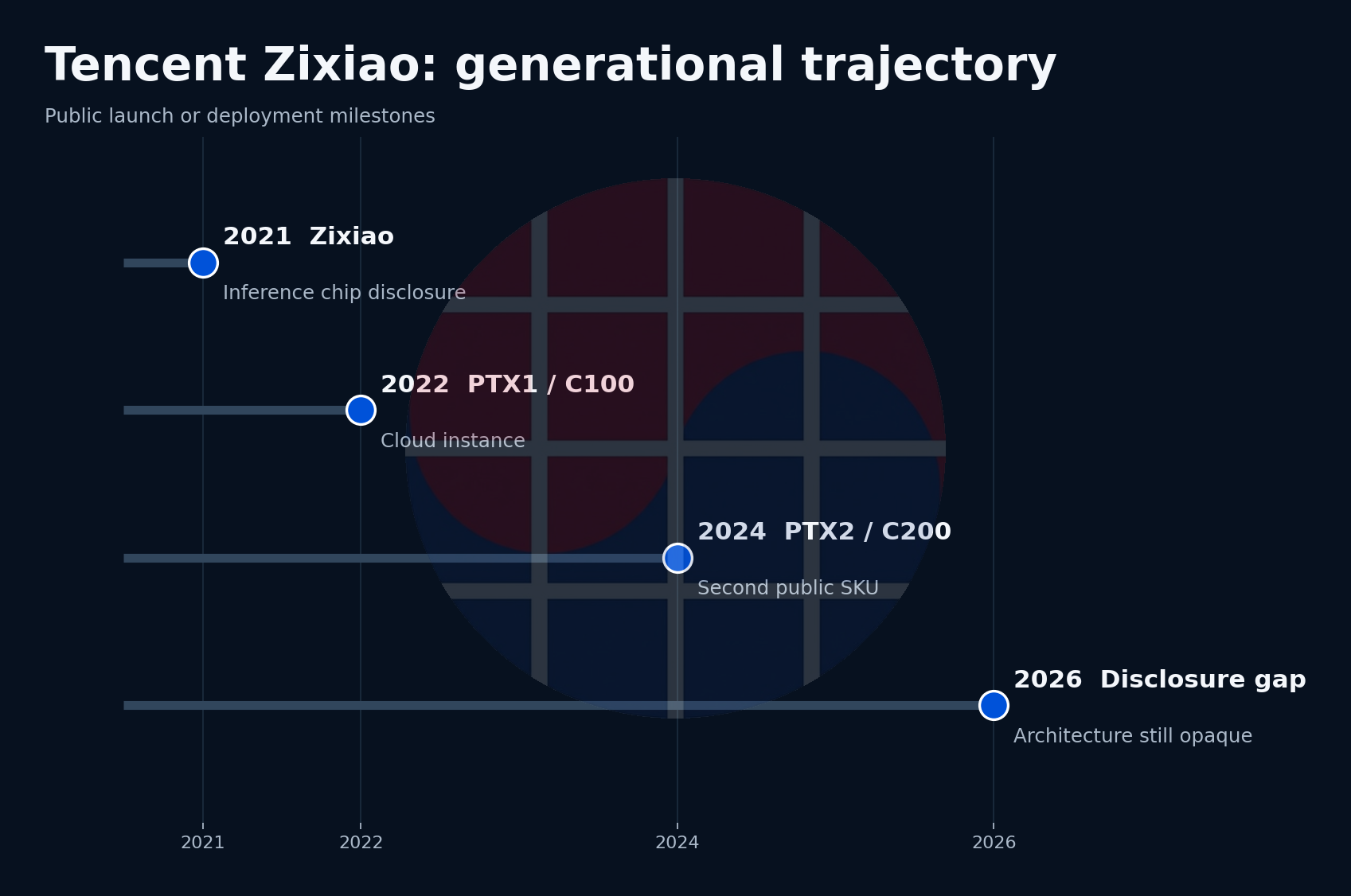
PTX2가 C200을 사용하는 것은 Tencent Cloud 공식 상품·billing 문서에서 확인된다. 하지만 memory capacity, bandwidth, process와 link spec을 제3자 글에서 가져와 채우지 않았다. product 존재와 architecture transparency는 서로 다른 사실이다.
Tencent의 three-chip strategy
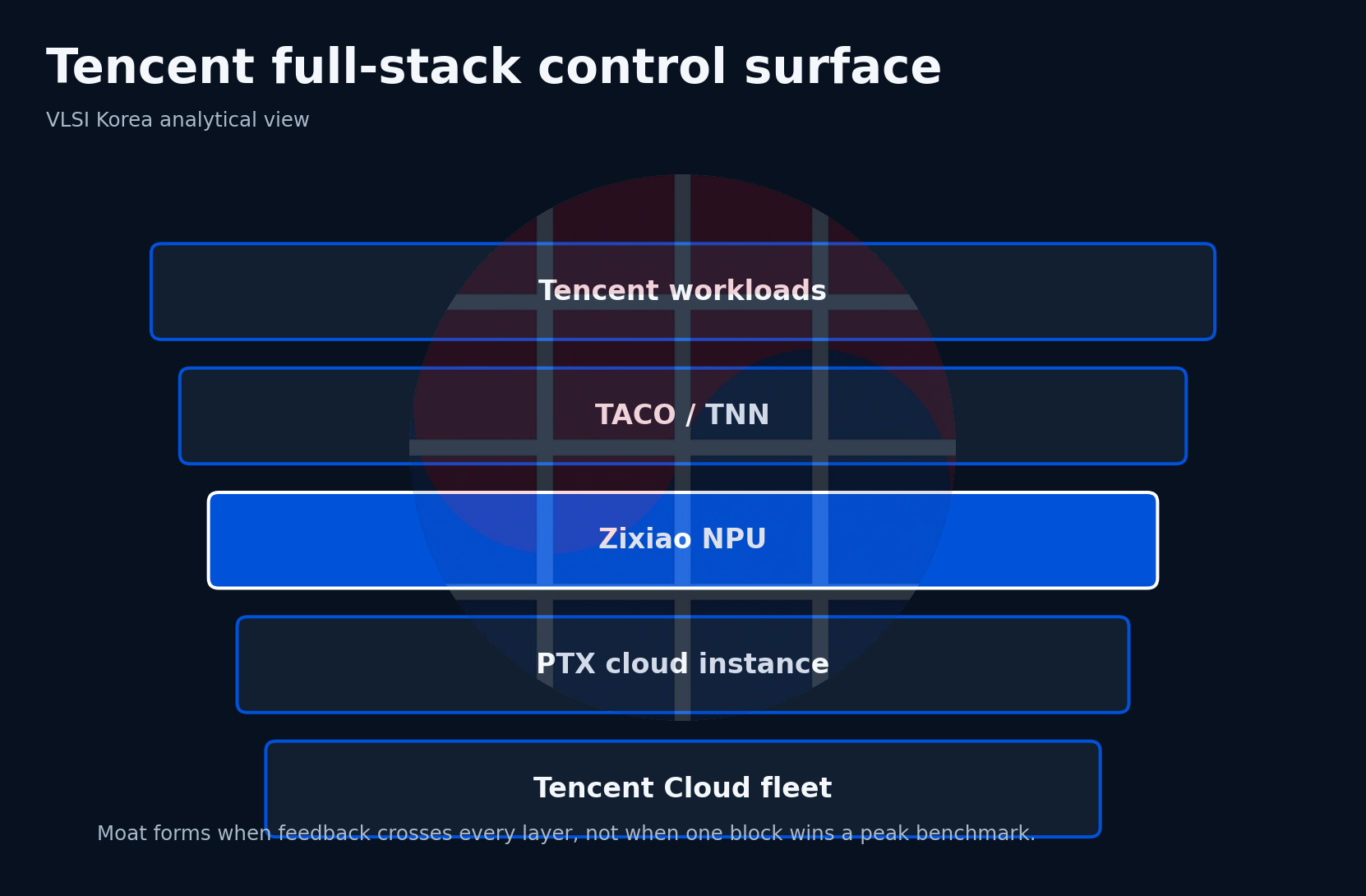
Tencent는 2021년부터 자체 chip을 세 domain으로 나눴다. Zixiao는 AI inference, Canghai는 video transcoding, Xuanling은 network interface와 cloud infrastructure를 맡는다. Tencent의 2021 ESG report에도 이 portfolio가 자체 개발 chip strategy로 제시됐다.
이 분리는 합리적이다. AI inference는 matrix·vector와 model memory, video는 codec pipeline과 pixel processing, network는 packet·virtualization과 data movement가 지배한다. 하나의 범용 SoC가 세 영역을 모두 처리하면 flexibility는 높지만 transistor와 power 효율이 떨어진다. Tencent는 가장 많은 내부 traffic이 있는 세 workload를 각각 고정해 total fleet cost를 낮추려 한다.
세 칩은 독립적이면서도 system에서 연결된다. video stream을 Canghai가 decode·encode하고 Zixiao가 content understanding이나 recommendation inference를 수행하며, Xuanling이 host networking과 data transfer를 offload할 수 있다. 실제 service latency는 AI compute 하나보다 이 pipeline 전체의 memory copy와 queueing에 좌우된다.
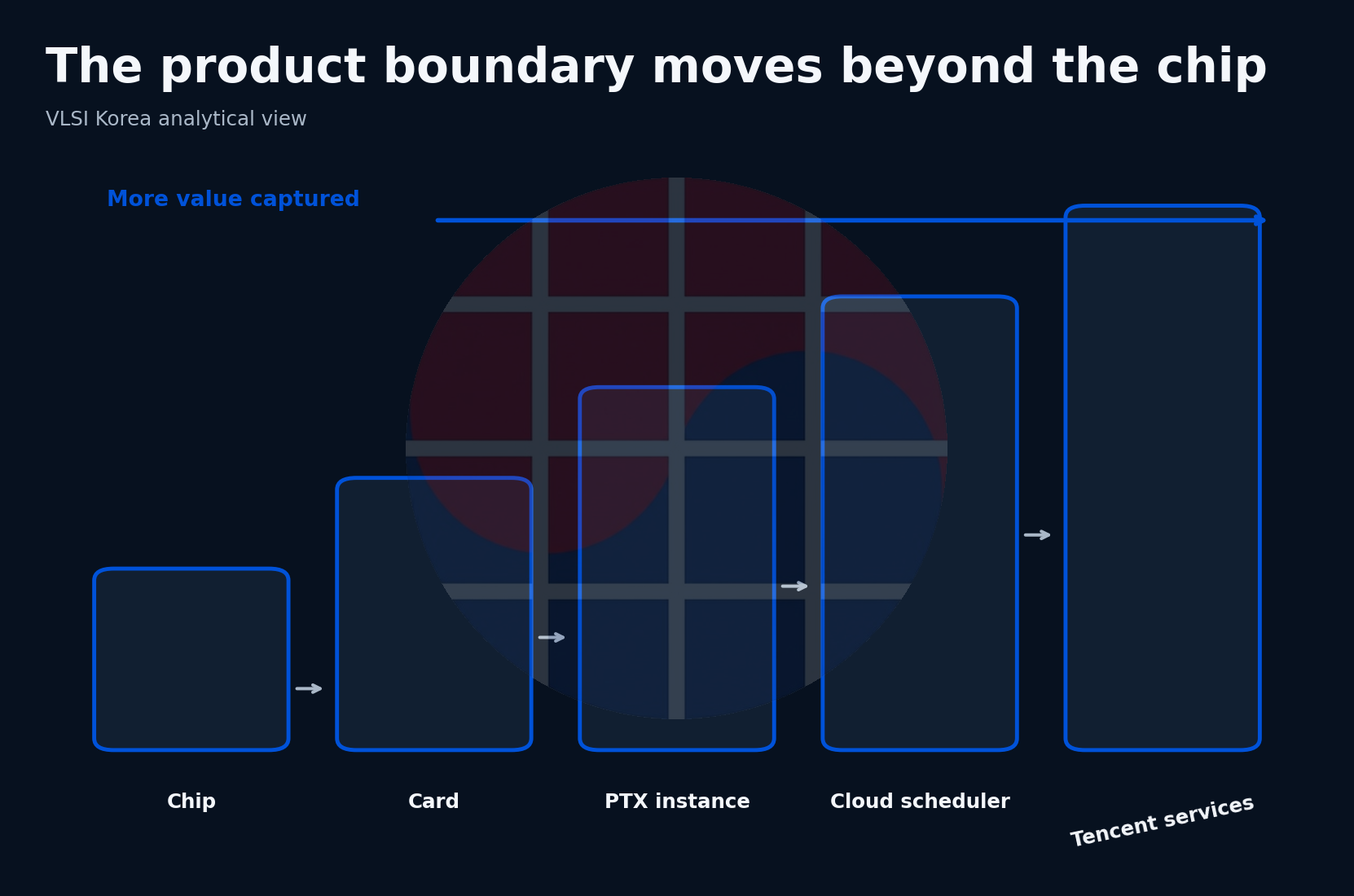
이 관점에서 Zixiao의 경쟁 제품은 GPU 한 장뿐 아니라 CPU + GPU + SmartNIC + software system이다. Tencent가 내부 service를 함께 바꾸면 chip당 peak가 낮아도 end-to-end copy와 host overhead를 줄여 비용을 회수할 수 있다.
Zixiao C100: cloud에 드러난 첫 세대
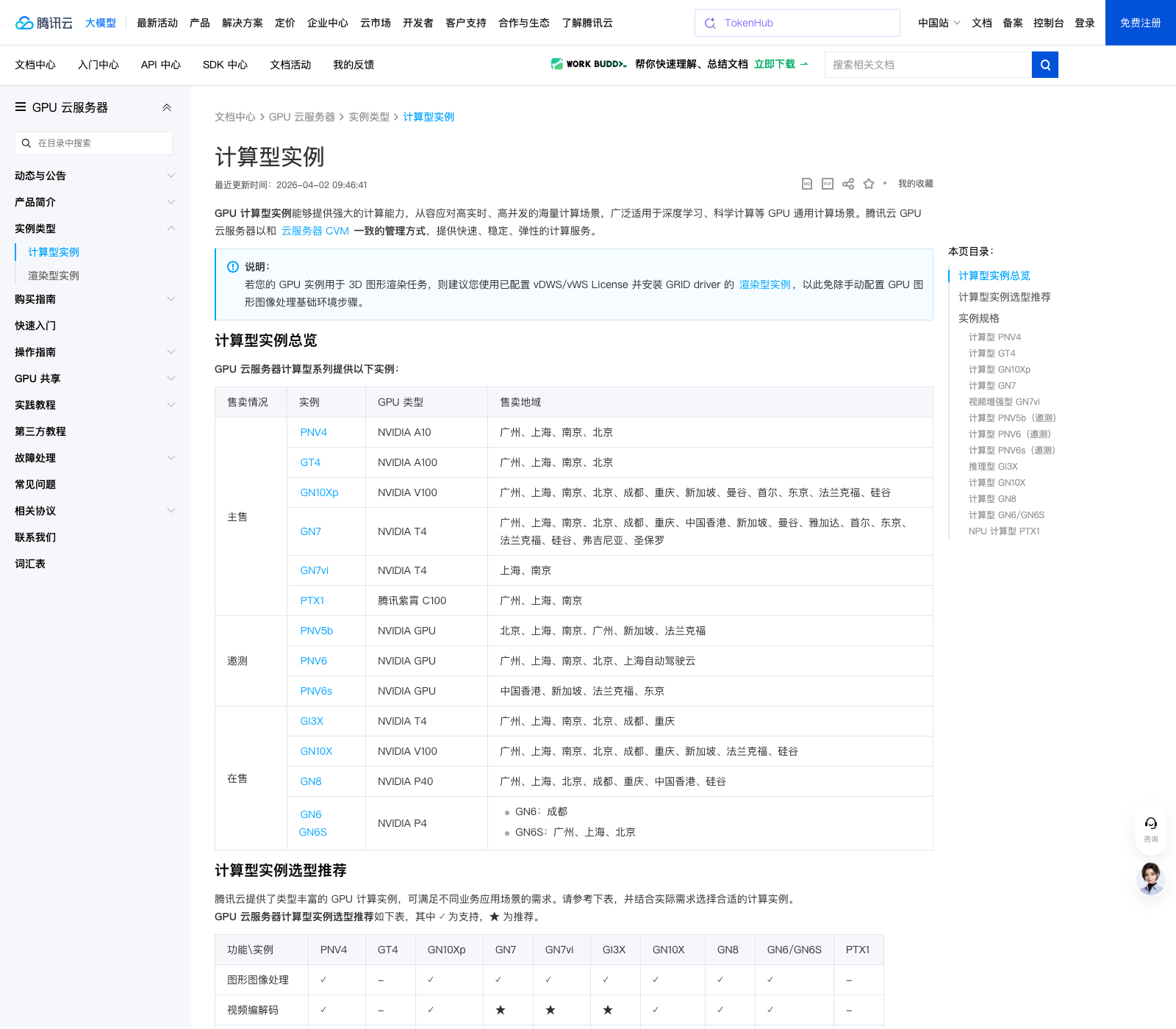
Tencent Cloud 문서의 PTX1은 Zixiao C100을 사용한다. card당 FP16 120 TFLOPS, 16 GB memory이며 1·2·4·8 card instance가 있다. host는 AMD EPYC Milan 계열이고 instance network는 최대 100 Gbps로 기재된다. 주요 적용은 computer vision, OCR와 NLP inference다.
120 TFLOPS라는 수치는 supported precision 중 FP16 peak다. 실제 inference는 INT8, sparsity, batch와 operator fusion에 따라 크게 달라진다. 공식 문서가 INT8 throughput, memory bandwidth와 card-to-card link를 충분히 공개하지 않으므로 120 TFLOPS ÷ model FLOPs로 request throughput을 계산하면 안 된다.
16 GB memory는 2022년 inference card로 이해할 수 있지만 modern LLM에는 작다. FP16 7B model의 weight만 약 14 GB이고 runtime, KV cache와 temporary buffer가 추가된다. quantization과 tensor parallel을 쓰더라도 card 간 communication이 증가한다. C100의 original target이 LLM보다 CV·OCR·NLP inference였다는 점이 spec balance와 일치한다.
최대 8 card server는 device density를 제공하지만 scale-up fabric이 공개되지 않았다. PCIe만 사용하는지 dedicated link가 있는지, peer-to-peer bandwidth와 collective library가 어떤지는 multi-card model throughput에 결정적이다. 100 Gbps instance network도 external scale-out의 상한일 뿐 card 간 local fabric을 설명하지 않는다.
Software와 cloud abstraction
Zixiao adoption의 핵심은 Tencent Cloud accelerator software다. compiler가 framework graph를 받아 supported operator를 Zixiao에 배치하고 runtime이 memory와 execution을 관리해야 한다. Tencent 내부 workload는 model owner와 hardware owner가 협업할 수 있어 unsupported operator를 다시 작성하거나 graph를 바꾸기 쉽다.
외부 고객에게는 framework compatibility, model conversion, quantization calibration, profiling과 error diagnostics가 더 중요하다. CUDA source를 가진 고객이 Zixiao에서 동일 kernel을 바로 실행할 수 없다면 porting cost가 hardware price advantage를 지울 수 있다. cloud service는 container image와 API로 이 차이를 숨길 수 있지만 custom model이 많을수록 compiler coverage가 드러난다.
세대 교체에서 hardware speedup보다 더 중요한 것은 old model과 container가 recompilation 또는 small change만으로 새 instance로 이동하는가다. 그러나 C100과 C200 사이의 compiler·runtime compatibility policy는 공개 자료만으로 충분히 검증되지 않는다.
Zixiao C200: SKU는 확인되지만 architecture는 확인되지 않는다
Tencent Cloud의 PTX2 billing 문서는 C200 기반 1·2·4·8 card 구성을 명시한다. 이는 단순 research prototype보다 강한 commercial evidence다. 고객이 구매 가능한 SKU, billing unit과 operation system support가 있다는 뜻이다.
그러나 C100에 공개한 수준의 FP16 compute와 memory조차 같은 문서에서 확인하기 어렵다. process, capacity, bandwidth, supported low precision과 interconnect가 없으면 C200의 generational improvement를 정량화할 수 없다. 이름의 100에서 200으로 변화했다고 2배 성능을 가정해서도 안 된다.
architecture opacity는 두 가지 효과가 있다. Tencent는 silicon sourcing과 design change를 service contract 아래 유연하게 관리할 수 있다. 반면 고객은 performance regression, capacity reservation, model fit와 lifecycle을 Tencent benchmark에 의존한다. dedicated hardware를 직접 다루려는 대형 고객에게는 이 불확실성이 adoption barrier다.
C200이 진짜 generational step인지 판단하려면 같은 model, batch, latency SLO에서 C100 대비 throughput/W, memory fit, multi-card scaling과 supported operator를 봐야 한다. 제품 listing만으로는 이 질문에 답할 수 없다.
왜 inference-first인가
Tencent의 internal service는 WeChat feed, advertising ranking, content moderation, speech, OCR, game와 video recommendation처럼 request volume이 크다. inference ASIC은 training chip보다 workload가 안정적이고 fleet utilization이 높아 investment payback을 예측하기 쉽다.
training은 framework와 model architecture가 빠르게 변하고 collective network, HBM capacity와 numerical flexibility가 필요하다. 최신 GPU를 구매해 research agility를 유지하고 stable production graph만 Zixiao로 옮기는 hybrid strategy가 합리적이다. Zixiao가 training을 못 한다는 단정이 아니라, 공식 product positioning이 inference economics에 더 가깝다는 뜻이다.
inference에서도 영역을 나눠야 한다. CV와 recommendation은 높은 batch와 fixed shape로 ASIC utilization을 높이기 쉽다. LLM serving은 variable sequence, prefill·decode 분리, KV cache, speculative decoding과 MoE 때문에 dataflow가 급변한다. C200이 modern generative AI를 겨냥했다면 larger memory, low precision, attention kernel과 fast link에 대한 공식 evidence가 필요하다.
Tencent의 system advantage
Tencent의 가장 큰 advantage는 user scale이다. internal traffic이 silicon의 baseline demand를 제공하므로 external cloud customer가 적어도 fleet를 채울 수 있다. model team은 hardware constraint에 맞춰 quantization, batching과 graph를 바꿀 수 있다.
두 번째는 video·network와의 co-design이다. AI service가 data ingest, decode, preprocessing, inference와 egress를 모두 포함할 때 Canghai와 Xuanling을 결합하면 CPU cycle과 memory copy를 줄일 수 있다. 이 절감은 Zixiao의 TOPS에는 나타나지 않는다.
세 번째는 cloud operation이다. instance provisioning, billing, security, container, monitoring과 replacement가 product에 포함된다. custom chip vendor가 card만 판매하는 것보다 고객 adoption surface가 넓다.
반대로 closed system은 external feedback과 developer ecosystem이 약하다. 공개 kernel language, profiler, compiler issue와 independent benchmark가 부족하면 performance claim을 검증하기 어렵다. internal workload success가 external generality를 보장하지 않는다.
Technical reality: 공개 부족도 하나의 기술 변수다
accelerator 구매자는 model이 memory에 들어가는지, 어떤 precision에서 accuracy가 유지되는지, unsupported operator가 CPU로 fallback하는지, multi-card scaling이 어떤지 알아야 한다. spec을 공개하지 않으면 모든 질문이 paid proof of concept으로 이동한다.
이 비용은 small customer에게 특히 크다. large Tencent account는 support team과 workload tuning을 받을 수 있지만, 일반 developer는 documentation과 community example이 부족하면 GPU를 선택한다. cloud provider가 chip price를 낮춰도 engineering time이 늘면 total cost가 높아진다.
따라서 transparency는 marketing 문제가 아니라 ecosystem performance의 일부다. Google TPU와 AWS Neuron은 문서, profiler, kernel interface와 generation spec을 공개해 고객이 사전에 model fit를 계산할 수 있다. Tencent가 C200 이후 external share를 늘리려면 이 gap을 줄여야 한다.
Watch points
- C200의 official compute, memory capacity·bandwidth, supported precision과 process가 공개되는가.
- PTX2에서 C100 대비 동일 model의 latency, throughput/W와 card scaling이 제시되는가.
- LLM attention, KV cache, quantization과 vLLM 같은 serving stack 지원이 확인되는가.
- C100 model과 container가 C200으로 얼마나 쉽게 이동하는가.
- Tencent internal service 외 external customer case와 sustained utilization이 공개되는가.
Contrarian read: spec을 숨기는 cloud chip이 더 오래 살아남을 수 있다
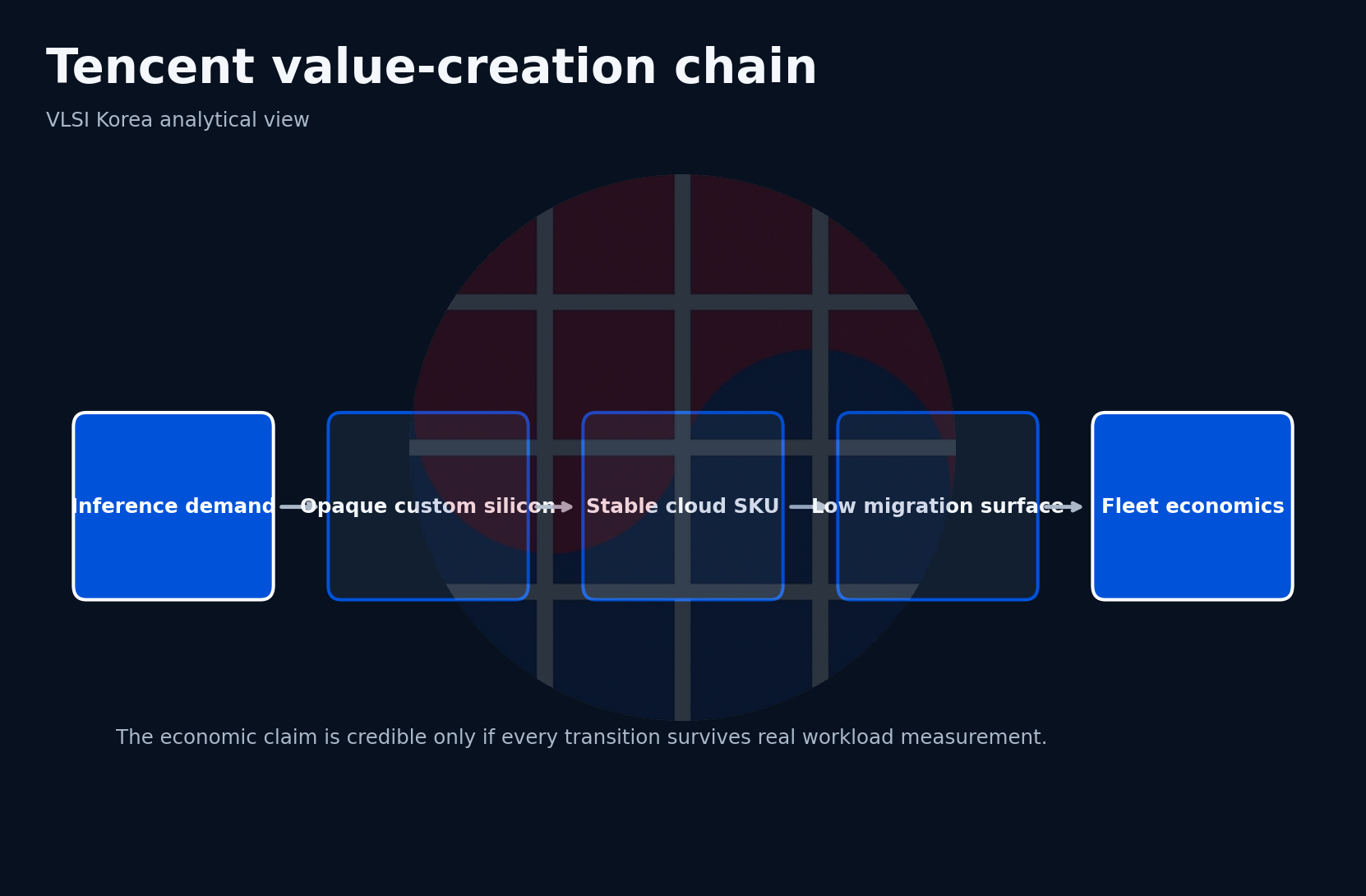
public accelerator는 customer가 architecture를 직접 최적화하므로 spec과 roadmap 약속이 필요하다. cloud instance는 provider가 hardware를 바꾸고 동일 API와 SLO를 유지할 수 있다. Tencent가 Zixiao를 invisible infrastructure로 만들면 model 변화에 따라 card와 compiler를 조용히 교체하고 price-performance만 개선할 수 있다.
그러나 이 전략은 API가 충분히 high-level이고 output이 fungible할 때만 작동한다. 고객이 custom kernel, deterministic latency나 multi-card topology를 요구하면 hardware opacity가 제약으로 돌아온다. Zixiao의 성공은 얼마나 많은 workload를 managed service 아래 추상화할 수 있는지에 달렸다.
Korean lens
한국 통신사와 platform 회사가 custom NPU를 만들 때 Tencent의 three-chip 전략은 좋은 참고다. AI core만 최적화해도 data ingest, network와 media pipeline이 병목이면 end-to-end 비용은 내려가지 않는다. SmartNIC, video, memory와 accelerator를 workload pipeline 단위로 설계해야 한다.
동시에 국내 생태계는 opacity를 그대로 따라 해서는 안 된다. 시장 volume이 중국 hyperscaler보다 작기 때문에 external developer와 customer를 더 일찍 확보해야 한다. memory, precision, compiler coverage와 benchmark methodology를 투명하게 공개하는 편이 proof-of-concept 비용을 낮춘다.
Sources
- Tencent Cloud PTX1 and Zixiao C100 specification
- Tencent Cloud PTX1 product update
- Tencent Cloud PTX2 and Zixiao C200 billing
- Tencent 2021 ESG report
Disclosure
본 글은 정보 제공만을 목적으로 하며, 특정 증권의 매수 또는 매도를 권유하는 것이 아닙니다. 본 글에 포함된 수치와 사실은 기업 공시, 언론 보도, 시장 조사 등 공개적으로 이용 가능한 자료를 바탕으로 작성되었으며, 해당 자료 또는 작성 과정에서 오류가 발생할 수 있습니다. 필자는 언급된 기업의 주식을 보유하고 있을 수 있습니다. 모든 투자 결정 및 그에 따른 결과는 독자의 책임입니다.