VLSI Korea
Samsung Posts Record $80B Quarterly Profit as TSMC Revenue Jumps 51%; Rubin Keeps 12-High HBM4
Daily Silicon, Sunday, October 11, 2026. Samsung Electronics posted a quarterly operating profit of ₩107.4 trillion — the first Korean company ever to break ₩100 trillion in a quarter. TSMC's Q3 revenue hit NT$1.49 trillion (+51% YoY), proving AI logic demand is intact, and NVIDIA's next-gen Rubin platform is expected to keep 12-


Daily Silicon, Sunday, October 11, 2026. Samsung Electronics posted a quarterly operating profit of ₩107.4 trillion — the first Korean company ever to break ₩100 trillion in a quarter. TSMC's Q3 revenue hit NT$1.49 trillion (+51% YoY), proving AI logic demand is intact, and NVIDIA's next-gen Rubin platform is expected to keep 12-high HBM4. Here's the power struggle at the peak of the memory supercycle.
Executive Summary
- Samsung Q3 operating profit ₩107.4T, an all-time high: revenue ₩195T (+126.6% YoY), operating profit ₩107.4T (+782.5% YoY), 55.1% margin. Fourth straight record quarter — but the stock fell 2.42% on sell-the-news.
- TSMC Q3 revenue NT$1.49T (+51% YoY): beat consensus. September revenue NT$511.86B (+54.6% YoY), near the all-time monthly high. AI logic demand holds firm.
- NVIDIA Rubin to keep 12-high HBM4: Counterpoint Research rebuts the 8-high cost-cutting thesis. Samsung and SK hynix benefit.
- Samsung leverages HBM4 to court AMD foundry business: Lisa Su visited Seoul on October 7. Helios racks need 31TB of HBM4 per system — the bargaining chip. SF2P 2nm talks on the table.
- ASML raises component prices 10%: Samsung and SK hynix accepted, effective January 2026. The equipment supercycle's bill comes due.
- SK hynix struggles with hybrid bonding: Samsung already shipped hybrid-bonded HBM samples. Micron holds 180+ patents for the 20-high era.
- Kospi -5.39% for the week: sell-the-news meets a counter-rally in equipment and battery names. KC Tech +34.78% for the week; LG Energy Solution earnings surprise.
- Broadcom's $42B chip loan to Anthropic: vendor financing is becoming the standard grammar of AI infrastructure.
01 · Samsung's ₩107.4T quarterly profit: first Korean company to break ₩100T
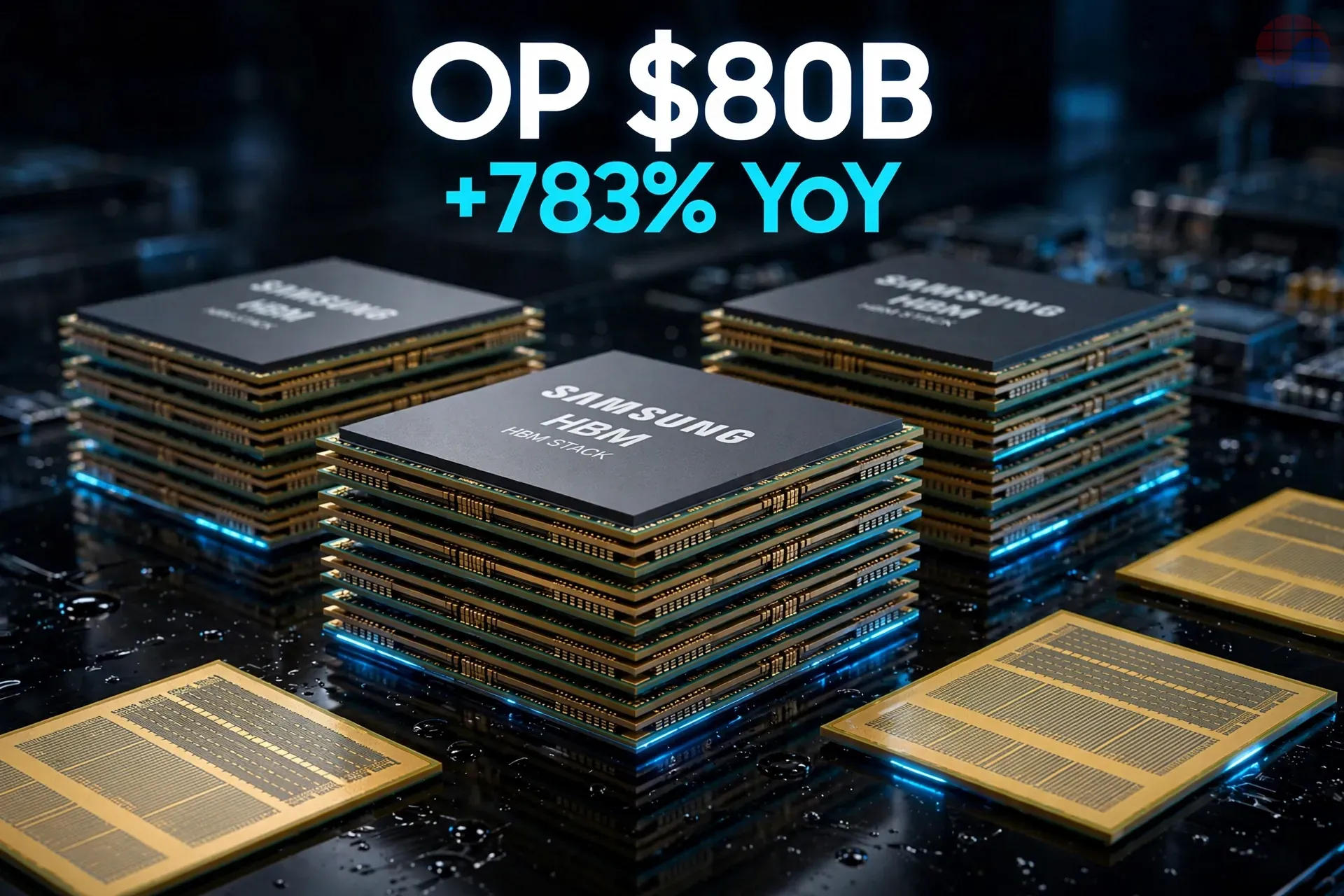
TL;DR: Samsung's preliminary Q3 results, announced October 8: revenue ₩195 trillion (+126.6% YoY), operating profit ₩107.4 trillion (+782.5% YoY) — a quarterly record. The 55.1% operating margin tops global big tech, and it's the fourth consecutive record quarter.
Against consensus (revenue ₩200.3T, operating profit ₩105.4T), revenue missed but operating profit beat by about ₩2T. H1 operating profit of ₩146.6T plus Q3's ₩107.4T brings the nine-month total to ₩254T — full-year operating profit is now projected at ₩350–375T, with some forecasts seeing Q4 above ₩100T as well.
The divisional split is stark. The DS (semiconductor) division's operating margin is estimated at 75–80%, while the DX (devices) division likely posted an operating loss of about ₩2T under cost pressure from rising memory prices. Samsung is more of a memory company than ever.
The market already knew. The stock closed down 2.42% at ₩262,000 on announcement day — sell-the-news flows, large semiconductor ETF rebalancing, and the end of a buyback overlapped. Full results land October 29.
02 · TSMC Q3 revenue NT$1.49T: AI logic demand isn't cooling
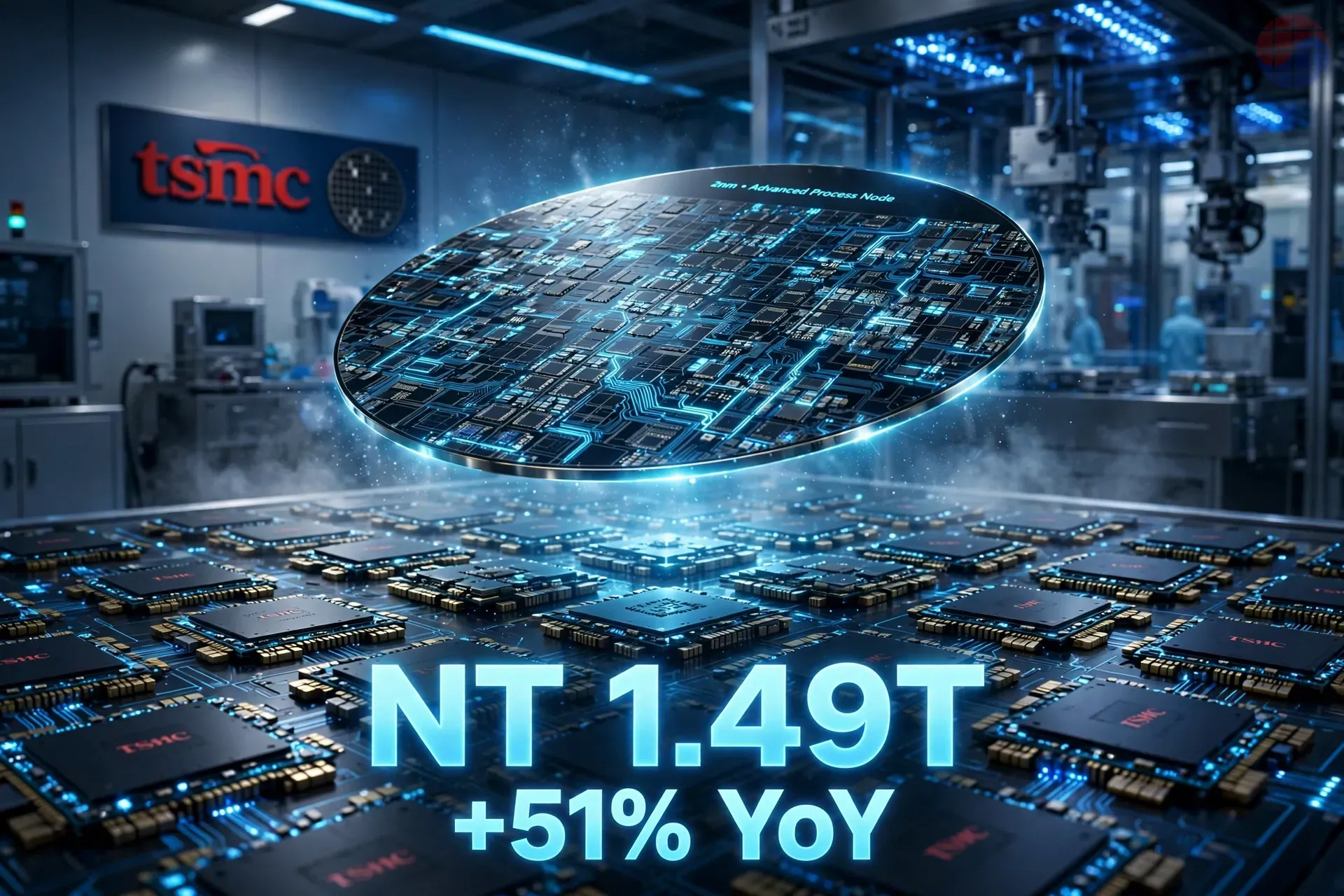
TL;DR: TSMC's Q3 revenue, reported October 8: NT$1.49 trillion (~$48.4B, +51% YoY), beating the NT$1.46T consensus. September revenue of NT$511.86B (+54.6% YoY) sits just below August's all-time monthly high of NT$514.8B.
While memory makers warn supply is booked out into 2027, TSMC's numbers show where the AI buildout is genuinely solid: the logic chips doing the computing, not the memory next to them. Neither of its two biggest customers, NVIDIA and Apple, shows any sign of pulling back orders.
The 2nm war is also starting on mobile. Apple, Qualcomm, and MediaTek unveiled next-gen mobile chips on TSMC 2nm, and the Economic Daily reports five top customers (Apple, NVIDIA, AMD, Qualcomm, MediaTek) raised 2nm reservations by 10–20%. TSMC's 2nm monthly wafer capacity is now seen at ~120K by end-2026, above the 90–100K previously expected.
Qualcomm's Snapdragon 8 Elite Gen 6 / Extreme Gen 6 (30B+ parameter MoE running on-device), Apple's A20 Pro (32-core dual neural engine, 2x AI compute, +50% memory bandwidth), MediaTek's Dimensity 9600 Pro (dual NPU, +51% LLM speed) — on-device AI is redefining the mobile spec race.
03 · NVIDIA Rubin keeps 12-high HBM4, says Counterpoint — relief for Samsung, SK hynix
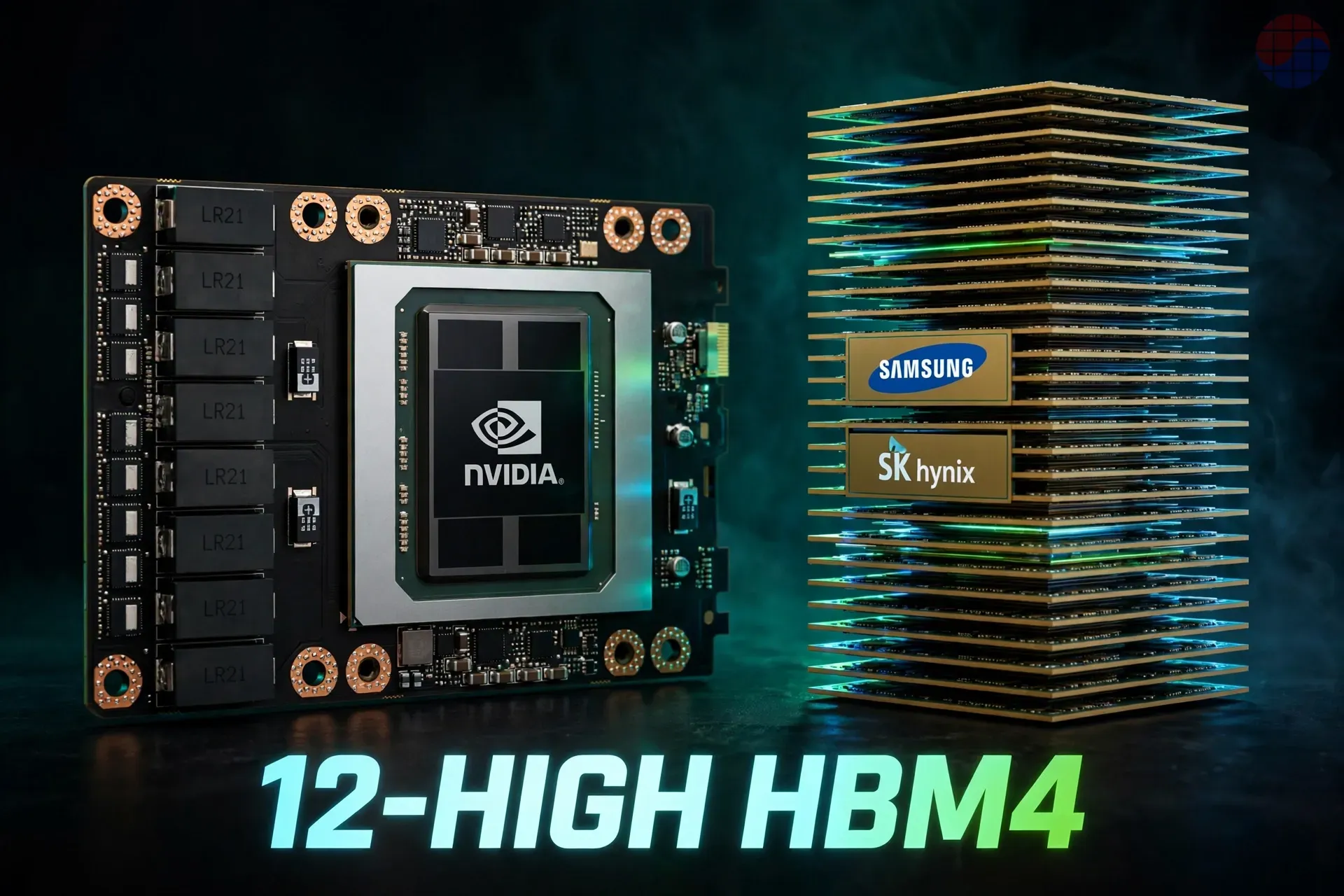
TL;DR: Per Counterpoint Research, most HBM4 in NVIDIA's next-gen Rubin AI platform will keep the 12-high stack configuration — rebutting speculation that NVIDIA would cut to 8-high to manage costs.
HBM4 consumes far more manufacturing capacity than conventional DRAM. If 12-high holds, the capacity squeeze on memory makers continues, keeping conventional DRAM supply tight and supporting prices. For Samsung, one more reason to ramp HBM4 production.
Counterpoint also dismissed talk of 4-high HBM products in the custom AI chip (ASIC) market: no such products identified. For AI infrastructure builders, performance and capacity still come first. Spec-downgrading HBM to cut costs doesn't fly — at least not in the Rubin generation.
04 · Samsung uses HBM4 as leverage to court AMD's foundry business
TL;DR: AMD CEO Lisa Su landed in Seoul on October 7. The stated agenda was HBM4, but the bigger question on the table was whether Samsung Foundry can win AMD's business on the SF2P 2nm process.
The leverage is structural. AMD's Helios rack cannot ship without 31TB of HBM4 per system. With SK hynix's 2026 HBM4 output reportedly committed mostly to NVIDIA, Samsung is effectively the only alternative supplier for AMD's Instinct MI455X. AMD invented HBM yet can't make a single stack — and Samsung knows it.
What Samsung wants is the return of AMD's logic business, gone to TSMC since its 14nm work in 2016. AMD is cautious: an AMD executive publicly called TSMC the "undisputed leader" at 2nm, and reports that Samsung's SF2 yield sits well below the ~70% high-volume customers expect are a burden. The realistic first step is a consumer Ryzen part, not flagship accelerators (Daishin Securities).
05 · ASML raises component prices 10%: Samsung, SK hynix accept the equipment supercycle's bill
TL;DR: ASML raised component prices 10% across the board for the Korean market; Samsung Electronics and SK hynix accepted. Effective January 2026. A 10% DUV equipment increase was reportedly accepted by some Chinese customers while TSMC opposed it.
Applied Materials and Tokyo Electron have also raised prices. The driver is structural: the AI data center boom has memory and foundry makers expanding capacity simultaneously, flooding equipment and component suppliers with orders while their own capacity takes time to scale.
SEMI projects 2026 global semiconductor equipment sales at $165.9B (+23.2% YoY), a record, growing for five straight years to $229.5B by 2028. Equipment vendors' pricing power is at a cyclical peak — and the cost eventually lands in wafer cost and chip prices.
06 · SK hynix struggles with hybrid bonding; Samsung ships samples first
TL;DR: Per an October 7 industry report, Samsung has already sent hybrid-bonded HBM samples to customers (generation, layer count, and customers unconfirmed). SK hynix bet its HBM4 strategy on MR-MUF (Mass Reflow Molded Underfill) — a reasonable call early on, but the math gets complicated for later generations.
HBM4's relaxed height restrictions reduced the urgency to switch, but 20-high stacks change the calculus. Micron holds 180+ hybrid-bonding patents — leverage for the next round of the stacking race.
Micron's gambit is NVHBM, a custom HBM4E co-developed with NVIDIA: moving the memory controller to the base die delivers +30% bandwidth and -15% power versus standard HBM4E, per vendor claims (not independently validated). The base die is fabbed at TSMC on a 3nm-class process. Micron's HBM market share was 18% in Q2 2026, down from 21%.
07 · Kospi -5.39% for the week: equipment and battery names rally against the selloff
TL;DR: The Kospi closed the October 5–9 week (three trading days) at 6,625.93, down 5.39%. Sell-the-news in Samsung (-3.48%) and SK hynix (-8.69%) plus ETF rebalancing weighed on the index — but equipment and battery stocks rallied on their own.
Weekly top gainer: KC Tech (+34.78%), followed by Korea Circuit (+6.92%), Daeduck Electronics (+6.70%), and Isu Petasys (+3.55%). The classic late-cycle pattern: capacity-expansion expectations spreading to materials, parts, and equipment names.
Battery stocks ran on LG Energy Solution's Q3 earnings surprise (operating profit ₩756B, +25.7% YoY, 132% above consensus): LG Chem +9.14%, LG Energy Solution +8.09%, Samsung SDI +7.56% for the week. A telling map of where the money goes while big semiconductor names rest.
08 · Broadcom's $42B chip loan to Anthropic: vendor financing becomes standard
TL;DR: Broadcom is providing Anthropic with $42B in convertible notes to lease Broadcom TPUs. Bank of America estimates Broadcom's total AI exposure could reach $370B by 2029.
It's a pattern now: NVIDIA's up-to-$100B for OpenAI, AMD's up-to-$5B for Anthropic (part of the 2GW MI450 deal), Amazon's additional $25B — chip vendors underwriting customers' compute bills has become the standard grammar of AI infrastructure.
The difference matters. NVIDIA's $100B is staged against GPU deployment milestones; Broadcom's $42B is a concentrated bet on a single counterparty, a single ASIC family, a single lab. In a market where compute costs recycle through the vendors that build the chips, who bears the risk decides the next cycle's winners.
09 · Semiconductor stock wrap
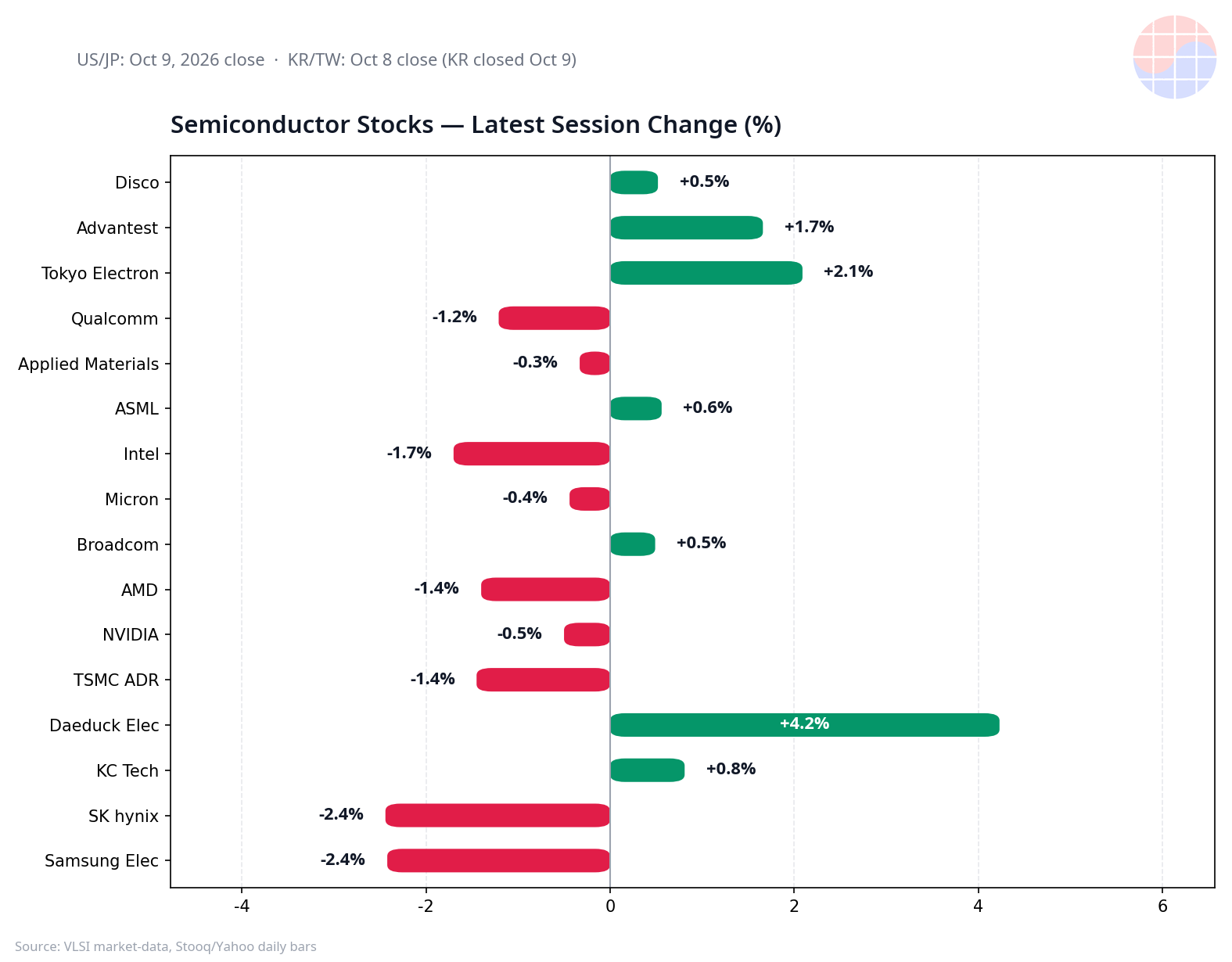
TL;DR: Major semiconductor names were mixed in the latest session (US/Japan: October 9 close; Korea/Taiwan: October 8 — Korea closed October 9 for Hangul Day). Sell-the-news hit Korea's large caps even on earnings surprises, while equipment names stayed strong.
| Stock | Close | Change |
|---|---|---|
| Samsung Electronics | ₩262,000 | -2.42% |
| SK hynix | ₩1,681,000 | -2.44% |
| KC Tech | ₩124,000 | +0.81% |
| Daeduck Electronics | ₩157,700 | +4.23% |
| TSMC ADR | $451.33 | -1.45% |
| NVIDIA | $229.34 | -0.50% |
| AMD | $611.97 | -1.40% |
| Broadcom | $361.92 | +0.49% |
| Micron | $1,031.32 | -0.44% |
| Intel | $105.26 | -1.70% |
| ASML | $1,779.68 | +0.56% |
| Applied Materials | $507.90 | -0.33% |
| Qualcomm | $173.88 | -1.21% |
| Tokyo Electron | ¥12,445 | +2.09% |
| Advantest | ¥41,610 | +1.66% |
| Disco | ¥61,460 | +0.52% |
The week's message is simple: the memory supercycle's gains are priced in (sell-the-news), and the next bet is moving to the beneficiaries of capacity expansion — equipment and materials. SK hynix's Q3 results (due later this month; consensus revenue ₩98.27T, operating profit ₩77.22T) are the next directional cue.
FAQ
How big is Samsung's ₩107.4T Q3 operating profit?
The first Korean company ever to break ₩100 trillion in quarterly operating profit — what Reuters called a world first for a tech company. Up 782.5% from ₩12.17T a year earlier, with a 55.1% quarterly operating margin above Apple and NVIDIA.
Why does TSMC's Q3 revenue matter?
Amid AI-bubble debate mixed with memory-supply warnings, it proves with numbers that demand for AI-compute logic chips is genuinely firm. September revenue nearly matched the all-time monthly high.
What does Rubin's 12-high HBM4 retention mean for the market?
HBM4 consumes far more capacity than conventional DRAM. Sustained 12-high keeps the capacity squeeze on memory makers, keeping conventional DRAM supply tight — a price support factor.
How is Samsung using HBM4 against AMD's foundry decision?
AMD's Helios rack needs 31TB of HBM4 per system, and with SK hynix's 2026 HBM4 largely tied to NVIDIA, Samsung is effectively the only alternative. That supply leverage is the wedge for SF2P 2nm logic orders.
What does the ASML price hike signal?
Equipment vendors' pricing power is at a cyclical peak. With the 2026 equipment market projected at $165.9B, rising expansion costs will eventually pass through to wafer costs and chip prices.
Note: figures cited are from press reports and VLSI market-data (daily-bar basis); preliminary results and consensus estimates may differ from final reported numbers. Not investment advice.