VLSI Korea
Huawei Ascend 310에서 970까지: 공정 열세를 SuperPoD로 보완하는 시스템 전략
Ascend 310부터 970까지, Huawei가 공정 제약을 memory 분화와 8,192-chip SuperPoD 전략으로 보완하는 방식을 분석합니다.


🆓 무료 글 · 누구나 무료로 읽을 수 있는 글입니다
이 글은 cloud AI accelerator의 세대별 architecture와 system economics를 비교해 구매·투자·공급망 판단을 내리려는 독자를 위한 글이다. 읽고 나면 peak 수치와 실제 model-level TCO를 분리하고, 다음 세대에서 검증할 지표를 선택할 수 있다.
자료 기준일: 2026-08-02
TL;DR
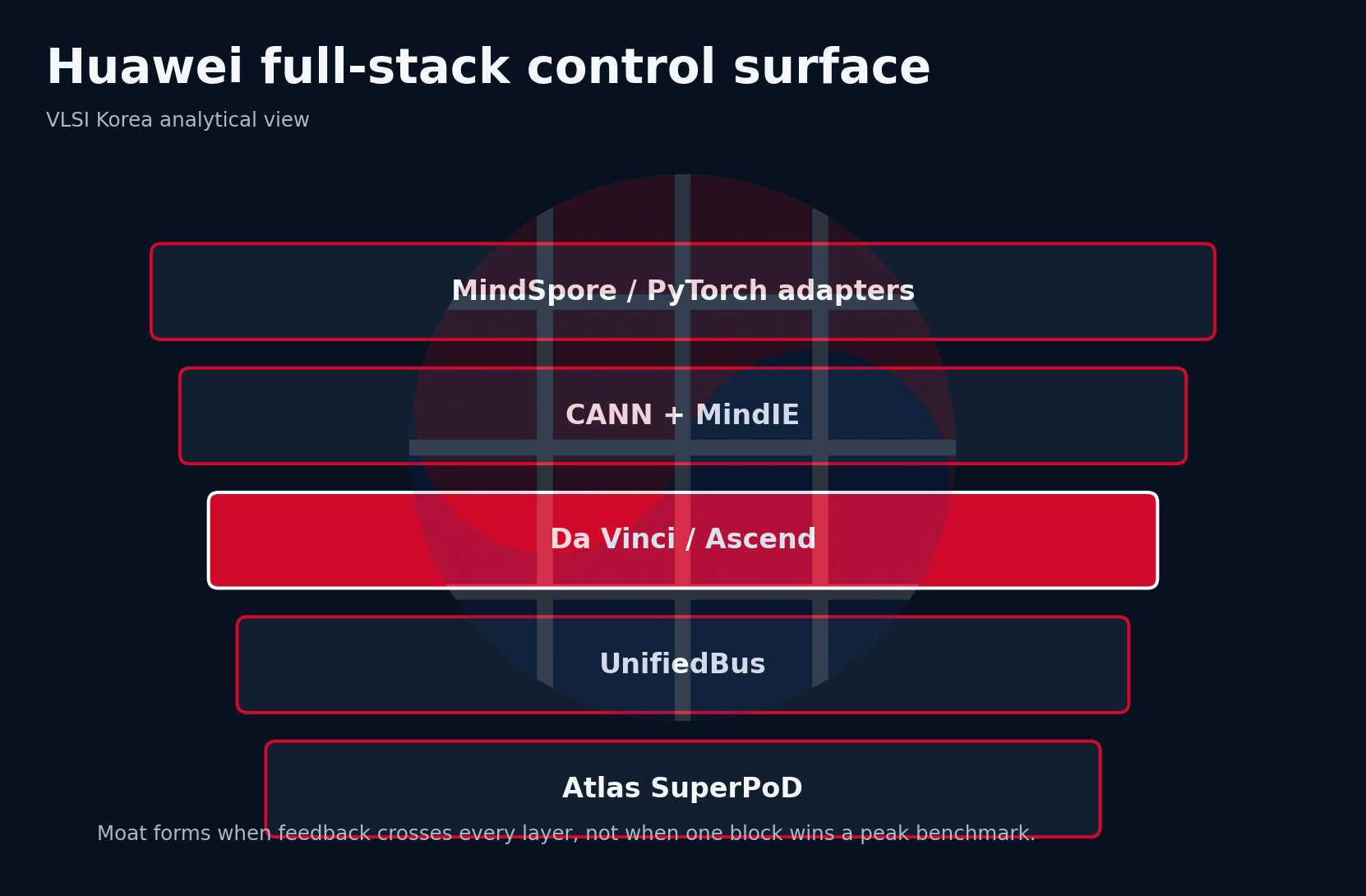
Huawei Ascend는 단일 chip benchmark보다 제약 조건 아래의 system design으로 읽어야 한다. 2018년 Ascend 310은 edge·inference, 2019년 Ascend 910은 datacenter training을 Da Vinci architecture와 CANN software로 묶었다. 910B·910C는 중국 내 실제 model training·inference와 Atlas 900 A3·CloudMatrix384의 기반이 됐다. Huawei는 advanced process 접근이 장기간 제한될 수 있다고 공개적으로 인정하고, 384개의 910C와 UnifiedBus 1.0, 이후 8,192개의 950DT와 all-optical UnifiedBus 2.0을 묶어 system scale로 보완한다.
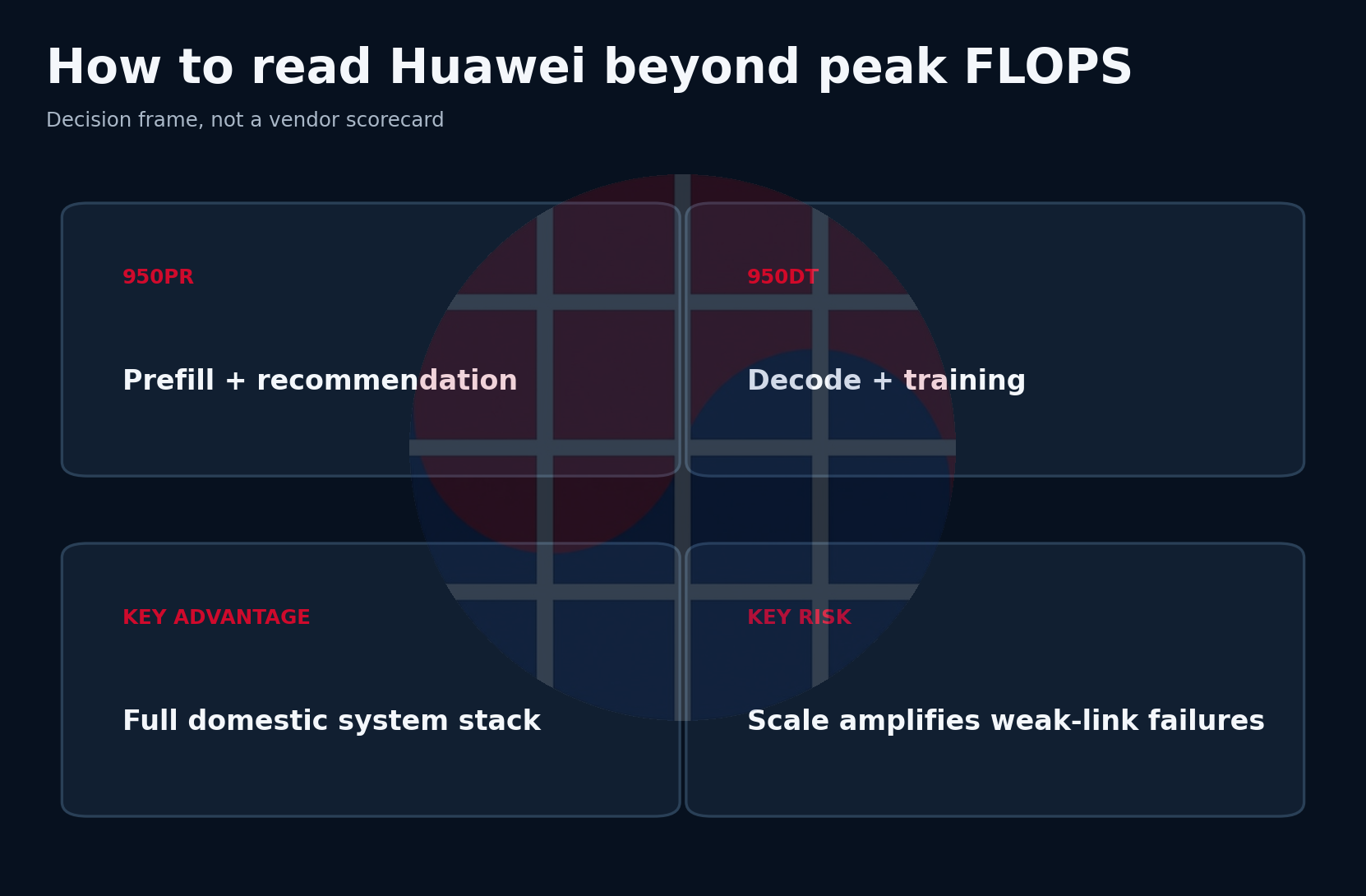
2026년 950PR은 prefill·recommendation, 950DT는 decode·training으로 memory를 분화한다. 둘 다 FP8 1 PFLOPS, FP4 2 PFLOPS, 2 TB/s interconnect를 목표로 하고, 950DT는 144 GB·4 TB/s proprietary HBM을 제시했다. 960은 2027년, 970은 2028년 compute를 매년 약 2배 높이는 roadmap이다. 가장 큰 risk는 roadmap 숫자가 아니라 leading-node·HBM·optics·software ecosystem의 실제 양산과 수율, 8,000개 이상 NPU cluster의 effective performance다.
Generation map
| Generation | Main role | Public architectural direction | System role | Status |
|---|---|---|---|---|
| Ascend 310 | Edge and inference | Da Vinci AI Core, low-power SoC family | Atlas edge and inference products | Launched in 2018 |
| Ascend 910 | Datacenter training | 32 AI Cores, 256 class AI TFLOPS | Atlas training systems | Launched in 2019 |
| Ascend 910B | Training and inference | CANN-compatible evolution | Domestic AI clusters | In production use |
| Ascend 910C | Training and inference | Higher-density system integration | 384-chip Atlas 900 A3 | Scaled in 2025 |
| Ascend 950PR | Prefill and recommendation | FP8 1 PFLOPS, FP4 2 PFLOPS, HiBL HBM | 950PR cards and SuperPoD | Planned for Q1 2026 |
| Ascend 950DT | Decode and training | 144 GB at 4 TB/s, 2 TB/s interconnect | 8,192-chip Atlas 950 | Planned for Q4 2026 |
| Ascend 960 | Train and serve | 2x 950 compute, memory, bandwidth, ports | 15,488-chip Atlas 960 | Planned for Q4 2027 |
| Ascend 970 | Train and serve | FP8 4 PFLOPS, FP4 8 PFLOPS target | Future SuperPoD | Planned for Q4 2028 |
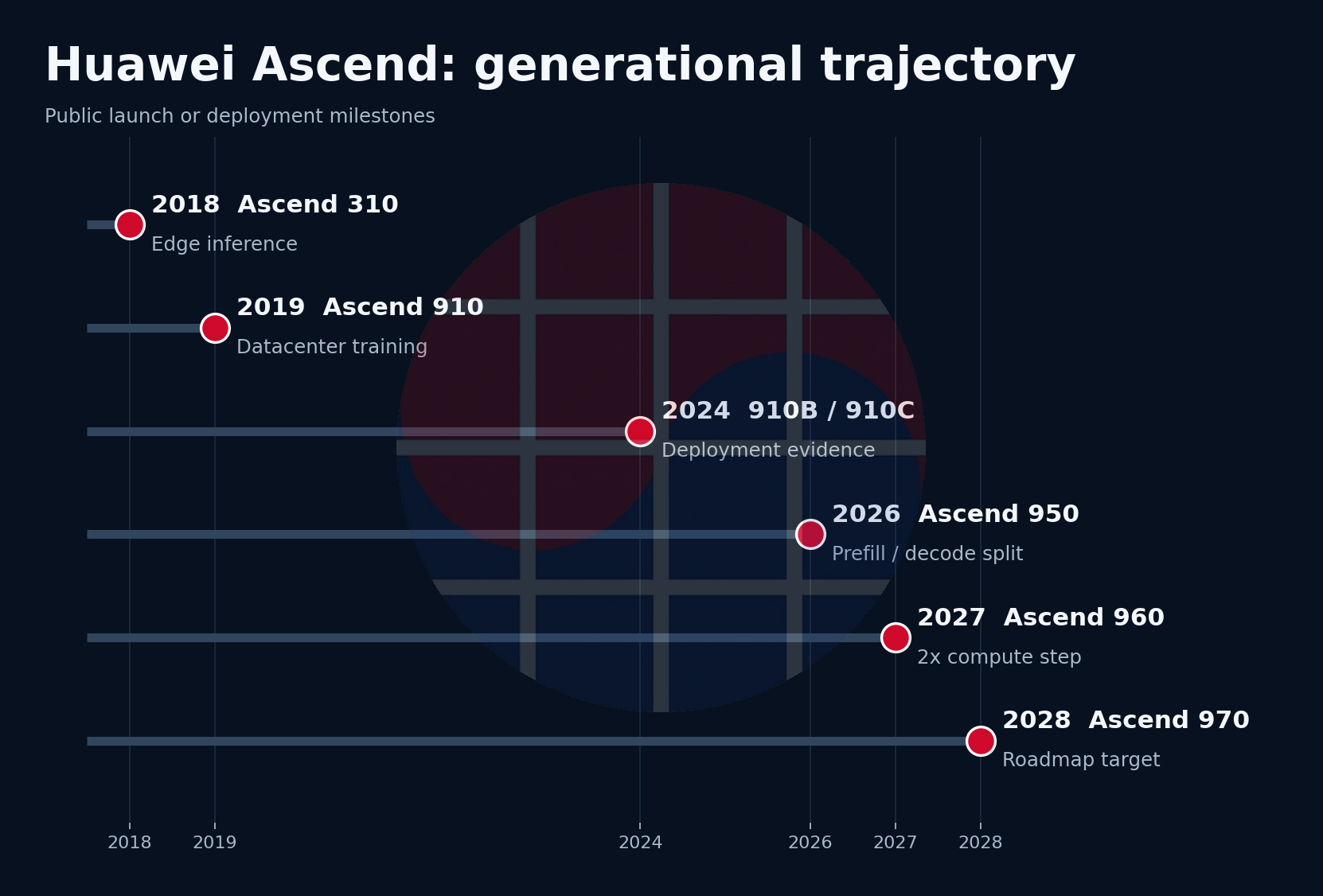
950 이후는 2025년 Huawei 공식 roadmap이다. 발표 시점의 계획이지 출하·양산 검증이 아니다. 910B·910C의 상세 process, memory, yield에 관한 비공식 추정은 사용하지 않았다.
Ascend 310과 910: full-stack의 출발
Huawei는 2018년 Ascend 310, 2019년 Ascend 910을 출시했다. 310은 카메라, edge server, inference card까지 전력과 video processing을 고려한 제품군이고, 910은 학습용 datacenter NPU다. 공통 기반은 Da Vinci AI core와 CANN software stack이다.
Da Vinci core는 cube, vector, scalar와 memory transfer engine을 결합한다. cube unit은 matrix·tensor 연산, vector는 activation·normalization·elementwise, scalar는 address와 control을 담당한다. on-chip memory는 L0A·L0B input buffer, L0C accumulator, L1, unified buffer로 명시적으로 나뉜다. compiler와 programmer가 data를 각 level에 배치해 HBM traffic을 줄이는 scratchpad 중심 구조다.
공개 연구 자료는 Ascend 910에 32 AI core와 16 x 16 x 16 tensor unit, 약 34 MB on-chip cache, 256 class AI FLOPS를 제시한다. Huawei Atlas 900T system은 한 NPU당 최대 90 GB/s link, 4 NPU full mesh에서 pair당 60 GB/s bidirectional을 설명한다. 개별 board 수치와 전체 chip·system 수치는 문서별 조건이 달라 peak를 하나로 합치지 않는 것이 안전하다.
CANN은 compiler, runtime, operator library, graph engine과 Ascend C programming을 제공한다. NVIDIA CUDA와 다른 ISA·memory model을 쓰므로 operator porting과 numerical validation이 adoption의 핵심이다. MindSpore와 Mind series tool뿐 아니라 PyTorch ecosystem, PaddlePaddle, vLLM 같은 외부 framework와의 연결이 필요하다.
910B·910C: 공개 사양보다 deployment evidence가 중요하다
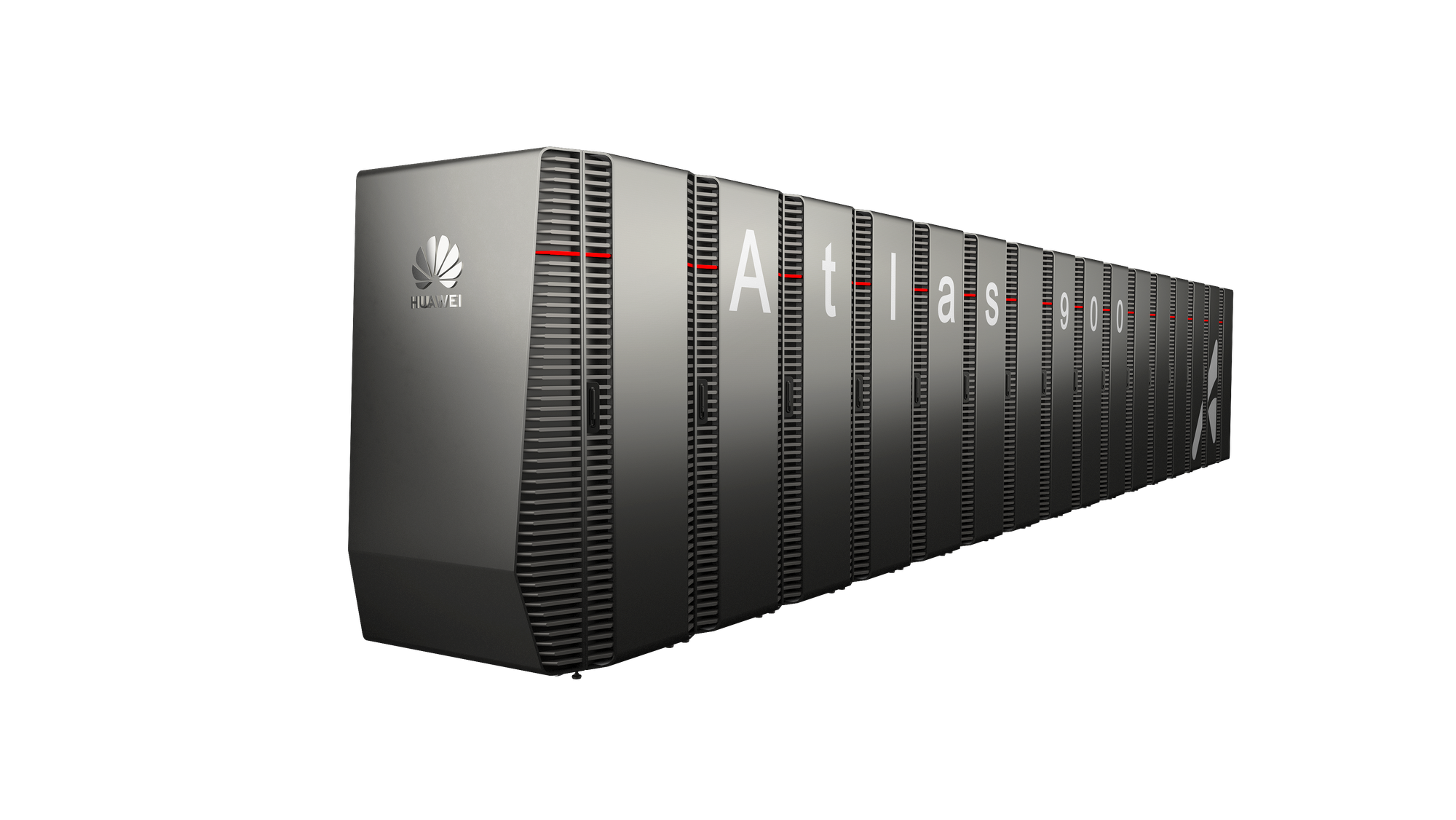
Huawei는 2025년 DeepSeek inference 수요에 맞춰 Ascend 910B와 910C의 optimization을 진행했다고 공식 발표했다. 910C는 Atlas 900 A3 SuperPoD의 building block이다. Huawei는 2025년 3월부터 최대 384개 910C를 묶은 system을 delivery했고 300개 이상 SuperPoD가 20개 이상 고객에게 배포됐다고 밝혔다.
Atlas 900 A3는 384개 chip과 UnifiedBus 1.0으로 최대 300 PFLOPS를 제시한다. Huawei Cloud의 CloudMatrix384는 이 hardware 위의 cloud service instance다. 여기서 수치보다 중요한 것은 384개 NPU를 하나의 scale-up domain으로 운영하는 경험이다. firmware, link fault, topology, collective, scheduler, liquid cooling, checkpoint를 함께 검증한다.
910C 상세 spec은 국제 경쟁 제품만큼 공식 공개가 충분하지 않다. 따라서 어떤 GPU와 같다는 비공식 비교 대신 세 가지를 봐야 한다. 실제 production cluster 수, mainstream model의 operator coverage, 장시간 training의 effective utilization과 failure recovery다. Huawei가 공개한 300개 이상 SuperPoD는 hardware delivery evidence지만 sustained model performance를 독립적으로 증명하지는 않는다.
제약 조건을 숨기지 않는 roadmap
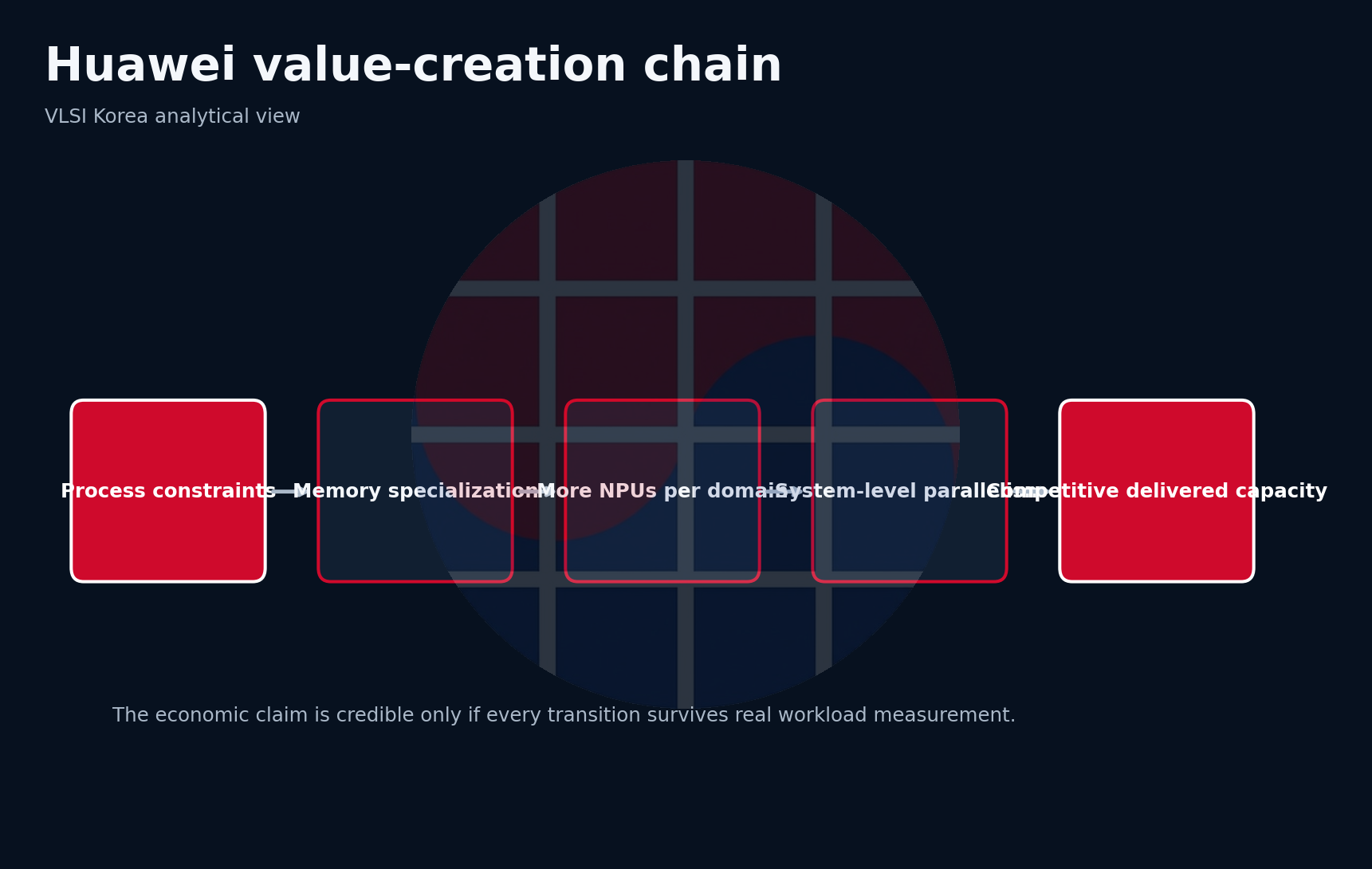
Huawei는 중국 본토가 advanced semiconductor manufacturing node에서 상당 기간 뒤처질 수 있다고 공개적으로 말했다. 그 대응은 같은 성능의 단일 die를 무리하게 복제하는 것이 아니라 practically available node에서 더 많은 chip을 연결하는 것이다. 이 선택은 wafer yield와 supply를 확보할 수 있지만 system power, HBM 수량, link, optical component와 software complexity를 크게 늘린다.
공정 열세를 scale로 보완하려면 N개의 느린 chip이 하나의 빠른 system처럼 동작해야 한다. 그러나 all-reduce와 all-to-all은 chip 수가 늘수록 통신과 tail failure 비용이 커진다. 8,192개를 하나의 scale-up domain으로 묶는다는 발표는 topology가 연결된다는 뜻이지 모든 model에서 linear speedup을 보장하지 않는다. Huawei 전략의 성패는 UnifiedBus의 effective bandwidth, latency, fault isolation과 compiler sharding에 달렸다.
Ascend 950: prefill과 decode를 memory로 분리
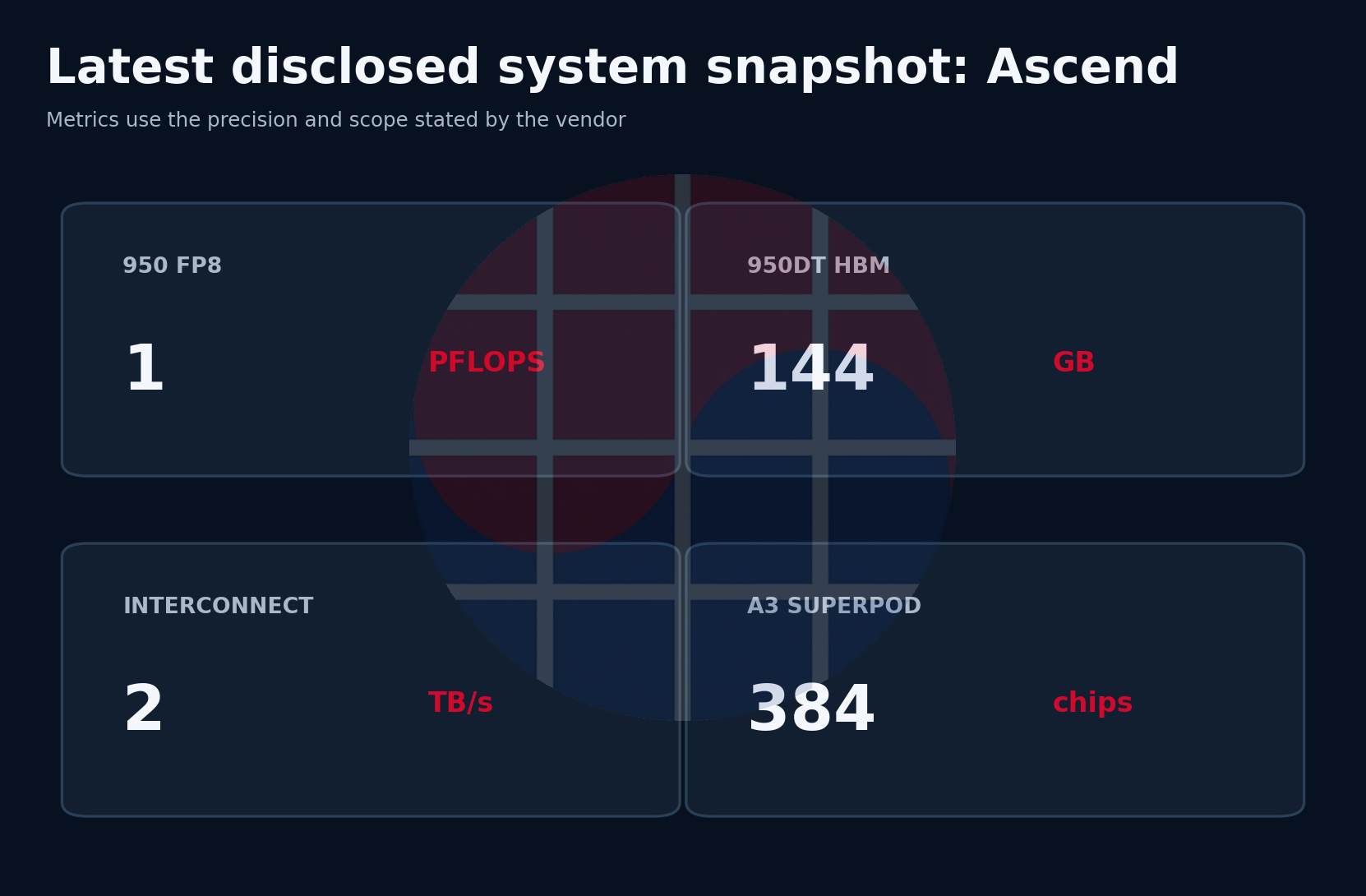
Ascend 950PR과 950DT는 같은 compute die를 쓰되 다른 proprietary HBM을 package한다. 공통 compute target은 FP8·MXFP8·HiF8 1 PFLOPS, MXFP4 2 PFLOPS, chip interconnect 2 TB/s다. 910C 대비 interconnect는 2.5배라고 Huawei가 발표했다.
compute core는 vector 능력을 키우고 SIMD와 SIMT를 결합한다. 기존 512-byte memory access granularity를 128 byte로 낮춰 fragmented·discontinuous access를 효율화한다. dense tensor만 빠르게 하는 architecture에서 MoE routing, embedding, attention, irregular vector workload를 더 잘 처리하려는 변화다.
950PR은 inference prefill과 recommendation에 맞춘다. 긴 prompt의 prefill은 큰 matrix와 높은 parallelism을 사용해 compute-bound가 되기 쉽고, recommendation도 large dense·sparse feature computation이 많다. Huawei는 HBM3e·HBM4e보다 cost-effective하다고 주장하는 HiBL 1.0을 사용해 capacity·bandwidth보다 cost balance를 우선한다.
950DT는 decode와 training용이다. 144 GB, 4 TB/s HiZQ 2.0 HBM과 2 TB/s interconnect를 제시한다. autoregressive decode는 token마다 weight와 KV cache를 읽어 memory bandwidth가 중요하고, training은 HBM capacity와 collective가 중요하다. 서로 다른 workload를 하나의 SKU로 묶는 것이 완벽하지는 않지만 950PR보다 높은 bandwidth와 capacity가 공통 분모다.
이 분화는 system scheduling에도 의미가 있다. inference service가 prefill request를 950PR pool, token decode를 950DT pool에 분리하면 각 stage의 compute-to-memory balance를 맞출 수 있다. 대신 activation·KV state를 chip pool 사이로 넘기는 network와 scheduler overhead가 생긴다. disaggregated serving이 이득이려면 queueing과 transfer 비용이 hardware utilization 개선보다 작아야 한다.
Atlas 950 SuperPoD와 UnifiedBus 2.0
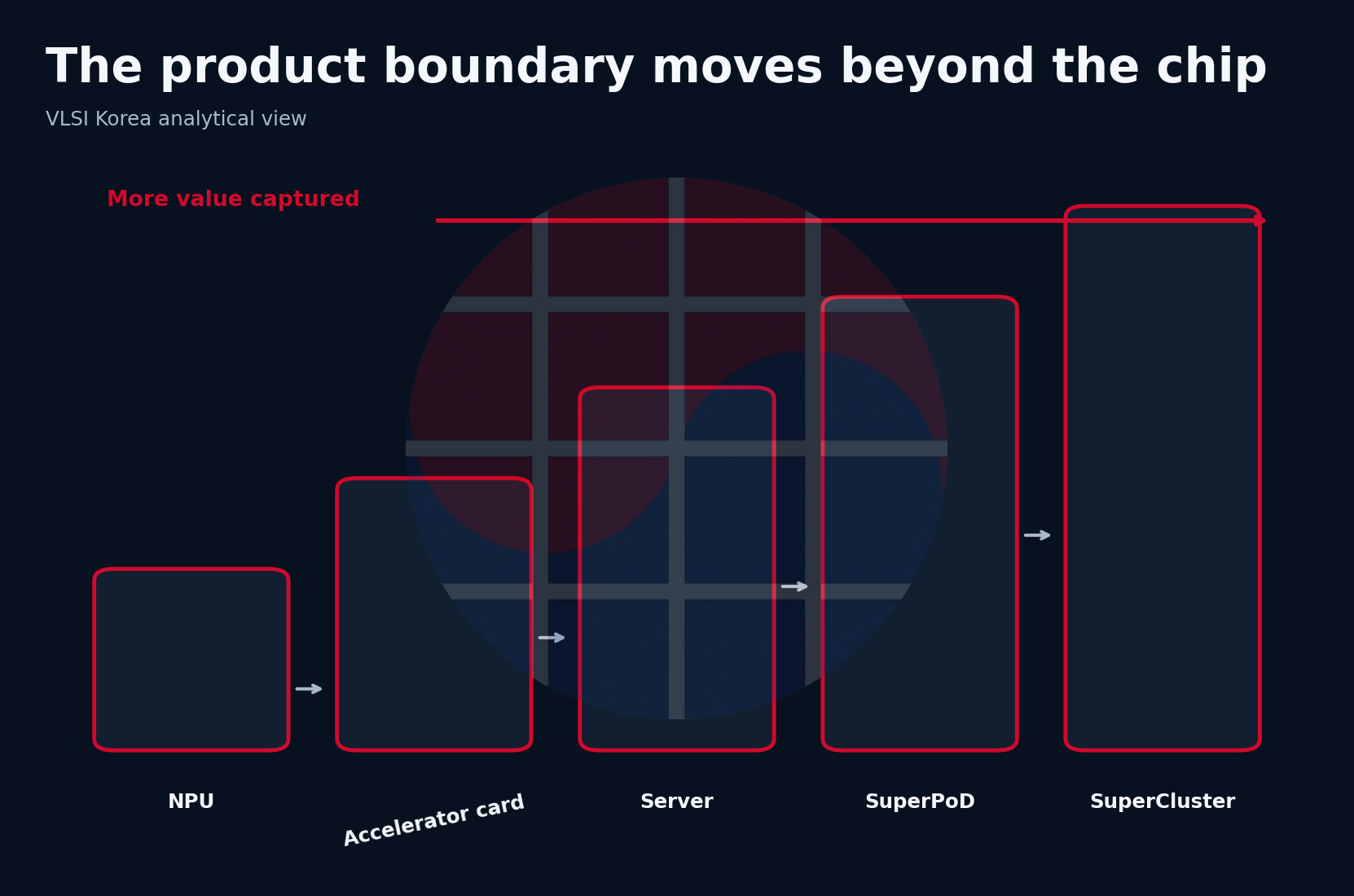
Atlas 950 SuperPoD는 최대 8,192개 950DT, 160개 cabinet, 약 1,000 m², 8 EFLOPS FP8, 16 EFLOPS FP4, 16 PB/s aggregate interconnect를 목표로 한다. 128개 compute cabinet과 32개 communication cabinet을 all-optical link로 묶는다. 2026년 4분기 계획이다.
UnifiedBus 2.0은 bus-grade interconnect, peer-to-peer coordination, resource pooling, unified protocol, large-scale networking, high availability를 목표로 한다. Huawei는 200 m 이상 optical reach, 100 ns급 fault detection·protection switching, 2.1 microsecond latency, TB/s bandwidth를 발표했다. UBoE는 UnifiedBus over Ethernet으로 existing Ethernet switch와의 연결을 제공한다.
이 architecture의 강점은 scale-up domain을 rack 밖 수백 cabinet까지 확장하는 것이다. NVIDIA NVLink domain보다 훨씬 많은 device를 하나의 logical machine으로 취급하려 한다. 약점은 규모 자체가 performance를 보장하지 않는다는 점이다. 8,192개 NPU의 aggregate bandwidth는 link당 bandwidth와 topology oversubscription, collective algorithm, hop count를 가린다. model-level tokens/s와 job completion time이 더 중요한 검증 지표다.
Huawei는 Atlas 900 A3 대비 training 17배, inference 26.5배, training 4.91M tokens/s, inference 19.6M tokens/s를 제시했다. model, sequence, precision, batch, quality와 baseline configuration이 충분히 공개되지 않은 vendor projection이므로 roadmap 목표로만 봐야 한다.
Ascend 960·970: 매년 2배 compute의 의미
Ascend 960은 950 대비 compute, memory bandwidth, capacity, interconnect port 수를 2배로 목표한다. 공식 target은 FP8 2 PFLOPS, FP4 4 PFLOPS이고 HiF4를 추가한다. 15,488-chip Atlas 960 SuperPoD는 2027년 4분기, 30 EFLOPS FP8, 60 EFLOPS FP4를 제시한다.
Ascend 970은 2028년 4분기 목표로 FP8 4 PFLOPS, FP4 8 PFLOPS, 960 대비 interconnect 2배와 memory bandwidth 1.5배 이상을 계획한다. spec은 아직 조정 중이라고 Huawei가 명시했다. 따라서 970 수치를 확정 제품으로 다뤄서는 안 된다.
매년 compute 2배는 process shrink만으로 달성하기 어렵다. lower precision, larger package, more die, higher power, architecture utilization이 함께 필요하다. FP16에서 FP8·FP4로 metric을 바꾸면 peak 숫자는 쉽게 커지지만 model quality와 sustained utilization을 검증해야 한다. memory bandwidth가 compute보다 느리게 늘면 inference는 낮은 bit weight와 cache reuse로 보완해야 한다.
CANN open strategy의 의미
Huawei는 2025년 말까지 910B·910C 기반 CANN compiler와 virtual ISA interface를 open하고 다른 software를 open source·open access하겠다고 발표했다. Mind toolchain과 openPangu model도 개방 계획을 제시했다. hardware monetization에 집중하고 software adoption friction을 줄이려는 전략이다.
CUDA 대체에서 source 공개만으로 충분하지 않다. documentation, backward compatibility, bug response, operator quality, profiler, community governance와 third-party kernel이 필요하다. interface를 열어도 hardware behavior와 compiler optimization이 opaque하면 ecosystem은 vendor support에 의존한다. 반대로 Ascend C, PyTorch adapter, vLLM과 model zoo가 빠르게 성숙하면 중국 내 volume이 software gap을 줄일 수 있다.
Watch points
- 950PR의 2026년 1분기 availability와 실제 customer deployment가 확인되는가.
- 950DT의 144 GB·4 TB/s proprietary HBM이 volume과 yield를 확보하는가.
- Atlas 950의 8,192-chip SuperPoD가 공개 model에서 sustained tokens/s, MFU, effective bandwidth를 제시하는가.
- UnifiedBus 2.0 ecosystem에 independent switch, optical, NIC vendor가 참여하는가.
- CANN open-source 계획이 source release를 넘어 external contribution과 compatibility로 이어지는가.
Contrarian read: 더 많은 NPU는 공정 열세를 보완하기보다 증폭할 수 있다
chip 수를 늘리면 aggregate compute는 증가하지만 HBM stack, package, board, optical module, switch, power와 coolant가 같은 비율로 필요하다. device failure probability와 straggler가 증가하고, all-to-all workload는 network 비용이 급격히 커진다. leading node가 부족한 상황에서 system component와 전력까지 더 많이 요구하면 total capex와 operating cost가 경쟁 system보다 높아질 수 있다.
Huawei 전략이 뒤집히는 조건은 UnifiedBus가 large scale에서 높은 effective bandwidth와 빠른 fault recovery를 실제로 달성하고, domestic supply chain이 HBM·optics·package를 충분히 공급하는 경우다. 이때는 chip당 열세보다 system availability와 공급 독립성이 더 중요해진다. 중국 고객이 NVIDIA 최신 제품을 안정적으로 구매할 수 없다면 absolute efficiency가 다소 낮아도 usable domestic capacity가 경제적 우위를 가진다.
Korean lens
Huawei roadmap은 한국 HBM과 advanced packaging의 전략적 중요성을 극단적으로 보여준다. 공정 접근이 제한돼도 memory와 interconnect를 충분히 확보하면 system을 확장할 수 있다. 반대로 HBM과 optical component가 막히면 compute die가 있어도 SuperPoD는 완성되지 않는다. 한국 공급망의 협력·통제 환경은 단순 매출 기회가 아니라 지정학적 risk와 연결된다.
국내 NPU 기업은 우리 chip이 몇 TOPS인가보다 몇 개를 하나의 reliable domain으로 묶을 수 있는지, compiler가 topology를 어떻게 쓰는지, 장애 한 개가 job을 얼마나 중단시키는지 보여줘야 한다. Huawei처럼 system architecture를 전면에 내세우되 vendor projection과 measured workload를 분리해 공개하는 것이 신뢰에 중요하다.
Sources
- Huawei Ascend computing overview
- Atlas 900T logical architecture
- Ascend hardware architecture
- Ascend and SuperPoD roadmap keynote
- Huawei 2025 annual report
- Huawei CloudMatrix overview
Disclosure
본 글은 정보 제공만을 목적으로 하며, 특정 증권의 매수 또는 매도를 권유하는 것이 아닙니다. 본 글에 포함된 수치와 사실은 기업 공시, 언론 보도, 시장 조사 등 공개적으로 이용 가능한 자료를 바탕으로 작성되었으며, 해당 자료 또는 작성 과정에서 오류가 발생할 수 있습니다. 필자는 언급된 기업의 주식을 보유하고 있을 수 있습니다. 모든 투자 결정 및 그에 따른 결과는 독자의 책임입니다.