VLSI Korea
Tencent Zixiao C100 and C200: A Strategy Where the Cloud Instance Is Visible but the Chip Is Not
Zixiao C100 and C200 are visible as cloud SKUs while the chips remain opaque. We analyze Tencent's portfolio and the cost of opacity.


🆓 Free article · Anyone can read this article for free
This article is for readers comparing cloud AI accelerator architecture and system economics for purchasing, investment and supply-chain decisions. It separates peak specifications from model-level TCO and identifies the evidence that should validate the next generation.
Data cutoff: August 2, 2026
TL;DR
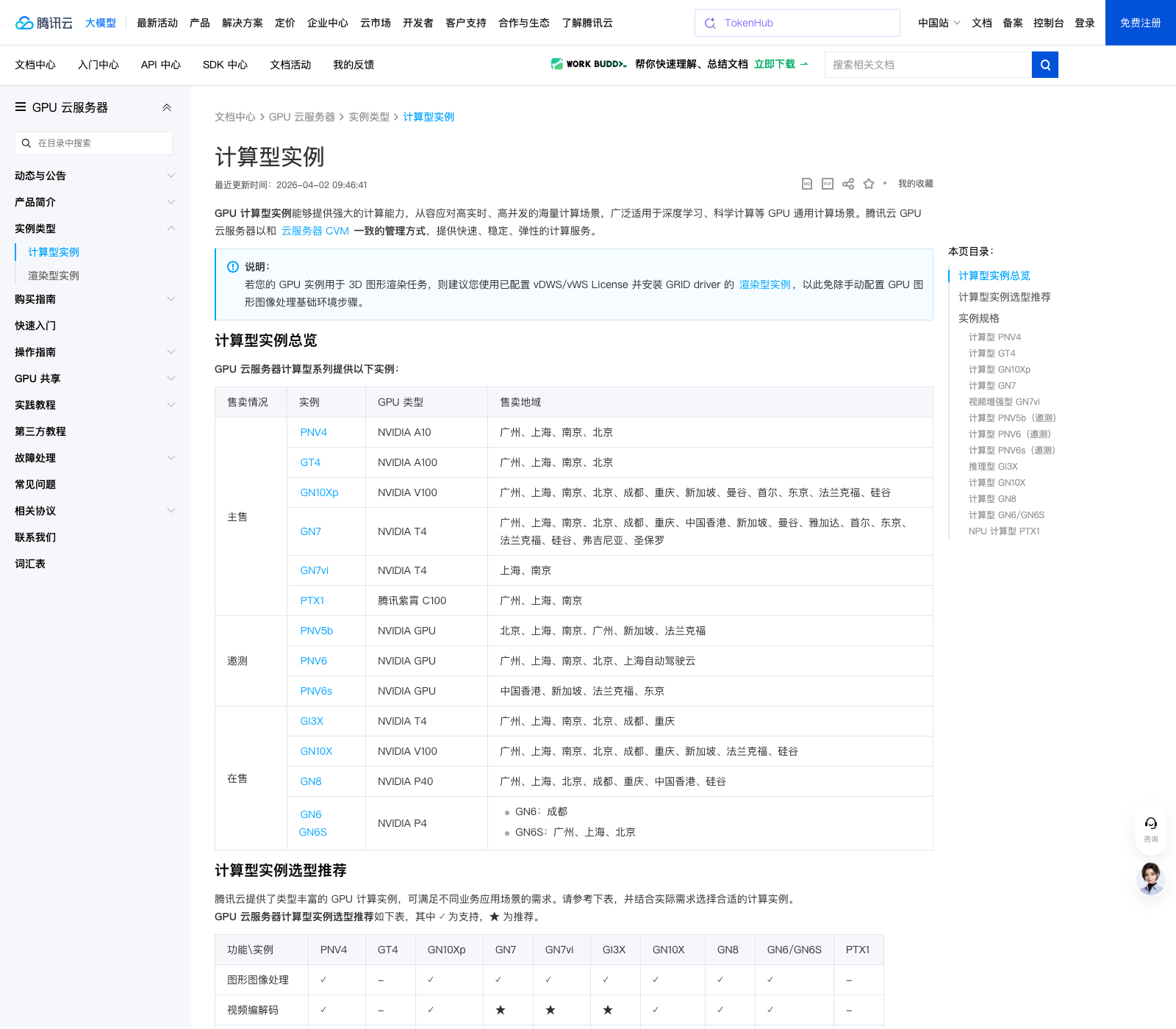
Zixiao appears in the opposite way from Hanguang 800. Alibaba published a highly visible first-generation architecture and benchmark, then left the successor obscure. Tencent sells two Zixiao generations, C100 and C200, through PTX cloud instances and billing catalogs, while disclosing little about process, die, memory bandwidth, interconnect and microarchitecture.
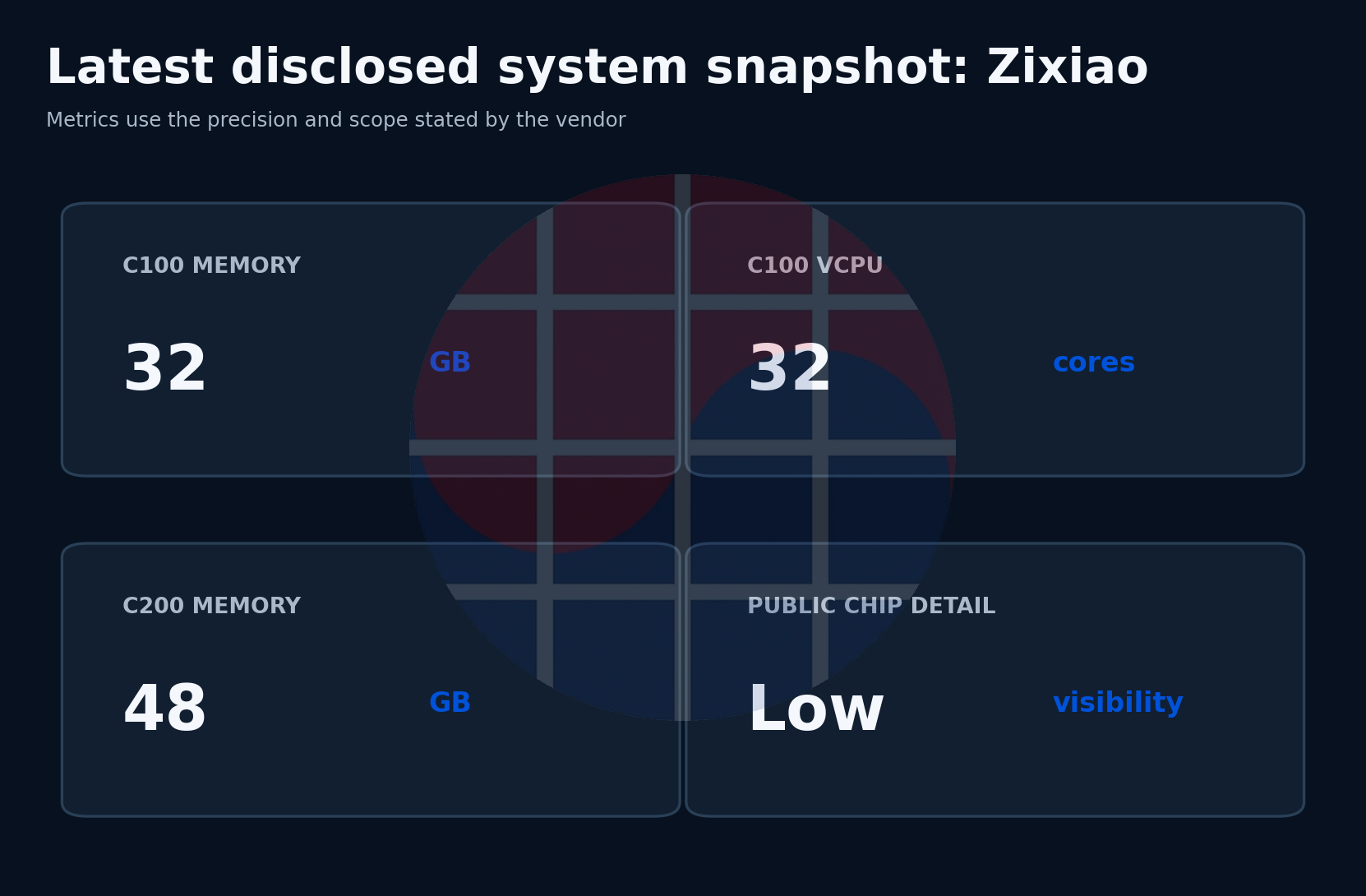
Official PTX1 documentation identifies the first-generation C100 at 120 FP16 TFLOPS and 16 GB per card, with configurations up to eight cards, AMD Milan hosts and as much as 100 Gbps of instance networking. It launched in 2022 for computer vision, OCR, speech and NLP inference. PTX2 billing confirms C200 products in one-, two-, four- and eight-card configurations, but not a comparable technical specification.
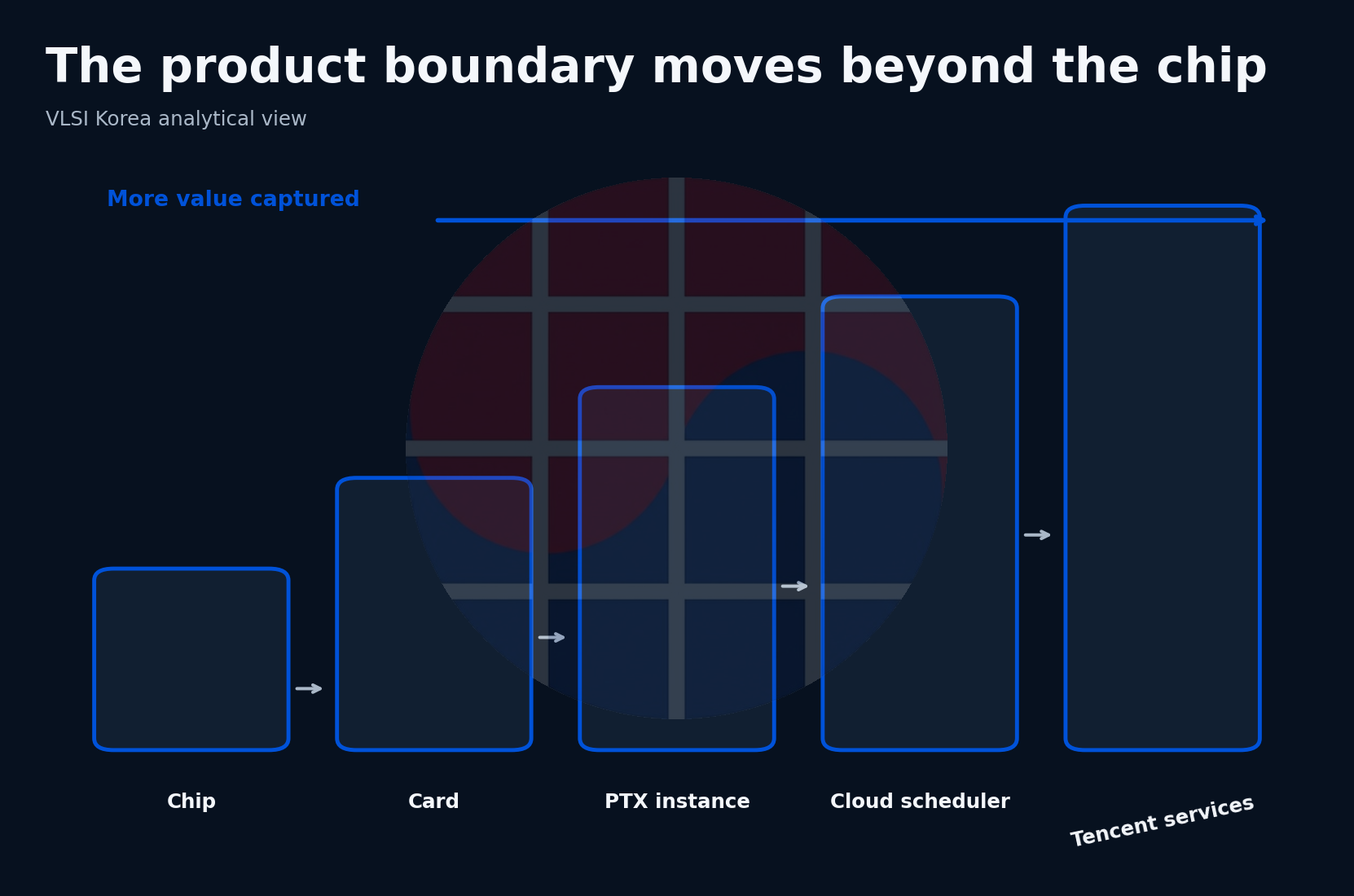
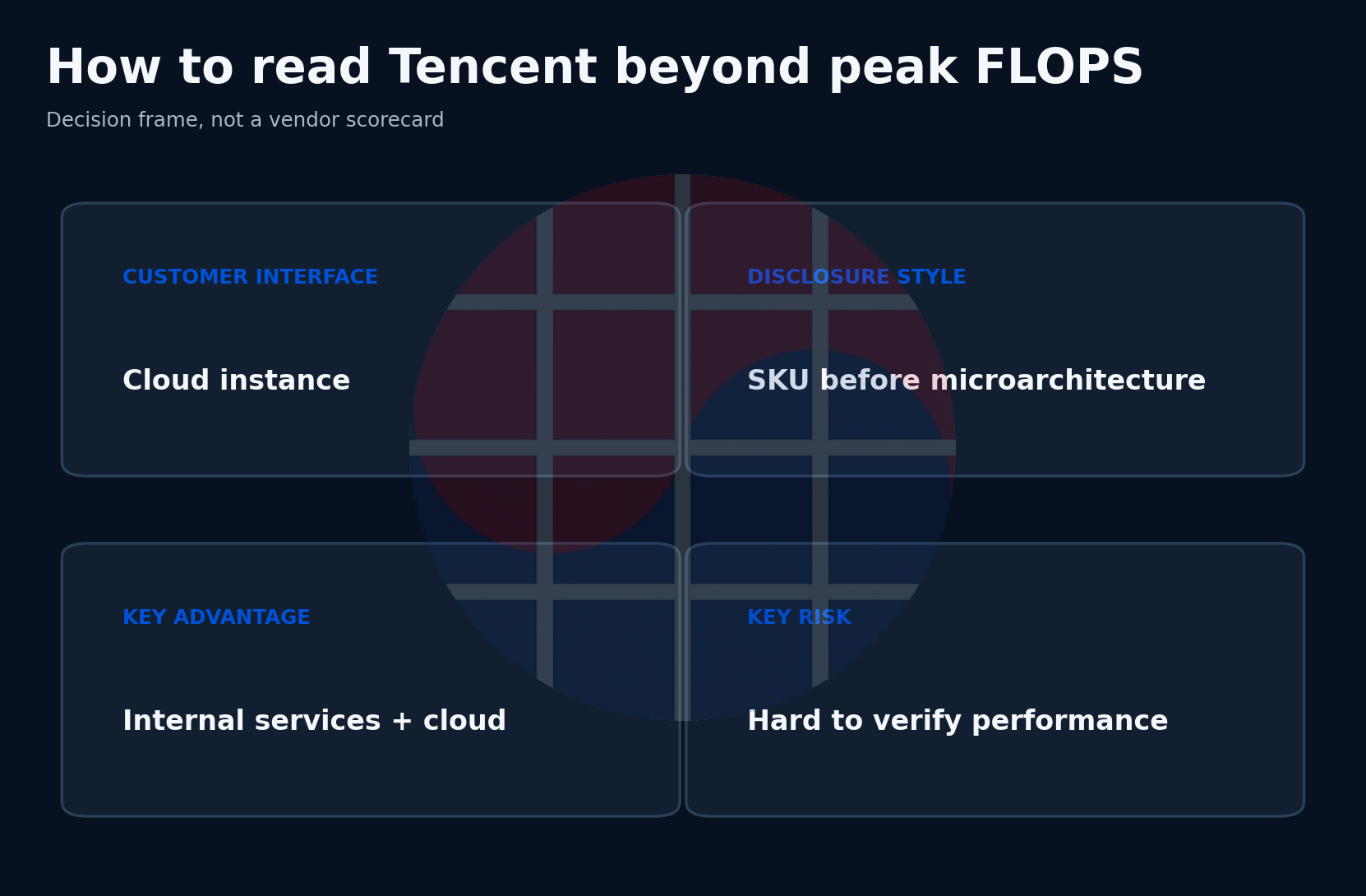
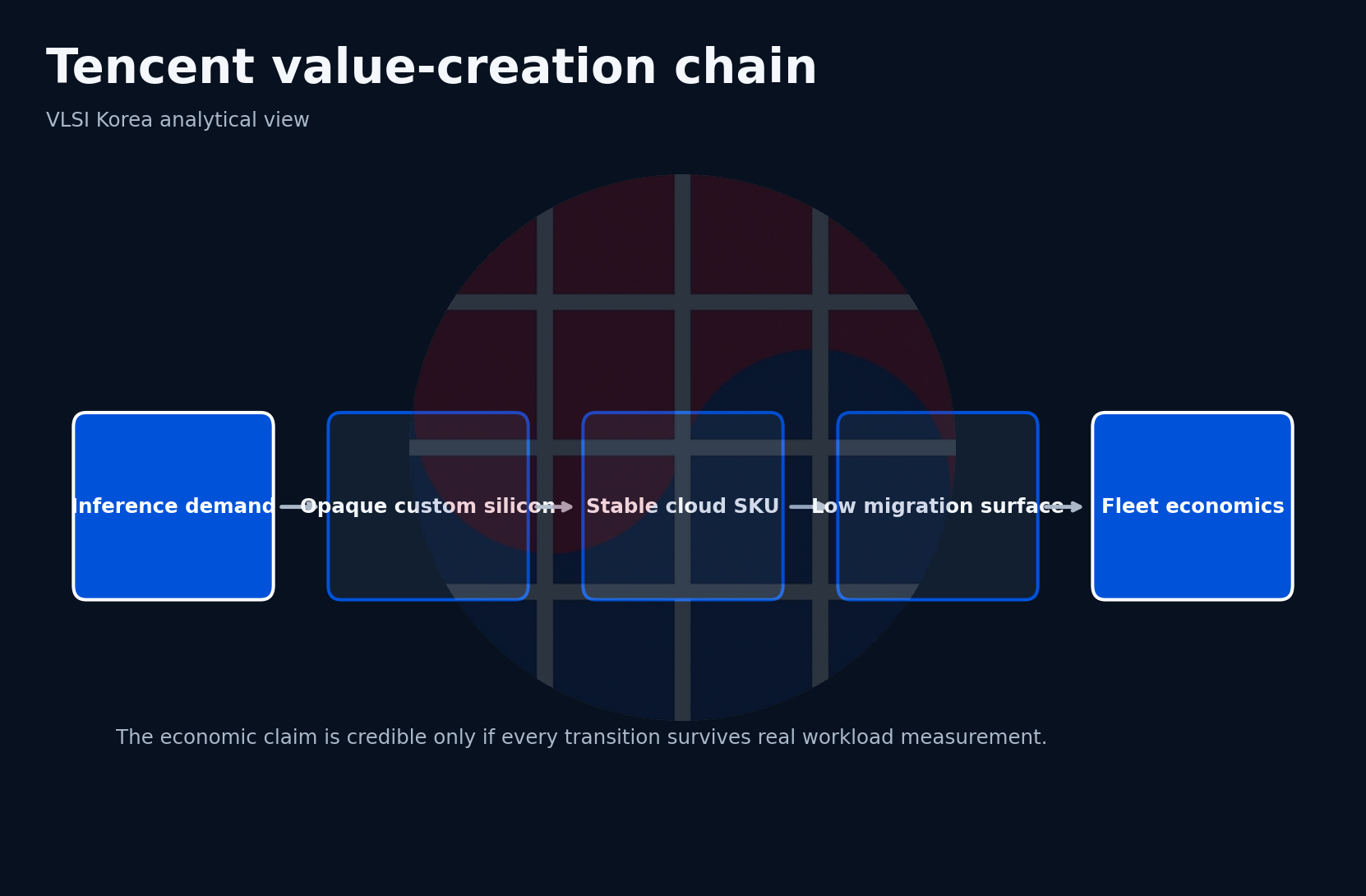
The defensible conclusion is not that Zixiao matches an unofficial GPU specification. Tencent has built a domain-specific portfolio: Zixiao for inference, Canghai for video transcoding and Xuanling for networking, then sold it under a cloud-instance abstraction. Its advantage is utilization from WeChat, advertising, video and cloud. Its weakness is that external customers cannot readily judge performance portability, lifecycle or independent benchmarks.
Generation map
| Generation | Cloud product | Public compute and memory | Primary workload | Evidence level |
|---|---|---|---|---|
| Zixiao C100 | PTX1 | 120 FP16 TFLOPS and 16 GB per card | CV, OCR and NLP inference | Official instance specification |
| Zixiao C200 | PTX2 | Not sufficiently disclosed | AI inference and cloud acceleration | Official product and billing presence |
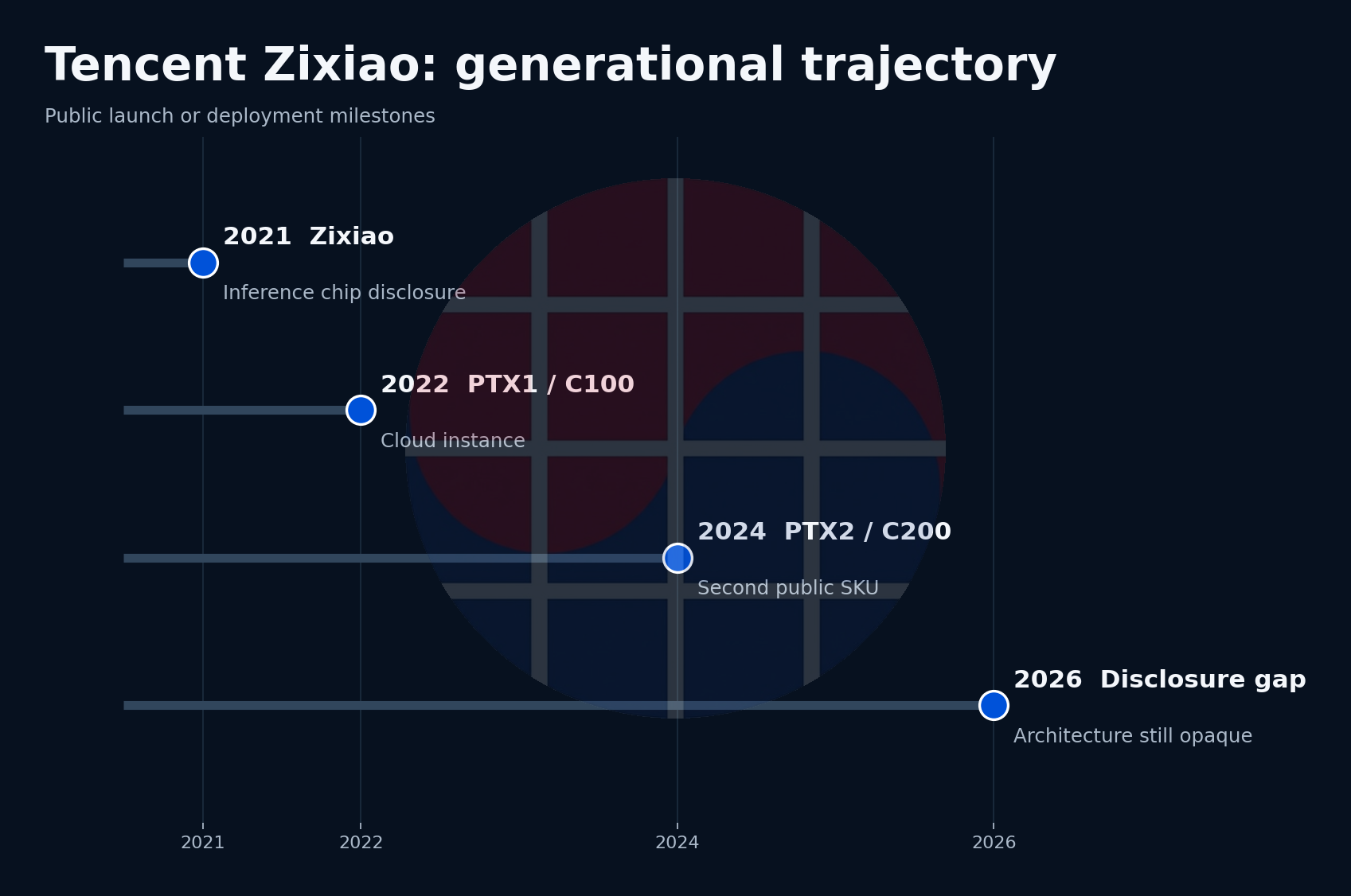
Tencent's official product and billing documentation establishes that PTX2 uses C200. It does not establish capacity, bandwidth, process or links, so those fields are not filled with third-party claims.
Tencent's three-chip strategy
Tencent divided custom silicon into three domains beginning in 2021. Zixiao handles AI inference, Canghai handles video transcoding, and Xuanling handles network interfaces and cloud infrastructure. The portfolio appears in Tencent's 2021 ESG report.
The split follows workload physics. Inference needs matrix and vector compute plus model memory. Video needs codec pipelines and pixel processing. Networking needs packet, virtualization and movement engines. One flexible SoC wastes transistors and power when these flows repeat at Tencent scale.
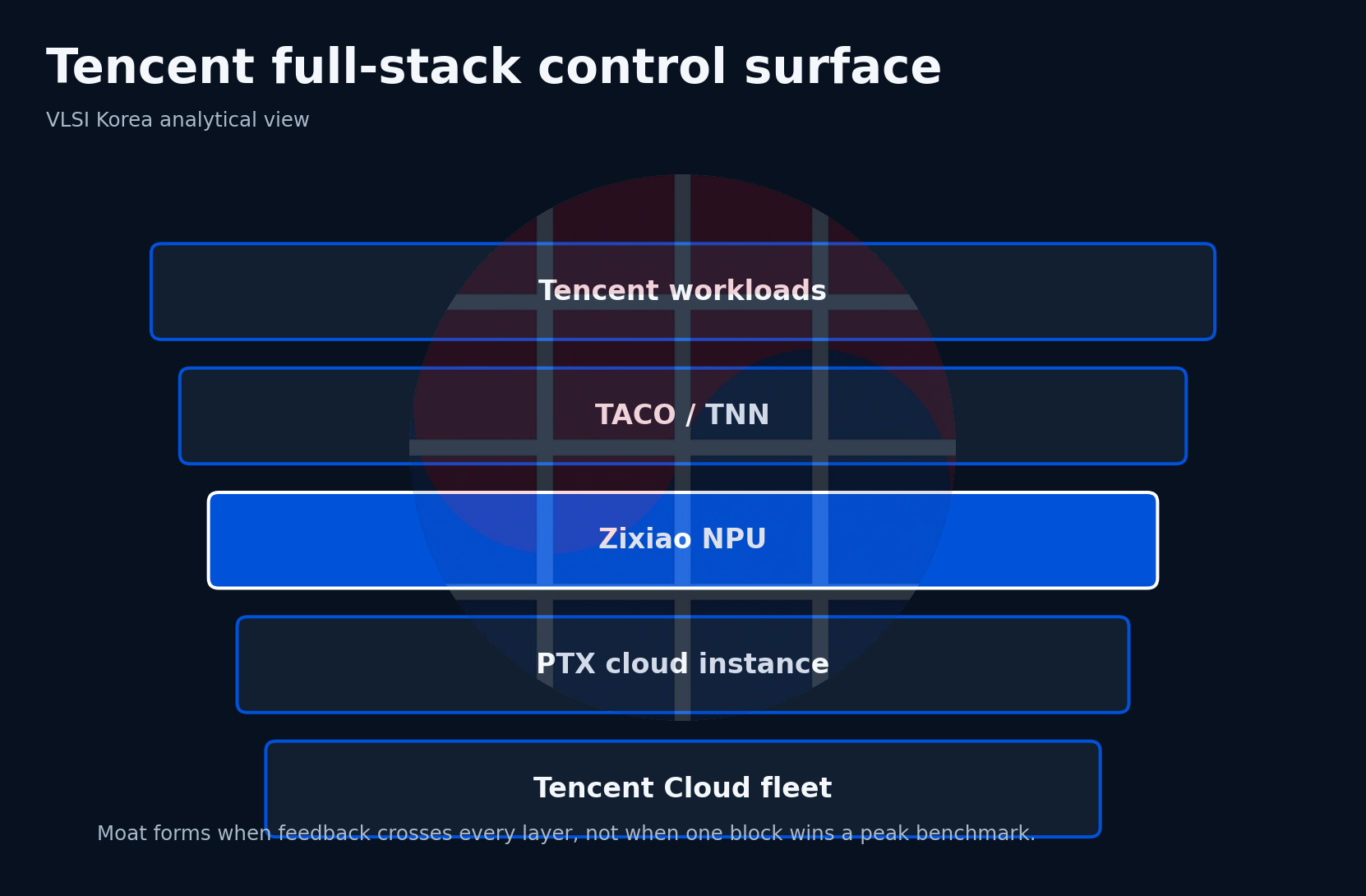
The devices can also work as a system. Canghai decodes video, Zixiao performs understanding or recommendation, and Xuanling offloads host networking and transfer. End-to-end service latency may depend more on copies and queues across that pipeline than on the AI chip alone. Zixiao therefore competes with a CPU-plus-GPU-plus-SmartNIC system, not merely with one accelerator card.
Zixiao C100: the first generation visible in cloud
Tencent Cloud PTX1 uses Zixiao C100. Each card provides a stated 120 FP16 TFLOPS and 16 GB, with one-, two-, four- and eight-card instances. Hosts use AMD EPYC Milan processors, and instance networking reaches 100 Gbps. The documented applications are computer vision, OCR and NLP inference.
The 120 TFLOPS figure is an FP16 peak. INT8 throughput, sparsity, batching and fusion can change actual inference substantially, but official documentation does not disclose enough INT8, memory-bandwidth or card-link information to derive request throughput.
Sixteen GB fits the 2022 target but is small for modern LLMs. A seven-billion-parameter model alone uses roughly 14 GB for FP16 weights before KV cache and buffers. Quantization and tensor parallelism help while increasing inter-card communication. The balance is consistent with an original focus on CV, OCR and conventional NLP.
An eight-card server provides density, but its scale-up fabric is not public. Whether cards rely on PCIe or a dedicated link, peer-to-peer bandwidth and collective software are essential to multi-card models. The 100 Gbps instance-network figure describes external scale-out, not the local fabric.
Software and the cloud abstraction
A compiler must map framework graphs to supported Zixiao operators, while the runtime controls memory and execution. Tencent's internal model teams can rewrite graphs or operators in cooperation with the hardware team. External customers care more about framework compatibility, conversion, quantization calibration, profiling and diagnostics.
Cloud containers and APIs can hide a proprietary ISA, but custom models expose compiler gaps. Generational continuity depends on whether old containers and models move from C100 to C200 with only recompilation or small changes. Tencent does not disclose enough of that compatibility policy to verify it.
Zixiao C200: a commercial SKU without an architecture
PTX2 billing documents explicitly list C200 one-, two-, four- and eight-card products. A purchasable SKU with operating-system support is stronger evidence than a research prototype.
However, even the C100-level FP16 and memory specification is not comparably visible. A change from “100” to “200” does not imply twice the performance. Architecture opacity lets Tencent alter sourcing and design under a service contract, but customers must depend on Tencent for model fit, capacity and lifecycle.
A true generational assessment requires C100-versus-C200 throughput per watt, memory fit, scaling and operator coverage on the same model, batch and latency SLO. A billing listing alone cannot answer those questions.
Why inference first
WeChat feeds, advertising ranking, moderation, speech, OCR, games and video recommendation produce high and predictable request volume. Stable production graphs make inference investment easier to amortize than a fast-changing training platform requiring larger HBM, collective networks and numerical flexibility.
The rational hybrid strategy is to retain GPUs for research agility and migrate stable graphs to Zixiao. Modern LLM serving is a harder inference target because sequence length, prefill and decode, KV cache, speculative decoding and MoE change the dataflow. A C200 claim for generative AI would require official evidence of memory, low precision, attention kernels and links.
Tencent's system advantage
Internal traffic supplies a utilization floor. Video and network co-design can remove CPU cycles and memory copies invisible in Zixiao's TOPS. Cloud provisioning, billing, security, containers, monitoring and replacement give Tencent a broader adoption surface than a company selling a card alone.
The cost is a shallow external developer ecosystem. Without public kernel languages, profilers, compiler issues and independent benchmarks, internal success does not demonstrate generality.
Transparency is a technical variable
An accelerator customer must know whether a model fits, which precision preserves accuracy, whether operations fall back to CPU and how multiple cards scale. If specifications are missing, every question moves into a paid proof of concept. That engineering cost is especially high for small customers.
Google and AWS publish generation specifications, profilers and kernel interfaces that support preliminary capacity planning. Tencent must close part of that gap if Zixiao is to earn broad external share. The official document screenshot used in this article is evidence of the PTX1/C100 cloud product, not a photograph of a physical chip.
Watch points
- Official C200 compute, capacity, bandwidth, precision and process details.
- C100-versus-C200 latency, throughput per watt and scaling on the same model.
- Support for LLM attention, KV cache, quantization and serving systems such as vLLM.
- Ease of moving C100 models and containers to C200.
- External customer cases and sustained utilization outside Tencent's own services.
Contrarian read
A cloud chip may survive longer when its specifications are hidden. The provider can swap cards and compilers while maintaining one API and SLO, improving price-performance without forcing customers to follow every architecture change.
That works only when the interface is high-level and output is fungible. Customers needing custom kernels, deterministic latency or topology information will experience opacity as a constraint. Zixiao's success depends on how much work Tencent can keep under managed-service abstraction.
Korean lens
Tencent's three-chip portfolio is useful for Korean telecom and platform companies. Optimizing only the AI core will not lower end-to-end cost when data ingestion, networks and media processing dominate. SmartNICs, video, memory and accelerators should be designed around the workload pipeline.
Korea's smaller market makes early external developers more important, so opacity should not be copied. Transparent memory, precision, compiler coverage and benchmark methodology lower proof-of-concept cost and accelerate an ecosystem.
Sources
- Tencent Cloud PTX1 and Zixiao C100 specification
- Tencent Cloud PTX1 product update
- Tencent Cloud PTX2 and Zixiao C200 billing
- Tencent 2021 ESG report
Disclosure
This article is for informational purposes only and does not constitute a recommendation to buy or sell any security. Figures and facts are based on publicly available corporate disclosures, media reports and market research, and errors may occur in the source material or writing process. The author may hold shares of companies mentioned. Readers are solely responsible for all investment decisions and outcomes.
Frequently Asked Questions
What are the official specifications of Tencent Zixiao C100?
The C100 provides 120 FP16 TFLOPS and 16 GB per card in PTX1 instances of one, two, four and eight cards. Official PTX1 documentation lists AMD EPYC Milan hosts and up to 100 Gbps instance networking, with a 2022 launch for computer vision, OCR, speech and NLP inference.
What is publicly known about Zixiao C200?
PTX2 billing confirms C200 products in one-, two-, four- and eight-card configurations. No comparable technical specification is disclosed, so process, memory capacity, bandwidth and interconnect are not established by official documentation.
What is Tencent's three-chip custom silicon strategy?
Since 2021, Tencent has split custom silicon into three domains: Zixiao for AI inference, Canghai for video transcoding, and Xuanling for network interfaces and cloud infrastructure. The portfolio appears in Tencent's 2021 ESG report.
What is Zixiao's main strength and weakness?
Its strength is utilization from internal traffic such as WeChat, advertising, video and cloud services. Its weakness is opacity: external customers cannot readily judge performance portability, lifecycle or independent benchmarks.
Related reading