



A practicing semiconductor engineer's daily read on global silicon news:
ASML, TSMC, and imec unveil the first 300mm-wafer 2D-material transistors as Qualcomm moves to acquire Jim Keller's Tenstorrent for up to $10B, while AI-driven demand sends equipment stocks and DRAM prices sharply higher.
Chase's Take — This week's biggest picture is that three paths toward 'beyond silicon' opened at once. Hitting a 50nm pitch with nFET and pFET simultaneously is industrial-grade proof that CMOS logic can survive past 1nm — the moment EUV meets 2D-material processing, Moore's Law gets at least another decade. Qualcomm's push to acquire Tenstorrent is the other axis: Jim Keller's RISC-V Tensix architecture is a fundamentally different bet than Nvidia GPUs — inference-specialized, open ISA, power efficiency — and if Qualcomm pulls this off, RISC-V gets a real shot at becoming AI infrastructure's third pillar alongside ARM and x86. Next week's biggest event is Micron's FY3Q earnings on 6/24 — consensus is $34.4B revenue and $19.63 EPS, and since it's the first quarter with HBM4 revenue recognition, it's the read we need on how strong this DRAM supercycle actually is.
1. ASML, TSMC, imec achieve first 300mm-wafer integration of 2D-material transistors — 50nm-pitch n/pFET marks post-silicon era
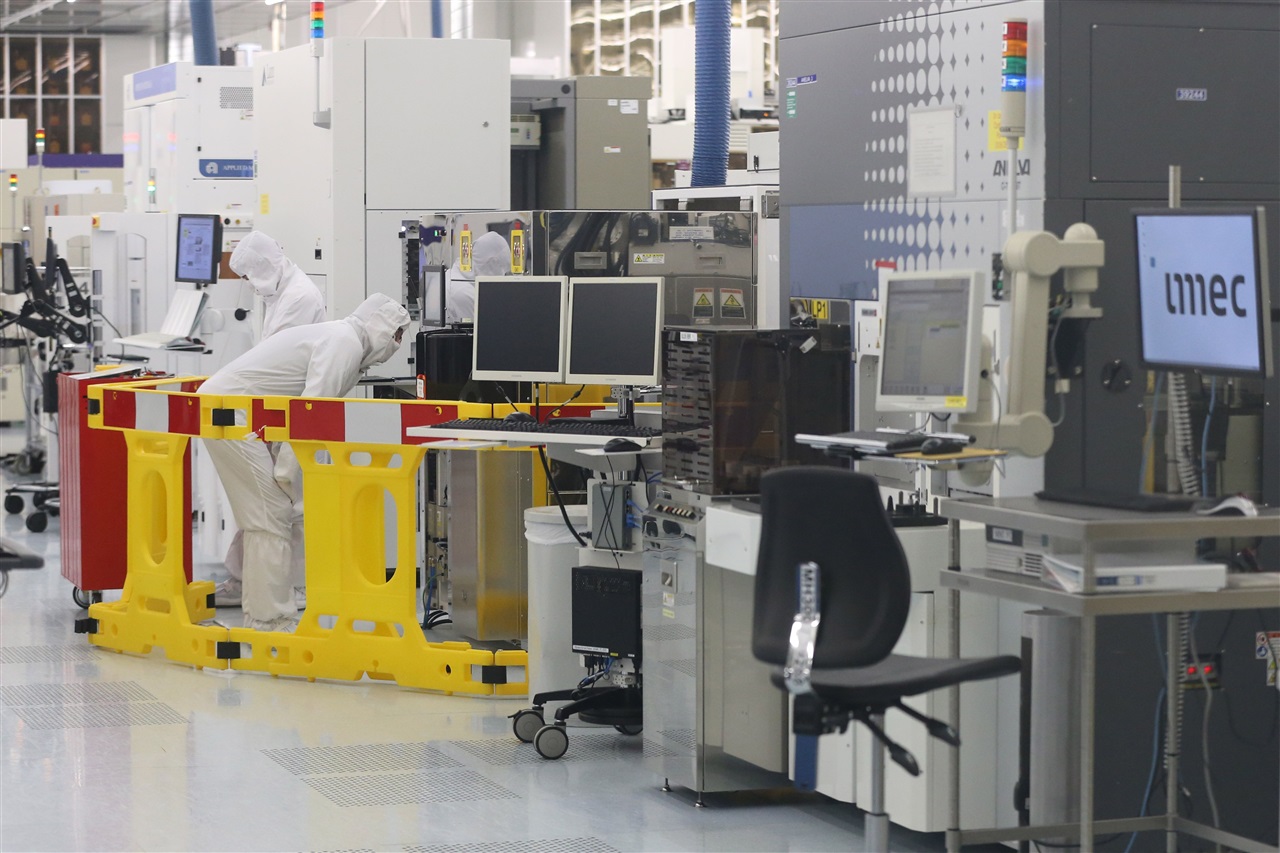
TL;DR — At VLSI Symposium 2026, ASML, TSMC, and imec became the first to integrate MoS2 nFETs and WSe2 pFETs on 300mm wafers at a 50nm contacted poly pitch — the industry's tightest pitch yet, signaling 2D-material transistors are leaving the lab for fab-scale production.
2. Qualcomm in talks to buy Jim Keller's RISC-V AI chip startup Tenstorrent for $8-10B — direct challenge to Nvidia's datacenter lock
TL;DR — Qualcomm is negotiating to acquire Tenstorrent, the RISC-V inference-chip startup led by Jim Keller, at roughly 3x its last valuation — a clear signal Qualcomm wants into the datacenter AI market.
3. US semiconductor equipment stocks jump 5-13% as Citi hikes AMAT, Lam, KLA targets on AI supercycle
TL;DR — Aehr Test Systems rose 13%, AMAT/ASML/Lam/Amkor each gained over 5% on June 17 as Citi raised price targets — Lam to $450 from $315, KLA to $290 from $206 — citing a structural AI capex cycle through 2028.
4. Morgan Stanley calls DRAM shortage 'structural' as AI servers reroute global memory output
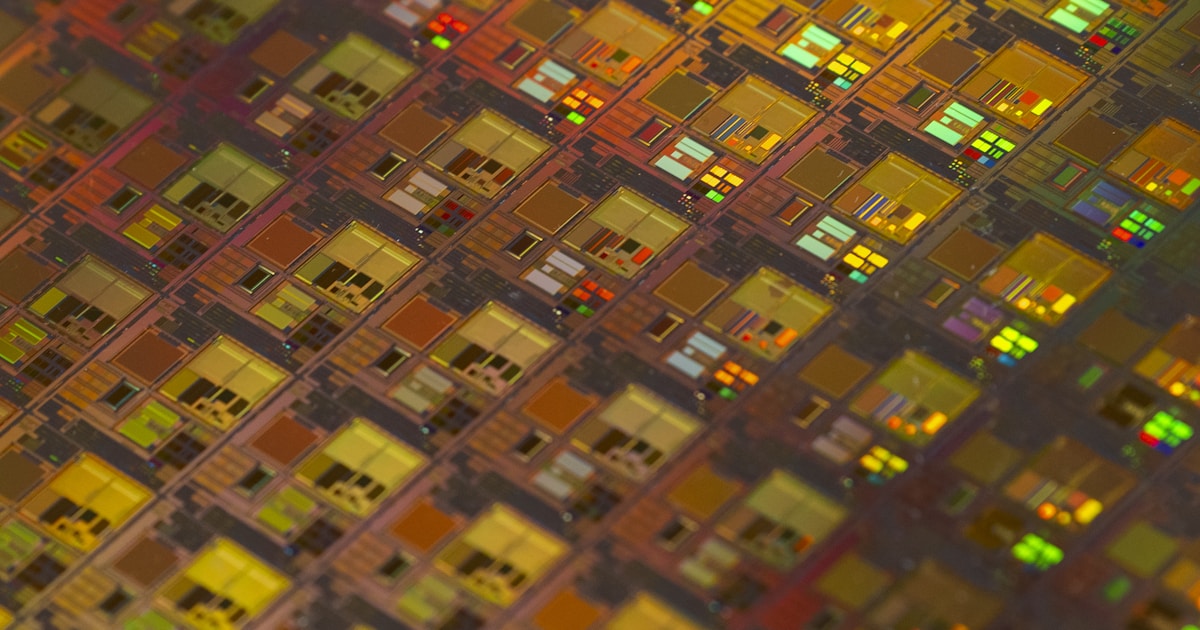
TL;DR — Morgan Stanley says AI demand is now reallocating over 60% of memory output, with DRAM contract prices up 58-63% and NAND up 70-75% in Q2 as HBM capacity eats into commodity DRAM supply.
5. UK Semiconductor Centre partners with Japan's Rapidus on advanced chip technology access

TL;DR — The UK Semiconductor Centre and Rapidus signed a partnership to collaborate on design, process, and packaging access as both countries push to reduce dependence on TSMC and Samsung.
6. PSMC places major equipment order with Lam Research as foundry capacity race heats up

TL;DR — Taiwan's PSMC disclosed a production equipment purchase from Lam Research signed May 22, expanding mature-node (55-130nm) capacity for power-management and display-driver ICs as AI demand spills into legacy nodes.
Source: DIGITIMES — PSMC places major equipment order with Lam Research as foundry capacity race heats up
7. Synopsys launches Nvidia-backed Multiphysics Fusion for AI chip and 3D-IC thermal/EM analysis
TL;DR — Synopsys Multiphysics Fusion combines thermal, EM, and power-integrity analysis in one Nvidia-accelerated platform, targeting cross-die thermal interference and signal integrity in 3D-IC, chiplet, and HBM-stack designs.
8. Coherent secures $50M CHIPS Act grant to expand Texas InP wafer fab
TL;DR — SIA welcomed a $50M CHIPS Act award for Coherent's Sherman, Texas InP wafer fab expansion, onshoring supply of the compound semiconductor material critical to datacenter optical interconnects.
Source: SIA — Coherent secures $50M CHIPS Act grant to expand Texas InP wafer fab
9. JX Metals expands InP substrate capacity as AI datacenter optical interconnect demand surges

TL;DR — Japan's JX Nippon Mining & Metals plans to grow InP single-crystal substrate capacity over 50% within two years to meet surging 800G/1.6T optical transceiver demand, holding over 60% global market share.
10. Foxconn chairman: Taiwan's electronics industry going global on AI and datacenter buildout

TL;DR — Foxconn's chairman, speaking as TEEMA head at CNAIC, said AI infrastructure and advanced manufacturing are driving Taiwan's electronics sector past $500B in projected 2026 exports, with semiconductors over 40% of that.