VLSI Korea
International marketing: Selling my semiconductor products abroad
Artificial intelligence, autonomous driving, and military drones all operate based on semiconductors. The semiconductor industry forms the physical...


🆓 무료 글 · 누구나 무료로 읽을 수 있는 글입니다
Artificial intelligence, autonomous driving, and military drones all operate based on semiconductors. The semiconductor industry forms the physical foundation of modern civilization, and its technological mechanisms function like a universal language that operates identically everywhere in the world.
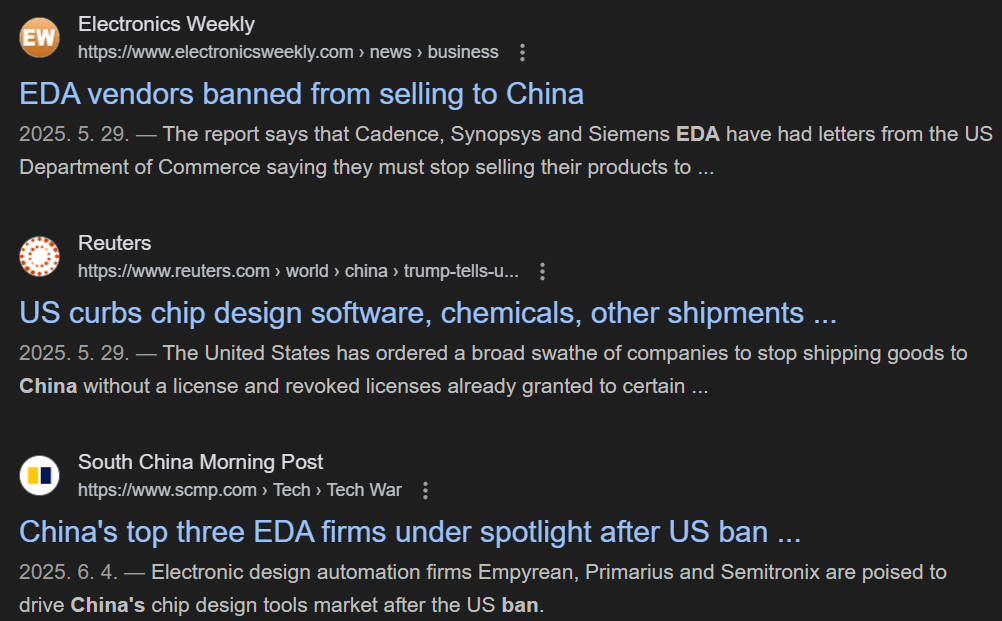
However, looking at the US-China trade dispute, the first items banned from sale are AI semiconductors, and EUV equipment exports to China remain prohibited. How should semiconductor companies approach international marketing, and how should they navigate politics and lobbying?
The semiconductor business. The process of leaving the lab and creating value in the actual market is a highly specialized business domain influenced by each country's culture, political dynamics, and regional regulations.
The proposition that "technology is a universal language, but business follows culture and politics" encapsulates the most critical challenge facing global semiconductor companies. This report analyzes the historical evolution of semiconductor marketing, the dilemma of standardization versus adaptation, the sophistication of Ingredient Marketing, and the impact of geopolitical variables on marketing strategy from multiple angles, presenting the direction modern 'Global Tech-Marketers' should pursue.
1. The Birth and Evolution of Semiconductor Marketing: From the 1960s to the AI Era
The history of marketing has evolved from simple product sales to managing vast ecosystems. Initially viewed merely as 'Expenditure,' marketing is now recognized as a 'Strategic Asset' that determines a company's fate.
1.1 Early Semiconductor Marketing and Moore's Law (1960s)
The semiconductor industry in the 1960s was driven by military and aerospace demand, such as NASA's Apollo program. Early transistors were expensive niche components, but the founding of Intel in 1968 ushered in an era of mass production centered on 'integrated circuits'. From this point on, Moore's Law transcended a mere technological observation, becoming a marketing expectation that took the improvement in price-performance ratio for granted.
1.2 Evolutionary Stages of Marketing Analysis
Marketing analysis capabilities have evolved in tandem with technological progress through four distinct stages.
- Stage 1:
- Descriptive: What happened?
- 1990s: CRM, basic Web logs
- Stage 2:
- Diagnostic: Why did it happen?
- 2000s: Expansion of digital channels
- Stage 3:
- Predictive: What will happen in the future?
- Around 2015: Machine learning, big data, CLV analysis
- Stage 4:
- Prescriptive: How to achieve it?
- 2020s: AI-based optimization, real-time decision-making
2. Standardization vs. Adaptation Strategy
Semiconductor companies must balance the efficiency of global production (standardization) with the specificity of regional demand (adaptation).
2.1 Same Die, Different Packaging
The 'Die', the core of semiconductors, is standardized globally for economies of scale in design and production. However, this standardized 'Die' is then packaged differently to meet the specific requirements of various applications.EC%A7%95">2.1 Same Die, Different Packaging
The 'Die', the core of semiconductors, is standardized globally for economies of scale in design and production. However, when this standardized Die enters the market, it undergoes thorough adaptation.
- Automotive: Must comply with AEC-Q100 reliability testing standards and ISO 26262 functional safety certification, requiring packaging that guarantees long-term reliability for 10-15 years.
- Consumer: Short lead times and price competitiveness are prioritized, with timely launches aligned with trends being key marketing points.
2.2 Samsung Electronics' International Marketing Strategy Case Study
Samsung Electronics adopts a strategy of standardizing core competencies (technological capabilities, brand name) while adapting non-core elements like promotions to suit each region's culture.
- Standardized Elements: Product concept, brand name, core performance specifications
- Adapted Elements: Tone and manner of advertising messages, distribution channel structure
3. Engineers vs. Procurement Teams
Semiconductor B2B marketing must target the organizational 'decision center' beyond individuals. Understanding the differing priorities between engineers and procurement specialists is essential.
3.1 Engineer's Perspective: Technical Excellence-%EC%99%84%EC%84%B1%EB%8F%84">3.1 The Engineer's Perspective: Technical Excellence
Engineers prioritize achieving the best PPA. They strive to adopt the best methodologies, but this incurs costs such as introducing new design tools or learning new architectures.
Procurement experts prioritize securing consistent deliveries without supply chain issues while limiting purchase costs. They tend to prefer products that are 'good enough' over those that are technically 'the best'. Their primary criteria are as follows:
- Supply Stability: The ability to deliver on time amid supply chain crises
- Cost Efficiency: Total Cost of Ownership (TCO)(Total Cost of Ownership)
- Risk Management: Supplier financial health and geopolitical stability
Therefore, marketers must adopt a dual-track strategy: providing engineers with technical data sheets and development toolkits, while appealing to purchasing teams with the stability and cost savings of long-term supply contracts.
4. Ingredient marketing
Semiconductors are hidden inside finished products, yet they can directly generate consumer demand through brand value.
4.1 The Success Formula of "Intel Inside"
Intel's campaign, launched in 1991, is an innovative case study that transformed an invisible component into a symbol of quality.
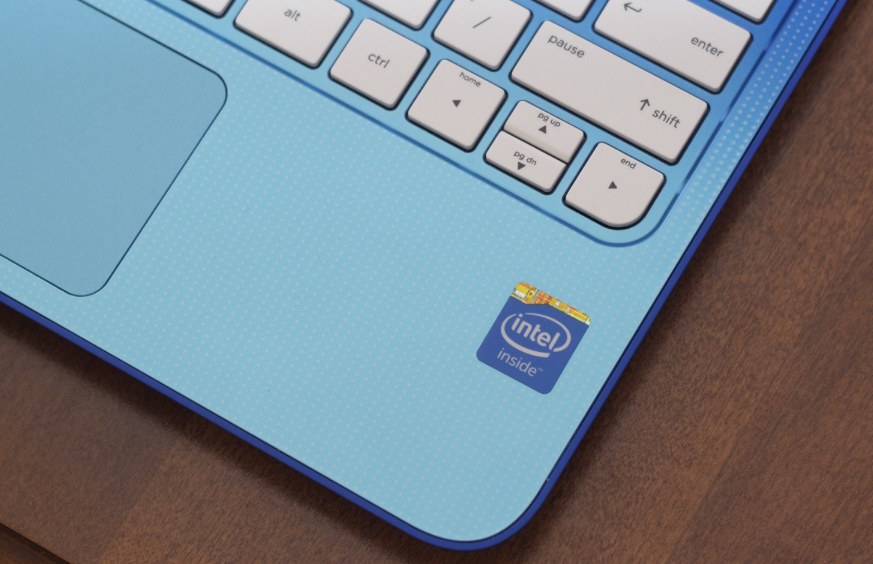
- Pull: Instilled in consumers the perception that PCs and laptops bearing the Intel sticker were superior, thereby encouraging PC manufacturers to use Intel chips and affix the Intel sticker to the device.
- Sonic Branding: The auditory logo, composed of five beeps, created a more lasting impression than the visual logo.
4.2 NVIDIA's AI Era B2B2C Strategy
NVIDIA simultaneously builds an emotional connection with the gaming community and establishes technological authority in the B2B market.
- Influencer Collaborations: Demonstrates GeForce RTX performance in real-time through gamers like Ninja and Shroud, forming a 'fandom'.
- GTC Conference: Utilizes this as a Lead-Gen Machine to solidify leadership in the AI industry.
5. Geopolitical Variables and PESTEL Analysis
Modern semiconductor marketing prioritizes geopolitical security and supply chain resilience over cost efficiency as greater values.
5.1 In-Depth PESTEL Analysis
- Political (P)
- Subsidy competition, e.g., U.S. CHIPS Act, European Chips Act
- Onshoring (production localization/domestication) functions as a marketing advantage
- Economic (E)
- Tariff hikes due to US-China trade conflict → Pressure for rising chip prices
- Surge in demand for high-performance AI chips
- Social (S)
- Shift in public perception regarding technological sovereignty
- Competition for semiconductor talent impacts companies' innovation capability branding
- Technological (T)
- Widespread adoption of generative AI and autonomous driving
- Securing 2nm process technology becomes a measure of brand leadership
- Environmental (E)
- Strengthened demands for carbon neutrality and ESG
- Resource efficiency efforts like transitioning to 450mm wafers become marketing points
- Legal (L)
- Strengthened export controls and intellectual property regulations
- Compliance capabilities emerging as a prerequisite for transactions
5.2 Strategic Utilization of Free Trade Zones (FTZs)
Many semiconductor companies utilize Free Trade Zones (FTZs) to address global logistics complexities. Within FTZs, customs duties can be deferred or exempted upon re-export, improving cash flow and enabling flexible responses to tariff fluctuation risks. This becomes a crucial marketing proposition, particularly for customers in tariff-sensitive industries (such as automotive).
6. The Psychology of Global Negotiation: East vs. West
Successful marketing is finalized at the final negotiation table. Cultural differences between East and West are clearly evident in negotiation styles.
- East Asian Region (Tight Culture): Relationship-centric (Guanxi, 關係). China is particularly more relationship-centric. Before discussing specific contract terms, they spend considerable time "introducing their background and credentials" to build mutual trust and long-term partnerships. They take a deductive approach, establishing principles first before discussing details.
- Western (Loose Culture): Rule-oriented, preferring to introduce names only and immediately get to the point. They analyze and negotiate each item individually based on rational logic and data.
Frequently Asked Questions
What is the core challenge of international semiconductor marketing?
Technology works as a universal language, but business follows culture and politics. Export controls, including bans on AI semiconductor sales and EUV equipment exports to China, make politics and lobbying part of marketing strategy.
How do standardization and adaptation apply to a semiconductor die?
The die is standardized globally for economies of scale, then packaged and adapted per application. Automotive parts must meet AEC-Q100 testing and ISO 26262 functional safety with 10-15 years of reliability, while consumer parts prioritize lead time and price.
What does Samsung standardize and adapt in international marketing?
Samsung standardizes core elements: product concept, brand name and core performance specifications. It adapts non-core elements such as advertising tone and manner and distribution channel structure to each region.
How has marketing analysis evolved?
Analysis moved through four stages: descriptive in the 1990s (CRM, web logs), diagnostic in the 2000s, predictive around 2015 (machine learning, customer lifetime value), and prescriptive in the 2020s (AI-based optimization and real-time decisions).
Related reading
- Semiconductor Organization Design and Personnel Management
- What Semiconductor Marketing Teams Do: EDA, Equipment, IDM, and Fabless
- China's EUV Light Source Prototype: What the 90% Localization Claim…
- ASML's Record Quarter Has a Catch: Chip Tools Will Run Short Through 2028
- Daily Silicon: Samsung KRW 90-110 Trillion, TSMC 3nm Design Demand