VLSI Korea
Weekly Silicon: Big Tech Is Monetizing AI and Building More Data Centers
Semiconductor research from Goldman Sachs, J.P. Morgan, Citi and UBS, organized around HBM, AI monetization, equipment, packaging and CXMT. AI use is generating returns, and more data centers are being considered as high-NPV projects. We identify potential beneficiaries.


🆓 무료 글 · 누구나 무료로 읽을 수 있는 글입니다
VLSI KOREA · WEEKLY SILICON
We revisited semiconductor research from Goldman Sachs, Morgan Stanley, J.P. Morgan, Citi, UBS, Barclays and Asian securities firms through five investment questions.
Three-minute briefing
MEMORY
Memory optimism has broadened from HBM to server DRAM and NAND. Long-term supply agreements and supply discipline are the next variables.
AI ECONOMICS
The next question for AI investment is not chip performance but customer monetization. Computing costs and hyperscaler cash flow must be assessed together.
CAPEX
The beneficiaries of AI capex are extending into process control, precision components, advanced packaging, testing and cleanrooms.
CHINA
The CXMT listing moves China's memory self-sufficiency drive from a policy slogan to a test of financing, capacity and earnings.
Read by institution, the reports can appear to express different views. Reassembled around industry trends, however, they tell one story. AI requires more compute, and compute requires more memory and packaging. For that investment to continue, hyperscalers must demonstrate real returns.
01 · MEMORY
Memory: Beyond HBM to server DRAM and NAND
This week's strongest common signal is that AI memory demand may spread beyond HBM to server DRAM and NAND.
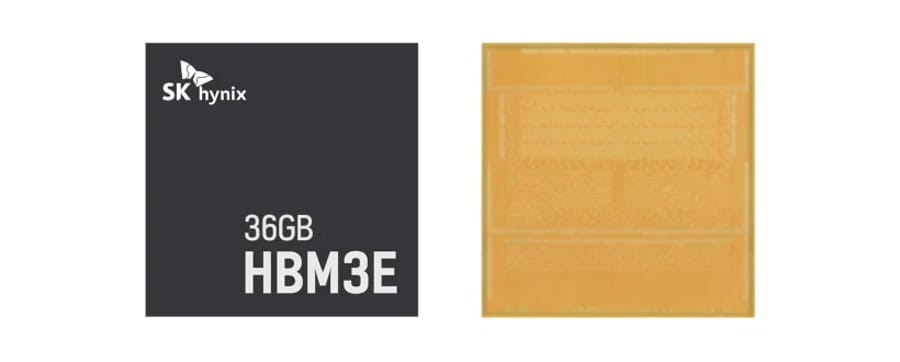
Citi's linkage is technical. AI CPU demand supports server DRAM pricing, while KV-cache in inference could create additional demand for NAND and server memory. In other words, HBM shipments alone can no longer explain all the memory demand created by AI.
Publicly cited figures from UBS and Barclays point in the same direction. UBS estimated 2027 DRAM bit-demand growth at about 36% and supply growth at about 19%, while Barclays presented scenarios of about 35% and 20%, respectively. The sources differ, but the core message is the same: supply grows more slowly than demand.
Daishin Securities reads this trend through Korean exports and macroeconomic growth, while Deutsche Bank identified memory and chips as the drivers of second-quarter technology-stock performance. Industry supply-demand conditions and share-price performance point in the same direction, but as J.P. Morgan warns, that does not mean the relative-performance gap already established will continue unchanged.
House consensus
AI memory demand is spreading from HBM to server DRAM and NAND, while long-term supply agreements and limited supply growth could support pricing and earnings visibility.
Where views diverge
Citi places more weight on the technical path that creates demand, UBS on contract pricing and the duration of shortages, and Barclays on SK hynix's HBM transition and supply advantage.
VLSI Korea view: Looking only at HBM may mean missing half of this memory cycle.
What investors should watch next
- The duration and actual contract pricing of long-term DRAM and NAND supply agreements
- Customer qualification for next-generation HBM and the pace of product transitions
- Whether mainstream server, PC and smartphone demand can absorb high memory prices
- When Chinese memory capacity expansion begins affecting global supply
What would break this thesis
- AI data-center investment slows faster than expected
- Capacity expansion is brought forward, rapidly narrowing the supply-demand gap
- High memory costs damage demand for servers and consumer devices
Related research · Original links and key takeaways
Samsung Electronics (005930.KS): Resilient Memory ASP Uptrend to Support Sustained Earnings Growth (Samsung Electronics: Memory pricing trends and earnings growth)
2026-07-02 · Peter Lee
Public reviews characterized Citi's view as one in which memory fundamentals, led by server DRAM, remain intact despite broad concerns over AI data-center investment.
View key evidence, risks and sources
- Evidence · Dow Jones and subsequent public articles consistently reported Peter Lee's argument that AI CPU demand supports server DRAM prices and that inference KV-cache could create additional demand for NAND and server memory.
- Industry implications · If AI memory demand spreads beyond HBM to server DRAM and NAND, memory vendors could improve both product mix and earnings visibility.
- Assumptions and risks · AI server investment and memory-supply discipline must continue. Slower data-center investment, supply expansion and weaker mainstream demand are the key risks.
Original · Research hub · Public Dow Jones citation · Investing.com public article · Subsequent Reuters coverage
Memory Semis Monthly - July '26 Edition: Further pricing upside amidst LTA negotiations (July memory monthly: LTA negotiations and pricing upside)
2026-07-03 · Nicolas Gaudois, Timothy Arcuri et al.
Public materials citing UBS's July memory monthly suggested further upside in second-half DRAM and NAND contract prices during long-term supply agreement negotiations, as well as the possibility of an extended shortage.
View key evidence, risks and sources
- Evidence · Public reviews reported that UBS estimated 2027 DRAM bit-demand growth at about 36% and supply growth at about 19%, with the shortage potentially lasting through the second quarter of 2028.
- Industry implications · Expanded LTAs could improve revenue visibility and investment discipline for memory vendors, while AI server customers must manage both capacity security and cost burdens.
- Assumptions and risks · Demand forecasts and the pace of capacity expansion must remain within expected ranges. High memory costs could damage server, PC and smartphone demand, or supply could normalize quickly.
Original · Research hub · Public audio metadata · Public Dow Jones citation · SemiMedia public review
Client note initiating coverage of SK hynix ADR
2026-07-14 · Simon Coles
Barclays' July 14 client note, quoted directly by CNBC, viewed DRAM supply and demand as potentially tight for several years because of AI memory demand and limited supply growth.
View key evidence, risks and sources
- Evidence · According to public articles, Barclays estimated 2027 DRAM bit-demand growth at about 35% and supply growth at about 20%, and suggested that SK hynix could retain a high HBM share for the next several years.
- Industry implications · Product transitions, including HBM4E, and supply constraints could support memory vendors' bargaining power and cash generation. Chinese memory technology is a medium-term variable, but adoption by global cloud customers will determine its near-term impact.
- Assumptions and risks · HBM technology transitions and customer qualification, AI capex and supply discipline must proceed as expected. Competitors regaining share, expanding Chinese supply and slowing AI investment are the main risks.
Original · Research hub · CNBC public article · Investing.com public article
Korean Exports: Clear Skies in the Second Half (Korean exports: Clear skies in the second half)
2026-07-01 · Lee Jung-hoon, CFA
Daishin Securities expects Korean exports to remain healthy in the second half and annual growth to remain robust given the semiconductor price outlook. It identifies semiconductor and computer exports as central to strong first-half exports.
View key evidence, risks and sources
- Evidence · The official PDF confirms June exports, growth rates for semiconductor and computer exports, the trade surplus and the second-half semiconductor price outlook. Some detailed figures appear in the source but were included only selectively because they could be misread as investment-decision data.
- Industry implications · AI demand and rising semiconductor prices are key drivers of Korean exports and macroeconomic growth. Semiconductor conditions are central not only to corporate earnings but also to Korea's macro outlook.
- Assumptions and risks · AI demand, semiconductor prices, stable energy prices and recovering demand in major regions must continue. Second-half base effects and weaker external demand are counterarguments.
Q2 Tech Performance Review: Memory Wins, Chips Dominate (Second-quarter technology-stock performance review: Memory and chip leadership)
2026-07-01 · Marion Laboure, Camilla Siazon
On its official Research Institute page, Deutsche Bank summarized second-quarter technology-stock performance under the theme that memory and chips led the sector. The public material confirms only that semiconductors and memory were central drivers of technology-stock performance.
View key evidence, risks and sources
- Evidence · The official page confirms the title, publication date, analysts, Technology topic and the summary phrase “Memory Wins, Chips Dominate.”
- Industry implications · The identification of memory and chips as central to technology-stock performance suggests that AI data-center and high-performance-computing demand continues to be reflected in differentiated sector performance.
- Assumptions and risks · Because this is based on a public summary, the report's detailed arguments and risks can be confirmed only to a limited extent. Memory pricing, the pace of AI investment and technology-stock valuation adjustments are the next indicators to monitor.
02 · AI COMPUTE
AI: Chips are no less important, but customer monetization matters more
AI investment may continue, but the speed at which hyperscalers convert that spending into revenue and cash flow will become as important as supplier performance.
Goldman Sachs identified computing costs and chip-supply constraints as bottlenecks to the spread of AI agents. Better models alone will not complete enterprise adoption. Productivity gains relative to cost must also be demonstrated.
Michael Wilson's team at Morgan Stanley interpreted the recent correction in semiconductor stocks not as the end of the AI theme, but as a broadening of market leadership to hyperscalers and other industries. Nikolaos Panigirtzoglou's team at J.P. Morgan argued that the performance gap between chip and memory vendors and hyperscalers is unlikely to keep widening.
J.P. Morgan presented two paths to convergence. AI-service monetization could advance and allow hyperscalers to catch up, or high chip costs could constrain customer investment capacity, slowing capex and semiconductor demand together. From the other side, DBS's AMD material argues that physical CPU and GPU deployment and agentic AI demand could continue.
House consensus
AI infrastructure investment continues, but in the next phase, customer monetization and capex efficiency, not just chip performance and supply, will determine market leadership.
Where views diverge
Goldman Sachs emphasizes adoption economics, Morgan Stanley the broadening of market leadership, J.P. Morgan the convergence of supplier and customer performance, and DBS AMD's physical-demand opportunity.
VLSI Korea view: AI's next question is shifting from “How many more chips will customers buy?” to “How much will they earn with those chips?”
What investors should watch next
- Hyperscaler AI revenue and cash flow, and next year's capex plans
- Actual customer deployments and supply transitions for AMD data-center GPUs and CPUs
- How much inference-efficiency gains reduce computing costs
- The direction of relative performance between AI semiconductors and cloud platforms
What would break this thesis
- Delayed AI-service monetization weakens customer investment capacity
- Capex falls sharply or product-transition and supply constraints persist
- Model-efficiency gains change current assumptions about compute bottlenecks faster than expected
Related research · Original links and key takeaways
AN AI JOB APOCALYPSE? ...AND MORE (The AI job-displacement debate and AI-agent costs)
2026-06-25 · Allison Nathan, Jenny Grimberg, Ashley Rhodes, James Schneider, Luya You
In its Top of Mind report on AI's labor-market impact, Goldman Sachs presented AI-agent economics and computing costs as a separate issue. From a semiconductor perspective, the concern is that wider AI use affects enterprise adoption through model and agent cost structures and chip-supply constraints.
View key evidence, risks and sources
- Evidence · The official PDF confirms publication on June 25, 2026, the report title, contributors and the section on AI-agent costs. Detailed cost tables and content relating to investment ratings and prices were not retransmitted.
- Industry implications · As AI agents spread into real work, GPU, accelerator and cloud-infrastructure costs could remain bottlenecks to AI adoption. Semiconductor demand is constrained not only by model performance but also by total cost of ownership and supply capacity.
- Assumptions and risks · Goldman's argument depends on AI adoption continuing to expand and enterprises confirming productivity improvements relative to cost. Model-efficiency gains, falling inference costs and delayed labor substitution are key variables.
Client note arguing that AI leadership could broaden from chips to hyperscalers
2026-07-06 · Michael Wilson and the U.S. equity strategy team
Morgan Stanley's July 6 client note, cited by Reuters and Bloomberg, interpreted recent semiconductor-stock weakness not as the end of the AI theme but as a sign that market leadership was broadening to hyperscalers and other industries.
View key evidence, risks and sources
- Evidence · Public articles cited the chip-index correction, recovering hyperscaler relative performance, near-term capex discipline and cash generation from established core businesses as support for the same argument.
- Industry implications · Some of the center of AI-investment benefits could shift from chip suppliers to customers that operate data centers and monetize AI services. Monetization speed and capex efficiency, rather than the direction of semiconductor demand, become differentiators in share-price performance.
- Assumptions and risks · Hyperscalers must maintain spending while proving profitability. Delayed AI monetization, a sharp capex decline and an extended semiconductor correction are counterarguments.
Original · Research hub · Reuters public article · Bloomberg public article
Client note on performance convergence between AI chip and memory vendors and hyperscalers
2026-07-02 · Nikolaos Panigirtzoglou and the strategy team
The J.P. Morgan strategy team's July 2 client note, cited by Bloomberg, argued that the substantial performance lead of semiconductor and memory companies over hyperscalers was unlikely to persist unchanged.
View key evidence, risks and sources
- Evidence · Public articles identify two paths to convergence. AI-service monetization could advance and allow hyperscalers to catch up, or chip costs could constrain customer investment capacity and slow both capex and semiconductor demand.
- Industry implications · The durability of AI semiconductor demand depends not only on chip performance but also on how quickly customers convert AI spending into real revenue and cash flow.
- Assumptions and risks · The base case is positive convergence by hyperscalers, but slower capex growth next year is a downside variable. Because the assessment relies on one family of public reviews, the detailed assumptions cannot be confirmed before checking the original.
Original · Research hub · Bloomberg HT public article · Yahoo Finance public republication
Advanced Micro Devices (Advanced Micro Devices: AI data-center growth opportunity)
2026-06-15 · Not stated on the public page
DBS presents AMD as a CPU and GPU supplier seeking to capture the AI growth opportunity. Data-center GPU and CPU demand are the key revenue drivers, while agentic AI and hyperscaler deployments support the medium- to long-term outlook.
View key evidence, risks and sources
- Evidence · The official HTML confirms the June 15, 2026 date, company overview, AI opportunity, expected data-center GPU growth and CPU outlook. Some growth rates supplied by the page were interpreted only within the scope confirmed in the original.
- Industry implications · AI accelerator competition is broadening beyond an NVIDIA-only structure to include AMD and custom and cloud demand. Platform competitiveness matters more for suppliers that offer both CPUs and GPUs.
- Assumptions and risks · AI customer engagement must convert into actual revenue and hyperscaler investment must continue. Intensifying competition, delayed product transitions and supply constraints are risks.
MORNING NEWS No.5579 (Morning News: AI and semiconductor stocks and the SOX rebound)
2026-07-15 · 投資戦略部 日本株投資調査グループ, 澤田
In its July 15 Morning News, Tokai Tokyo said AI and semiconductor-related stocks that had weakened the previous day could lead the Japanese market alongside a rebound in the SOX index. ASML's earnings release was also presented as a catalyst for semiconductor sentiment that day.
View key evidence, risks and sources
- Evidence · The official PDF confirms the date, publishing department, SOX rebound, rebounds in NVIDIA and Japanese semiconductor-related stocks, and the ASML earnings event. Index and price figures appear in the source, but the digest summarized mainly the direction.
- Industry implications · Japanese semiconductor-equipment and AI-related stocks are viewed as part of a global chain sensitive to the U.S. SOX and ASML earnings. Because this is a short-term market report, its company-fundamentals analysis is limited.
- Assumptions and risks · The assumption is that the rebound in U.S. semiconductor stocks and ASML's results are interpreted positively. Earnings disappointment, high valuations and volatility in AI-related stocks are the main risks.
投資策略週報 Global Markets Weekly Kickstart: 半導體與銀行驅動日股 (Investment strategy weekly: Semiconductors and banks drive Japanese equities)
2026-07-09
KGI Taiwan stated in its weekly strategy material that semiconductors and banks were driving Japanese equities. Its view was that AI demand continued to lift Japanese semiconductor trends and that AI monetization was a key item to confirm during the second-quarter earnings season.
View key evidence, risks and sources
- Evidence · The official PDF confirms the July 9, 2026 date, title, “Semiconductors and Banks Drive Japan Equities,” and language concerning AI demand and Japanese semiconductors. The author could not be confirmed within the public PDF.
- Industry implications · Japanese semiconductor exposure is divided between equipment and the AI supply chain, while bank stocks follow the separate theme of interest-rate normalization. The semiconductor chain remains tied to global AI demand and earnings confirmation.
- Assumptions and risks · AI demand must persist and earnings releases must confirm expectations. Geopolitical variables, earnings disappointment, and interest-rate and currency movements are major risks to the weekly strategy.
03 · EQUIPMENT & PACKAGING
The second line of AI capex beneficiaries: Inspection, precision components, packaging and cleanrooms
Investment in GPU and HBM production creates a long order chain extending into process control, precision components, advanced packaging, testing and cleanrooms.
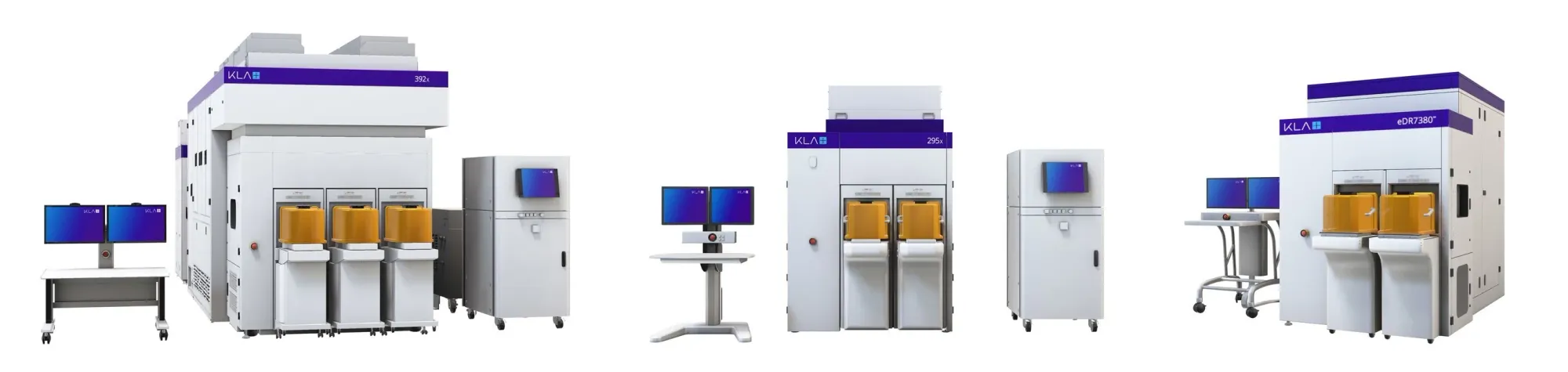
DBS locates KLA's investment thesis in process control and yield management. As advanced processes and stacking become more complex, equipment that identifies defects faster and raises yields becomes more valuable.
Kenanga looks one level further down the supply chain. AMS supplies aluminum precision components to WFE customers, and the key question is whether the commissioning of Penang and Johor capacity translates into actual orders. Separate advanced-packaging material emphasizes that AI bottlenecks are shifting beyond process scaling to memory bandwidth, power and thermal management.
Sum Technology, covered by MBSB Research, is exposed to cleanrooms and mission-critical facilities. Connecting this with Yuanta Securities' material on Samsung foundry small caps reveals how the downstream effects of AI investment are spreading from finished equipment to factory environments and regional supply chains.
House consensus
The effects of AI capex can spread from GPUs to process control, precision WFE components, advanced packaging, testing and cleanrooms.
Where views diverge
KLA is sensitive to structural growth from process complexity, while AMS and Sum Technology depend more heavily on order conversion, capacity and project execution.
VLSI Korea view: The true breadth of the AI supply chain appears in yield, packaging and factory investment rather than GPU sales volumes.
What investors should watch next
- Orders and customer capex for process-control and metrology equipment, including KLA
- Customer qualification and utilization of new capacity at WFE component suppliers
- Actual investment conversion for 2.5D and 3D packaging, testing and thermal-management bottlenecks
- Samsung foundry utilization and the spread of orders to Korean equipment and component suppliers
What would break this thesis
- WFE investment turns down or export controls intensify
- Customer approvals, production ramps or cleanroom projects are delayed
- High customer concentration in the downstream supply chain increases earnings volatility
Related research · Original links and key takeaways
KLA (KLA: Long-term WFE and process-control beneficiary)
2026-07-07 · Not stated on the public page
DBS describes KLA as a supplier of semiconductor process-control and yield-management solutions that could benefit from long-term WFE growth and manufacturer capacity expansion. The importance of equipment that reduces process defects is central to the investment thesis.
View key evidence, risks and sources
- Evidence · The official HTML confirms the July 7, 2026 date, KLA segment revenue composition, regional revenue exposure and the long-term WFE growth thesis. Detailed investment figures were not retransmitted.
- Industry implications · As AI and digitalization sustain investment in advanced and high-performance chips, metrology and inspection equipment becomes more important. KLA is exposed to yield-management demand arising from increased process complexity.
- Assumptions and risks · WFE investment must be sustained over the long term, with continued investment in major regions including China, Taiwan and Korea. Export controls, customer capex adjustments and an equipment-cycle slowdown are risks.
AMS Berhad On Radar (AMS Berhad review: Semiconductor WFE supply-chain exposure)
2026-07-06 · Woon Pin, Cheow Ming Liang
Kenanga presents AMS as an alternative supply-chain exposure participating in the semiconductor WFE upcycle. Its judgment is that aluminum precision engineering and a WFE customer base could provide downstream benefits from increased equipment investment.
View key evidence, risks and sources
- Evidence · The official PDF confirms developments since AMS's listing, the schedule for commissioning Penang and Johor capacity, and the WFE-related investment outlook. Ratings, target prices and fair-value figures were not retransmitted.
- Industry implications · AI data-center investment and expanding WFE demand could spread beyond finished-equipment vendors to materials, components and precision-machining supply chains. The role of Malaysia's downstream semiconductor supply chain is gaining attention.
- Assumptions and risks · WFE OEM demand, approved aluminum-mill supply and the ramp of new capacity must proceed without delay. Delayed customer approval, weaker WFE orders and execution risk are key items to monitor.
Technology Thematic Sector Update: Advanced Packaging (Technology thematic sector update: Advanced packaging)
2026-06-15 · Cheow Ming Liang, Tan Woon Pin
Kenanga believes Malaysia's strategic importance in advanced packaging is increasing following SEMICON Southeast Asia 2026. Its thesis is that AI semiconductor bottlenecks are shifting beyond process scaling to packaging, memory bandwidth, power and thermal management.
View key evidence, risks and sources
- Evidence · The official PDF confirms a roadmap for pilot validation in 2026, C4 bumping in 2027 and 2.5D packaging capability in 2028. Event feedback and changes in packaging technology are the core evidence.
- Industry implications · Advanced packaging is becoming a strategic layer that efficiently integrates logic, memory, RF, sensors and power semiconductors, rather than merely a back-end process. This could create medium- to long-term opportunities for Malaysia's OSAT, equipment and materials supply chains.
- Assumptions and risks · The roadmap must translate into actual mass-production capability and customer qualification. Delayed technology transitions, customer insourcing, global OSAT competition and slower AI investment are risks.
Sum Technology Berhad: Riding on Semiconductor and Data Centre Growth (Sum Technology: Benefiting from semiconductor and data-center growth)
2026-06-16 · Ming San Soong
MBSB Research presents Sum Technology as an engineering-solutions provider exposed to demand for cleanrooms and mission-critical facilities in the semiconductor and data-center ecosystem.
View key evidence, risks and sources
- Evidence · The official PDF confirms the June 16, 2026 date, author Ming San Soong, semiconductor, E&E and data-center customers, and descriptions of cleanroom EPCM and MVAC products. Investment figures such as IPO price and fair value were excluded.
- Industry implications · Investment in semiconductor fabs and data centers spreads demand beyond chip companies to cleanroom, process-utility, electrical and mechanical facility providers. The Malaysian and Philippine facility ecosystems stand to benefit.
- Assumptions and risks · Project awards and new-facility and regional expansion must proceed as planned. Post-IPO execution, order concentration, data-center investment volatility and rising costs are the main risks.
Time to Focus on Samsung Foundry-Related Small Caps (Time to focus on Samsung foundry-related small caps)
2026-07-10 · Kwon Myung-jun, Seo Seok-jun
Yuanta Securities' official list shows a report dated July 10, 2026 titled “Time to Focus on Samsung Foundry-Related Small Caps.” The public teaser confirms that the global foundry market and small caps related to Samsung foundry are its main subjects.
View key evidence, risks and sources
- Evidence · The official research list confirms the title, date, authors and part of a public summary beginning with “1Q26 global foundry market.”
- Industry implications · Korean small component and equipment companies connected to the Samsung foundry supply chain are being treated as leveraged exposure to changes in the foundry market.
- Assumptions and risks · Because this is based on a public summary, the scope of the thesis is limited. Samsung foundry orders, process competitiveness, customer diversification and small-cap liquidity are the key variables to confirm.
04 · CHINA
China: The CXMT IPO moves the self-sufficiency story to an earnings test
The CXMT listing marks an inflection point where China's memory self-sufficiency drive begins to be judged by financing, capacity and earnings rather than policy slogans.
Mirae Asset Securities believes China's semiconductor industry has entered an upcycle and that memory self-sufficiency is now being tested by the capital market. Its emphasis on broad exposure to the entire Chinese semiconductor value chain rather than individual stocks is distinctive.
Samsung Securities presented CXMT and Unitree as the leading technology events in China's third-quarter IPO market. The CXMT listing, in particular, is where China's memory self-sufficiency drive meets capital-market financing. It could catalyze local equipment and materials vendors, but for global memory companies it is also a countervailing variable in the form of medium-term supply expansion.
House consensus
China's semiconductor self-sufficiency drive is moving into a phase where it will be tested through listings, financing, capacity and earnings.
Where views diverge
Mirae Asset Securities considers China's semiconductor cycle and entire value chain, while Samsung Securities focuses on the specific event of the CXMT IPO.
VLSI Korea view: The CXMT IPO is a test that converts China's memory-technology narrative into numbers for capital and earnings.
What investors should watch next
- CXMT's listing timetable and actual investment plans
- Revenue and customer diversification at Chinese equipment and materials vendors
- The pace at which Chinese memory capacity expansion affects global DRAM and NAND supply
- The effects of U.S.-China technology controls on equipment access and productivity
What would break this thesis
- The listing is delayed or policy support weakens
- Overinvestment and low utilization damage returns on self-sufficiency investment
- Technology controls become stronger than expected and obstruct production expansion
Related research · Original links and key takeaways
China Semiconductors (China's semiconductor industry enters an upcycle)
2026-07-09 · Kang Min-hee
Mirae Asset Securities believes China's semiconductor industry has entered an upcycle and that memory self-sufficiency is now being tested by the capital market. Its investment approach focuses on broad exposure to China's semiconductor value chain rather than individual stocks.
View key evidence, risks and sources
- Evidence · The official PDF confirms publication on July 9, 2026, author Kang Min-hee, the Chinese semiconductor value chain and an ETF-based approach. Figures concerning prices and investment opinions were not retransmitted.
- Industry implications · As Chinese memory and the domestic equipment and materials ecosystem attract attention together, investors must assess both the global memory and equipment chain and the localization premium.
- Assumptions and risks · Policy support, memory conditions and value-chain earnings confirmation must align. Overinvestment, weaker policy support and slowing global demand are risks.
China's Q3 IPO Market: The Leaders of China's Semiconductors and Humanoids Are Coming! (China's third-quarter IPO market: The leaders of China's semiconductors and humanoids are coming)
2026-07-08 · Jeon Jong-kyu
Samsung Securities presented CXMT and Unitree as leading China technology events in the third-quarter IPO market. It judged that semiconductor, equipment and materials, and humanoid value chains were likely to drive China's technology momentum in the second half.
View key evidence, risks and sources
- Evidence · The official PDF confirms first-half China IPO fundraising, planned fundraising by CXMT and Unitree, and the recovery in the STAR Market. Return and investment-strategy figures were outside the required scope and were not retransmitted.
- Industry implications · The CXMT listing is an event where China's memory self-sufficiency drive meets capital-market development. Chinese semiconductor equipment and materials and AI-bottleneck-related chains could be revalued through IPO and earnings momentum.
- Assumptions and risks · China's IPO timetable, policy support and China technology earnings momentum must continue. Listing delays, overheated valuations and U.S.-China technology controls are the key risks.
05 · EDGE & SPECIALTY
Semiconductor demand outside data centers is not one market
Edge AI and communications semiconductors must be distinguished by actual adoption markets, customer counts, transitions to mass production and repeat orders, not broad buzzwords.
DBS does not limit Qualcomm's growth path to premium smartphones. Its view is that 5G and communications-semiconductor demand can expand into automotive, IoT and edge networking.
Sivers Semiconductors, covered by DNB Carnegie, shows through an order for Ka-band beamforming ICs how satellite-communications semiconductors could move from development to production. Whether orders from a particular customer and project translate into recurring revenue must be confirmed separately.
House consensus
Outside data centers, connectivity and compute demand are also creating specialty-semiconductor markets in automotive, IoT, edge networking and satellite communications.
Where views diverge
Qualcomm is a platform company spanning multiple markets, while Sivers depends more heavily on particular customers and projects transitioning to mass production.
VLSI Korea view: Who places a mass-production order and when matters more than the label “edge AI.”
What investors should watch next
- Whether automotive and IoT revenue actually reduces smartphone dependence
- Whether satellite-communications IC orders lead to repeat orders and mass-production revenue
- Customer chip insourcing and adoption of competing platforms
- RF and communications IP licensing and customer concentration
What would break this thesis
- Smartphone demand slows as customers insource chips
- Satellite-communications projects are delayed or orders remain one-off
- Licensing disputes and customer concentration affect profitability
Related research · Original links and key takeaways
Qualcomm Inc (Qualcomm: Communications semiconductors and edge opportunities)
2026-07-07 · Not stated on the public page
DBS views Qualcomm as a communications-semiconductor and solutions company that can capture 5G opportunities in premium handsets, automotive, IoT and edge networking.
View key evidence, risks and sources
- Evidence · The official HTML confirms the July 7, 2026 date and provides an overview of the QCT semiconductor business, QTL licensing business, RFFE and 5G. Content resembling investment ratings and target prices was excluded.
- Industry implications · Communications-semiconductor demand could expand beyond smartphone modems and RF into automotive and edge AI. Qualcomm is viewed as a supplier with both wireless IP and a chipset portfolio.
- Assumptions and risks · Premium-handset and automotive and IoT adoption must be sustained. Slower smartphone demand, customer insourcing and licensing disputes are the main risks.
Production order from ALL.SPACE of USD8.2m (ALL.SPACE production order: Sivers Semiconductors)
2026-06-15 · Örjan Rödén
DNB Carnegie's publicly accessible material states that Sivers Semiconductors received a production order from ALL.SPACE for Ka-band beamforming ICs. It distinguishes the material from ordinary independent research by noting that it is company-sponsored research and marketing communication.
View key evidence, risks and sources
- Evidence · The official access route confirms the title, date, analyst, the Sivers and ALL.SPACE order, and the thesis for product-revenue growth in the wireless division. Detailed valuation figures were not retransmitted.
- Industry implications · Demand for satellite communications and mmWave beamforming ICs could become a mass-production transition event for specialty-semiconductor vendors. Long-term demand for data-center photonics and the wireless business is also mentioned.
- Assumptions and risks · The order must lead to actual mass production and recurring revenue. The conflicts inherent in commissioned research, customer concentration and the satellite-communications project timetable are risks.
Five things to watch before the next issue
Memory contracts
The direction of long-term DRAM and NAND supply negotiations and actual contract prices
AI monetization
Hyperscaler AI revenue, cash flow and comments on next year's capex
Equipment cycle
ASML earnings and WFE orders and customer-investment signals, including KLA
Chinese supply
The CXMT IPO timetable, investment plans and pace of Chinese memory-supply expansion
Downstream supply chain
Customer qualification and capacity commissioning at advanced-packaging, precision-component and cleanroom companies
Frequently asked questions from semiconductor investors
What is the strongest common signal in global semiconductor research this week?
AI memory demand could broaden from HBM to server DRAM and NAND. Citi emphasized the technical path that creates demand, while UBS and Barclays highlighted a structure in which demand growth outpaces supply growth.
Does semiconductor-stock weakness mean the AI cycle is ending?
The materials reviewed here do not reach that conclusion. Morgan Stanley suggested that market leadership could broaden from chips to hyperscalers, while J.P. Morgan said the performance gap between the two groups could narrow through monetization or slower capex.
What memory demand should investors watch beyond HBM?
Server DRAM and NAND. The core argument in Citi's material is that AI CPU deployments and inference KV-cache could also affect demand for mainstream server memory and storage.
Which supply chains beyond GPUs are linked to AI investment?
Process control and metrology, precision WFE components, advanced packaging, testing and cleanroom facilities. In downstream supply chains, however, customer qualification, actual orders and capacity commissioning matter more than the AI label.
Why does the CXMT IPO matter to global memory investors?
Because it marks the point at which China's memory self-sufficiency drive begins to face capital-market and earnings scrutiny. It could create opportunities for Chinese equipment and materials vendors, but it could also expand medium-term supply in the global memory market.