VLSI Korea
Orbital Data Center (ODC) Technical Report
→ Cost issues arise. How can we receive more energy in a larger space while consuming less energy? The Orbital Data Center (ODC) is an attempt to move the...


- AI requires data centers.
- Data centers are large and consume significant energy.
- Cooling systems to reduce heat generation are also necessary.
→ Cost issues arise.
How can we receive more energy in a larger space while consuming less energy?
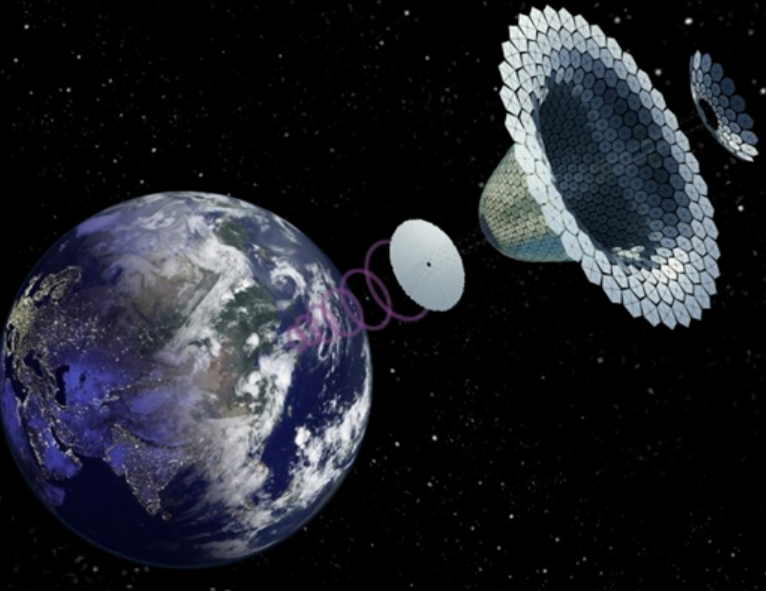
The Orbital Data Center (ODC) is an attempt to move the "power, cooling, and land constraints of Earth-based data centers" into space.
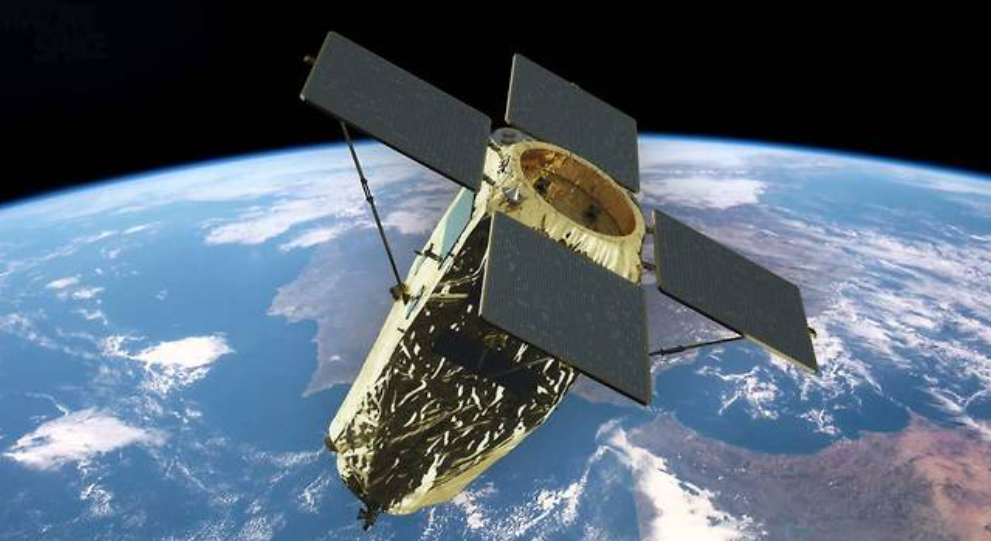
- There is much more space beyond Earth.
- Being closer to the Sun allows for greater access to solar energy.
- It is significantly colder, offering advantages for cooling.
- Furthermore, Earth has strong gravity, whereas gravity is weaker beyond Earth.
-> That's why ODC is gaining attention.
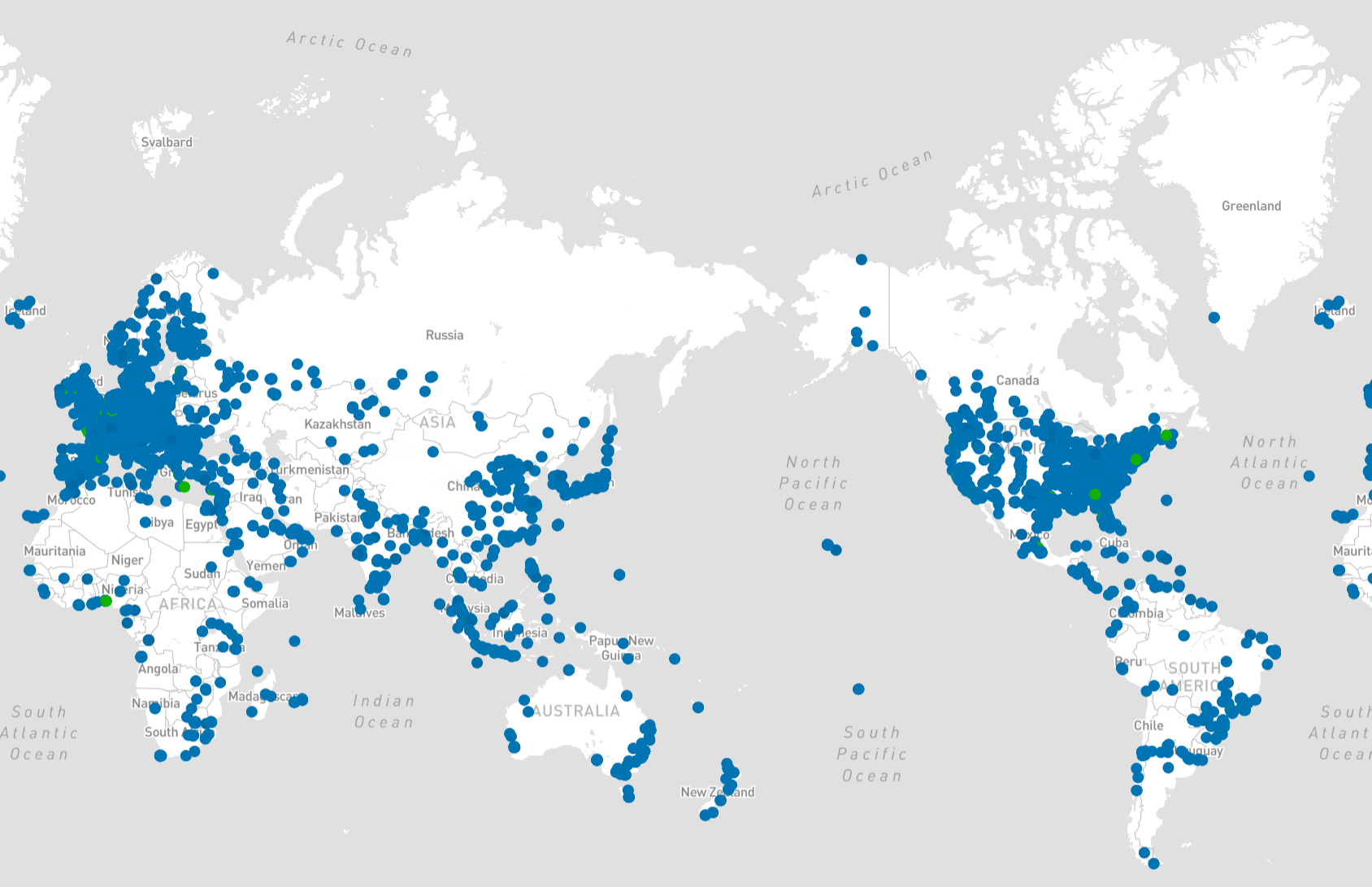
Currently, data centers are built near rivers, lakes, or coastlines where cooling water can be supplied.
In the future, it is expected that many will be built in extremely cold polar regions.
Next is space beyond Earth.
How far from Earth? Low Earth orbit, Medium Earth orbit, Geostationary Earth orbit. We must consider where to build the data center.
- Based on distance from Earth, they are classified as [LEO, MEO, GEO].
- The farther away, the longer the communication latency.
- We must also consider air resistance, eclipses, cosmic radiation, and the risk of collision with space debris.
In summary, ODC is a strong candidate for the next-generation data center by 2035.
1️⃣ LEO (Low Earth Orbit)
- Altitude
- Several hundred to about 1000 km
- Protected LEO category: Typically below 2000 km
- Atmospheric Drag
- Air resistance exists to some extent up to low Earth orbit.
- Air density decreases exponentially with altitude
- Highly sensitive to Solar/Geomagnetic activity
- Orbital maintenance thrusters required
- Eclipse (Power impact)
- Eclipse possible at approximately 1/3 of orbit
- Example: Approx. 35-minute eclipse at 500 km altitude
- Critical for battery sizing
- TID (Total Ionizing Dose)
- Relatively low
- However, increases in SAA / Polar orbits
- SEE (Single Event Effects)
- SEU / SEL / SET occur
- Error rate management based on LET threshold required per NASA LLIS standards
- Material Environment
- Atomic Oxygen (AO) erosion present
- UV / VUV effects present
- Coating/material selection critical
- Potential for Collision with Space Debris
- Highest congestion
- Space DC Suitability
- Lowest communication latency
- Power/thermal design complexity
2️⃣ MEO (Medium Earth Orbit)
- Altitude
- GNSS band
- Thousands to ~20,000 km
- Atmospheric drag
- Practically negligible
- Eclipses
- Occur depending on orbital/geometric conditions
- TID
- Inside Van Allen radiation belts
- Potentially very high TID
- SEE
- Stronger radiation environment
- Rad-hard components and shielding required
- Material Environment
- Almost no AO
- Potential for Space Debris Collision
- Less congested than LEO
- Moderate risk
- Space DC Suitability
- Very high radiation burden
3️⃣ GEO (Geostationary Orbit)
- Altitude
- 35,786 km
- Atmospheric drag
- Negligible
- Eclipses
- Seasonal presence
- Example: Approx. 69-minute eclipse season
- TID
- Impact of outer radiation belt
- Large long-term cumulative dose
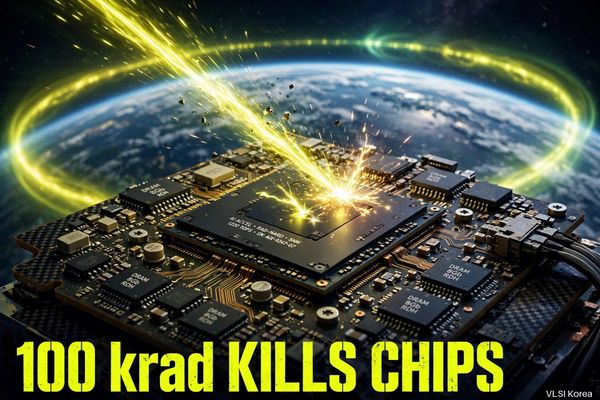
- Example: 100 krad @ 5mm Al over 10 years
- SEE
- High-energy electron effects
- Charging / Discharge (ESD) issues critical
- Material Environment
- No AO
- Debrief/Slot
- Slot/frequency ITU management required
- Orbital resource constraints
- Space DC Compatibility
- Latency critical (~240ms or more)
- Significant radiation/power design burden
🎯 Key Comparison from Chip Design Perspective
LEO
- Moderate TID
- SEE management required
- AO countermeasures required
- Most realistic option
MEO
- High TID
- Rad-hard essential
- Low cost-effectiveness
GEO
- Long latency
- Charging risk
- High accumulated dose
ODC, Is It Possible Before 2030?
- Between 2025–2027
Small-scale orbital computing nodes (demonstration/pilot) are realistic.
Limited AI services or specialized computational nodes are highly likely to emerge. - However,
Full-scale ODCs replacing 10 MW-class ground data centers with equivalent capacity
are unlikely to surpass ground-based cost-effectiveness before 2030. - From an economic perspective,
a reversal within the short term is structurally unfavorable.
Industry and academia continue researching space semiconductors, and it is anticipated that by the early 2030s, ODC cost-effectiveness will surpass that of terrestrial data centers.
The solar radiation heat problem is more serious than you might think
- Assumptions
- IT load 10 MW
- Total heat dissipation 11 MW
- Stephan–Boltzmann constant σ = 5.670374419×10⁻⁸ W·m⁻²·K⁻⁴ (NIST)
- Radiator surface temperature 350 K (≈77°C)
- Emissivity ε ≈ 0.9
- Required area approx. 1.44 × 10⁴ m² (based on cross-section)
- Radiator surface temperature 300 K (≈27°C)
- Required area approximately 2.66 × 10⁴ m²
- Area nearly doubles
- When lowering temperature
- Increased structural mass
- Complex deployment mechanism
- Increased risk of micrometeoroid/impact
- Increased attitude control burden
- Conclusion
- There is no such thing as "free vacuum cooling."
- Ultimately, a massive surface area must be deployed.
Power-to-Mass Ratio-%EC%95%8A%EB%8B%A4">Power requirements are also significant
- Solar constant ≈ 1361.6 W/m²
- Assuming system efficiency of 20–30%
- When 11 MW supply is required
- Solar panel area approx. 2.7 × 10⁴ ~ 4.0 × 10⁴ m²
- Considering LEO eclipses (approx. 35 min)
- Several MWh of storage required
- Battery mass potentially tens of tons in scale
- Therefore
- Choosing a dawn–dusk sun-synchronous orbit significantly impacts economic viability
- Orbital design directly determines the cost structure
Based on a 10 MW ground-based data center
- Global average construction cost in 2026
- Approximately 11.3M USD/MW
- AI server costs
- Potential to rise to approximately 30M USD per MW
- Industry average PUE(2024)
- Approx. 1.56
- U.S. Industrial Electricity Rate (2025 Cumulative)
- Approx. 8.61¢/kWh
- TCO/NPV Model Based on Above Assumptions
Break-Even Conditions
- For ODC to break even compared to ground-based systems
- Orbital delivery cost must decrease to
- Approximately 200–300 USD/kg
- Current small satellite rideshare cost
- Several thousand USD/kg
- Gap
- At least a 1–2 digit difference
- Implications
- Unless launch cost structures fundamentally change
- Full-scale space data centers remain economically disadvantaged
So what comes first?
- ODCs are more likely to materialize as data centers handling specific data rather than full-scale data centers.
- Examples
- Data pre-processing
- Data post-processing
- Data archiving
Most current data centers are cloud providers like "Google, Amazon, Microsoft," and AI HypeScaler companies.
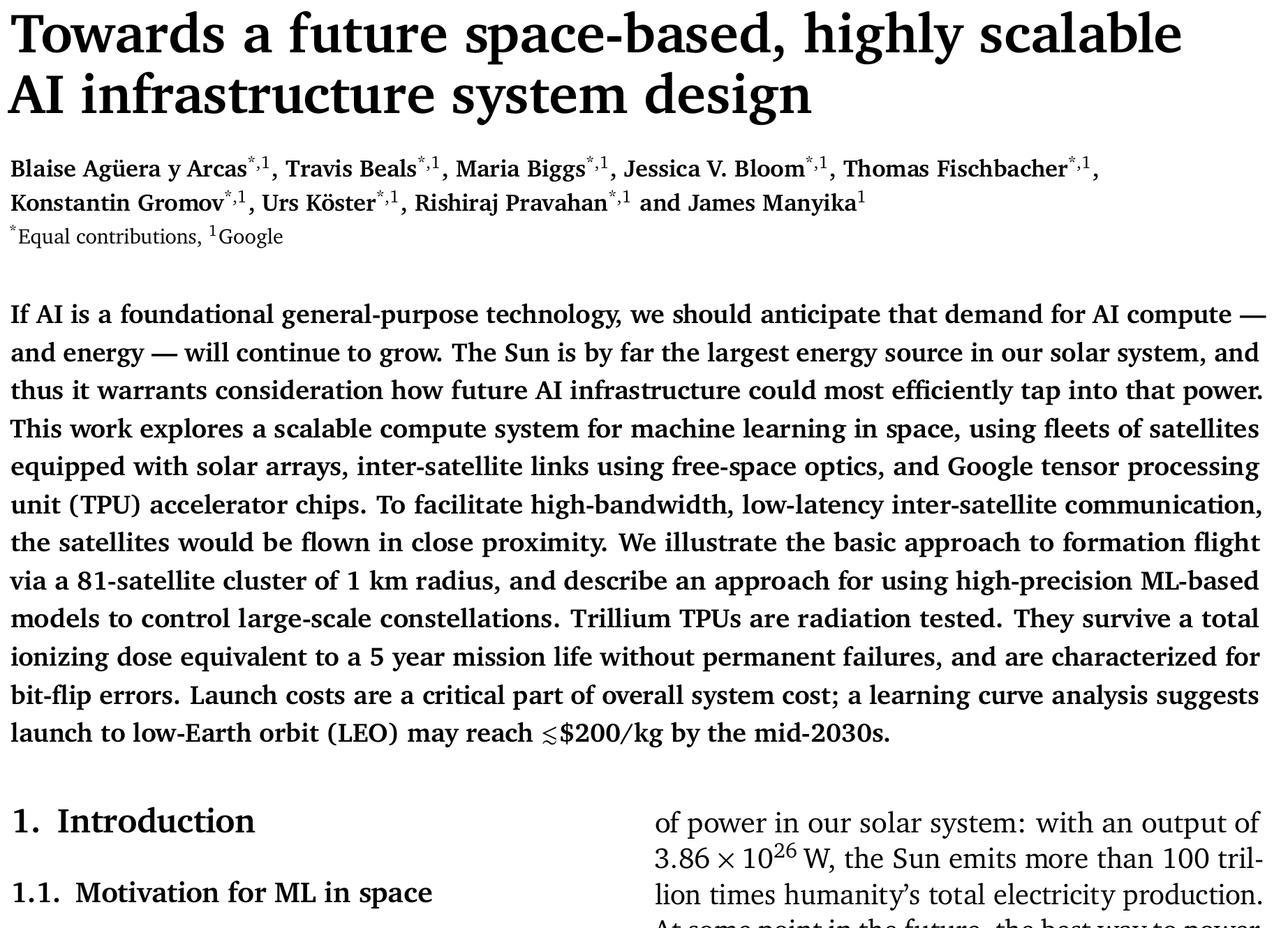
These companies are publishing papers targeting 2025–2027 for:
- Space-based GPU/AI computing nodes
- Orbital TPU clusters (optical ISL)
- Lunar/orbital data storage methodologies.
Summary
- Small-scale orbital computing nodes: Feasible
- 10 MW-class ground-based alternative ODC: Currently poor cost-effectiveness.
The conclusion is simple.
Space data centers are "possible".
However, they have not yet entered the realm of "economic viability". It seems they will start small initially.
Finally, let's redefine the concept of ODC.
Space Data Center / ODC Concept Definition and Classification-Orbital Edge Node-ODC Concept Definition and Classification
An Orbital Data Center (ODC) is the concept of "deploying data center functions (computing, storage, networking) into space (such as Earth orbit or the lunar surface)." This is divided into two categories.
- Orbital edge node: Performs "data preprocessing, compression, filtering, inference (especially AI inference), and local caching/storage." Its focus is on enhancing mission efficiency by "reducing the volume of data to be transmitted" in situations where ground links (downlinks) are bottlenecks. This is already expanding into satellite onboard processing/AI, delivering value even without 'large-scale data center scale'.
- This is the short-term goal of ODC.
- Full-scale ODC: Requires MW-level power, thermal management, and high-bandwidth networking like ground data centers, enabling: ① Solar power systems(or nuclear power, etc.), ② large-area radiators (radiative heat dissipation), ③ massive bandwidth (optical ISL + ground gateway), and ④ long-term reliability (radiation/impact/thermal deformation/re-entry regulations).
- This is the long-term goal for ODC.
In summary, ODC is the 2035 target data center strategy for energy efficiency.
The next article will cover reliability issues in space semiconductors and chip design for Military spec / NASA / SpaceX.
📚 Series Contents — Space Data Center Semiconductors
Using this technical report as the Episode 0 hub, we publish one deep dive on space data center semiconductors every week, for ten episodes.
- Episode 1: How Radiation Kills Chips — TID, SEE and Rad-Hard Design Basics (published 23 October 2026)
Next: Episode 2 — the COTS counterattack, how Starlink-class systems keep commercial chips alive in orbit. Related briefings leo-01 (Starlink chips) and leo-02 (terrestrial GPUs in space) are linked in the body above.