

A practicing semiconductor engineer's daily read on global silicon news:
AMD committed $10 billion to Taiwan's packaging ecosystem to dilute CoWoS dependency via EFB on the same day Lisa Su flagged memory as another pressure point, while Korea's May 1-20 chip exports hit a record $21.9 billion (+202% YoY) and U.S. capital reshaped AI power IC and academic R&D pipelines.
Chase's Take — The most meaningful signal today is AMD putting weight on EFB (Elevated Fan-out Bridge) and pulling ASE, SPIL, and PTI into the picture. On the surface they said CoWoS supply is fine, but throwing $10 billion at Taiwan's OSAT and substrate chain is closer to an admission that TSMC's InFO/CoWoS-L queue is tight through 2027. The memory-as-new-bottleneck remark is the same story — if SK hynix, Samsung, or Micron slips on HBM4 16-Hi 48GB volume for the Helios rack, the entire MI450X shipment curve wobbles. From an STA/backend perspective, EFB adoption changes the base die interconnect RC and thermal hot-spot distribution — distance penalty improves over a silicon interposer but thermal reroutes, so H2 2026 tape-out teams need to redo their IR drop and thermal budgets. Korea's macro risk is bigger — with Samsung + SK hynix approaching half of KOSPI market cap, the May 27 simultaneous listing of single-stock leveraged/inverse ETFs could let two-way volatility overwhelm fundamentals without macro hedging. Next week's NVIDIA Q1 FY27 print (5/27) and Marvell Q1 FY27 will set the tone on memory commentary — that's the watch-point.
1. AMD to promote packaging ecosystem — Lisa Su's $10 billion EFB bet
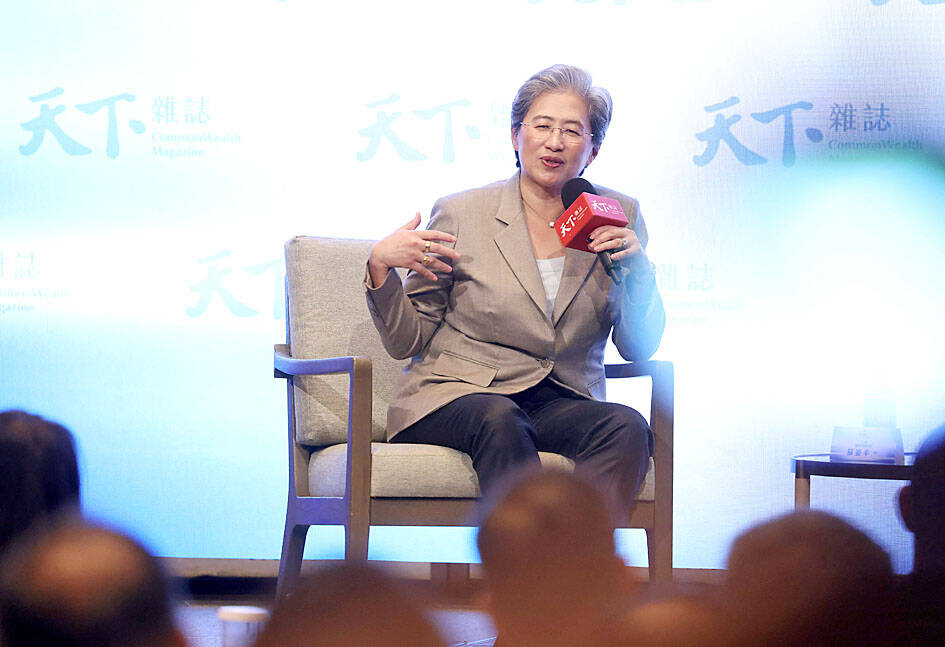
TL;DR — AMD will invest over $10 billion in Taiwan's semiconductor ecosystem across three years, co-developing next-gen bridge packaging EFB (Elevated Fan-out Bridge) with OSATs (ASE, SPIL, Powertech) and substrate partners (Unimicron, Nan Ya PCB). Lisa Su called AI "the third inning of nine."
Source: Taipei Times — AMD to promote packaging ecosystem — Lisa Su's $10 billion EFB bet
2. AMD's Lisa Su says memory is becoming another pressure point for AI chips
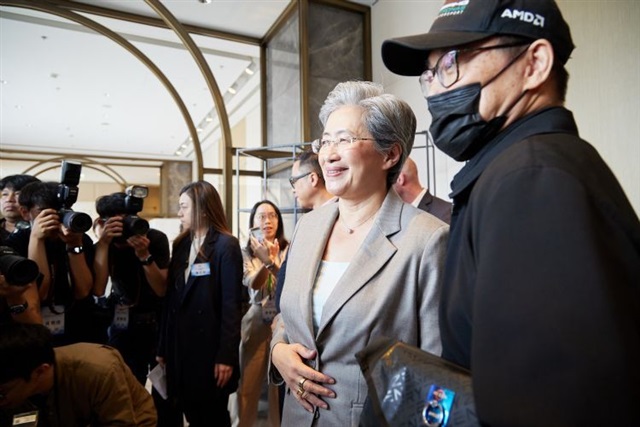
TL;DR — Lisa Su said on May 22 that TSMC CoWoS supply is fine but memory is now another pressure point. Dropped right before NVIDIA Q1 FY27 earnings, it signals the AI chip supply bottleneck is moving from packaging to memory.
Source: DIGITIMES — AMD's Lisa Su says memory is becoming another pressure point for AI chips
3. Korea exports up 65% in first 20 days of May on chips — semis hit record $21.9B
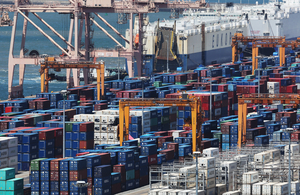
TL;DR — Korea Customs: total exports up 65% in the first 20 days of May with chip shipments more than tripling. Total $52.7B (vs $31.9B YoY), semiconductors $21.9B (+202%) — 41.7% of total exports, +19 ppts YoY, an all-time first-20-days high.
Source: The Korea Herald — Korea exports up 65% in first 20 days of May on chips — semis hit record $21.9B
4. Analog Devices to acquire Empower Semiconductor for $1.5B — AI power IC push
TL;DR — ADI will buy integrated voltage regulator (IVR) and silicon capacitor specialist Empower Semiconductor for $1.5 billion all-cash to attack the "last inch" of AI data center power delivery. Closing 2H 2026.
Source: The Next Web — Analog Devices to acquire Empower Semiconductor for $1.5B — AI power IC push
5. Meta, Broadcom, and others fund $125M semiconductor research hub at UCLA

TL;DR — Meta, Broadcom, Applied Materials, GlobalFoundries, and Synopsys are jointly launching a $125 million Semiconductor Hub at UCLA's Samueli School of Engineering, covering chip design, equipment, software, and manufacturing — privately funded, not a government subsidy.
Source: CNBC — Meta, Broadcom, and others fund $125M semiconductor research hub at UCLA
6. Micron CEO: memory chip shortage lasting beyond 2026 — Bloomberg interview
TL;DR — Micron CEO Sanjay Mehrotra told Bloomberg the memory chip shortage will extend past 2026 and disclosed major U.S. DRAM capacity expansion. He frames the AI demand surge as a structural platform shift, not a cyclical move.
Source: Bloomberg — Micron CEO: memory chip shortage lasting beyond 2026 — Bloomberg interview
7. Bernstein's Stacy Rasgon on why he raised his price target on Nvidia

TL;DR — Bernstein's Stacy Rasgon told CNBC on May 21 that his Nvidia PT bump rests on strong Blackwell demand and Vera CPU TAM expansion — a sell-side signal right before NVIDIA Q1 FY27 earnings.
Source: CNBC — Bernstein's Stacy Rasgon on why he raised his price target on Nvidia
8. KOSPI volatility returns — semis lead with +9.7% as foreign selling collapses
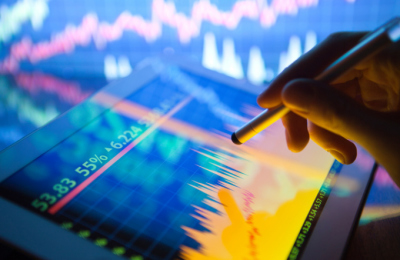
TL;DR — On May 22 the KOSPI saw volatility after the prior day's 8.4% surge, hit by profit-taking and US-Iran noise. Semis still outperformed at +9.7%, with displays +15.8%, autos +14.4%, IT appliances +12.6%, and IT hardware +11.6%. Kiwoom recommends sticking to the baseline scenario.
Source: Newspim — KOSPI volatility returns — semis lead with +9.7% as foreign selling collapses