VLSI Korea
Daily Silicon: Seller's Market Era — Big Tech Capex Bends to Memory
TL;DR — Microsoft CFO Hood broke out $25B of 2026's $190B capex as a dedicated memory chip cost line. Combined Alphabet, Amazon, Meta, and Microsoft capex hi...


🆓 무료 글 · 누구나 무료로 읽을 수 있는 글입니다
A practicing semiconductor engineer's daily read on global silicon news:
The first week of May 2026 in semiconductors is defined by memory swallowing everything: Microsoft carved out $25B of its $190B 2026 capex specifically for memory and component price hikes, while Apple's Tim Cook explicitly guided substantial memory cost increases for the June quarter, SK hynix restructured short, flexible LTAs into multi-year strong-commitment contracts to lock in a seller's market, Korea's April chip exports rocketed +152% YoY for a 13th straight monthly record, TSMC drove a simultaneous 5-fab N2 ramp targeting +45% YoY capacity, and inference workloads shifted enough weight to give Cerebras, Groq, and Tenstorrent a second chance.
Chase's Take — From an STA engineer's angle, the most important signal is Microsoft itself disclosing to the SEC that $25B was earmarked specifically for memory price escalation — a hyperscaler breaking out component inflation as its own capex line item is effectively a confession that memory ASP inflation is no longer transient noise but multi-year structural cost. When even Apple is simultaneously crying about advanced-node shortage and memory pricing, SK hynix flipping its contract architecture to multi-year LTAs is an unambiguous regime change — the memory cycle is moving from a quarterly spot game to a multi-year commitment game. The caveat: this all rests on frozen NAND capacity plus DRAM getting siphoned into HBM at a wafer-bit 4x penalty, and inside that +152% YoY Korean export print, ASP effect is north of 80%, meaning bit shipments are actually only a single-digit increase. Next watch-points: how Lisa Su guides MI400 ramp on the May 5 AMD Q1 call, and how Jensen splits Vera Rubin capacity guidance across SK hynix, Samsung, and Micron at the June 1 GTC Taipei keynote.
1. Microsoft Earmarks $25B of AI Capex for Memory Chip Costs — Big Tech Capex Hits $725B Record

TL;DR — Microsoft CFO Hood broke out $25B of 2026's $190B capex as a dedicated memory chip cost line. Combined Alphabet, Amazon, Meta, and Microsoft capex hits $725B (+77% YoY), directly triggered by 1Q26 DRAM contract pricing up 95% QoQ. Capacity-constrained throughout 2026.
2. SK hynix Restructures LTAs into Multi-Year Commitments — Seller's Market, Q1 DRAM Op Profit Record +201% YoY

TL;DR — SK hynix overhauled its contract architecture from short, flexible LTAs to multi-year deals with strong two-sided commitment. Q1 revenue ₩52.58T, operating profit ₩37.61T, net income ₩40.35T — all quarterly records, +201% YoY. Marketing exec: HBM and server DRAM demand rising across the board, supply expansion is hard.
3. TSMC Ramps Five N2 Fabs in Parallel — Apple Books Half of Initial Capacity, +45% Leap Over 3nm
TL;DR — TSMC is ramping five N2 fabs simultaneously in 2026, targeting 45% more capacity than the equivalent 3nm window. AI accelerator wafer volume scales 11x and advanced packaging capacity expands another 80% in 2027. Apple has locked in over half the initial N2 allocation, with NVIDIA, Qualcomm, and AMD also taking large slices.
4. South Korea Exports Jump 48% in April — Semiconductors Alone +152%, Chip Record Streak

TL;DR — Korea's April exports hit $85.89B (+48% YoY), with semiconductors alone surging +152%. AI memory demand drove a 13th consecutive monthly record, per MOTIE.
Source: UPI — South Korea Exports Jump 48% in April — Semiconductors Alone +152%, Chip Record Streak
5. Inference Is Giving AI Chip Startups a Second Chance — Cerebras, Groq, Tenstorrent Split Prefill from Decode
TL;DR — AI workloads are tilting from training to inference, where a single NVIDIA GPU is inefficient — opening a second chance for chip startups. AWS pairs Trainium prefill with Cerebras decode, NVIDIA pairs GPU prefill with Groq decode, and Intel pairs GPU with SambaNova RDU, standardizing disaggregated inference.
6. Toilet Maker Toto Spikes on AI Pivot — $190M Into Electrostatic Chucks for NAND
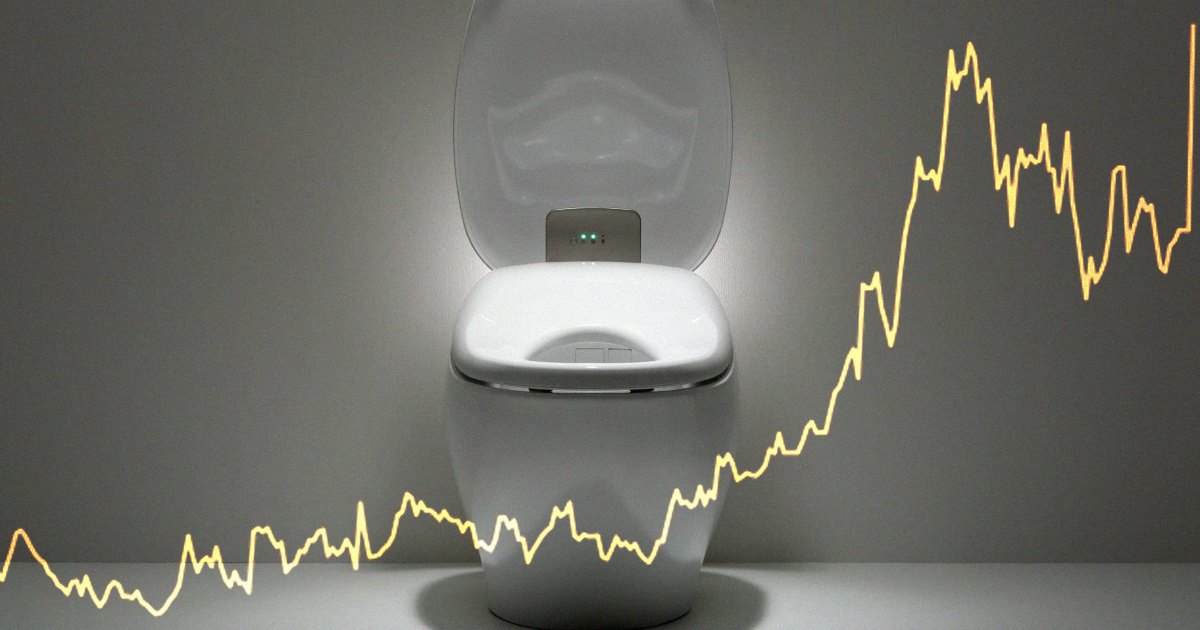
TL;DR — Japanese toilet maker Toto announced a $190M investment in semiconductor component production and R&D, sending the stock up 18% to its highest since 2021. Its electrostatic chuck business — a critical part in NAND mass production — already accounts for over half of company profits. A direct AI chip boom beneficiary.
Source: Futurism — Toilet Maker Toto Spikes on AI Pivot — $190M Into Electrostatic Chucks for NAND
7. AMD Data Center Revenue Threatens Intel's Most Profitable Business — 41% Server CPU Share in 36 Months
TL;DR — AMD's data center revenue went from zero to threatening Intel's most profitable business in 36 months. Server CPU revenue share hit 41%, with EPYC adoption accelerating across AWS, Azure, Google, and Meta. Data center revenue reached $12.6B (+94% YoY) with Q3'25 alone at a record $4.3B, driven by Zen, the GlobalFoundries spinoff, and TSMC 7nm/5nm.
Related reading
- Daily Silicon: Analyst Consensus Surge vs TSMC April Slowdown,…
- Daily Silicon: Big Tech Funds EUV Scanners — The Memory Supercycle…
- Daily Silicon: NVIDIA D-day, Triple Memory PT Hike
- Daily Silicon: HBM, ASIC, CPO All Surging — Memory Cycle Extends…
- Daily Silicon: NVIDIA US$710 Billion: HBM, CPO, TSMC Supply Chain